REVIEW · SALALAH
Desert Safari, Sunset & Sand Bashing (Rub Al Khali Desert)
Book on Viator →Operated by Salalah Glory Tours · Bookable on Viator
Rub Al Khali turns golden fast. A Salalah 4×4 desert safari into the Empty Quarter is one of the few places in Oman where you can stack UNESCO frankincense history, the Ubar story at Shisr, and a real high-dune sunset in a single afternoon; I love the drive-and-stop rhythm (not rushed) and the small extras like Ahmed’s warm, friend-to-friend vibe plus tea, snacks, and photo time. The one thing to consider: there can be an extra site entrance fee (listed as about 3 OMR per person) not included.
This is a private experience with pickup offered and an 8 to 9 hour stretch that’s long enough to feel like an outing, not a quick photo stop. Sand bashing is optional, so you can choose the level of dune chaos that matches your comfort, and the guides emphasize safety and solid desert driving.
In This Review
- Key highlights you’ll care about
- Rub Al Khali from Salalah: why this safari feels special
- How the afternoon timing works (and why it matters)
- Wadi Dawkha: UNESCO frankincense country you can actually walk through
- Shisr and the Ubar story: the Lost City that links trade, dunes, and myth
- Thumrait’s black camel farm: quick, photogenic, and rooted in the frankincense era
- Empty Quarter sunset + dune driving: where the day turns into a memory
- Optional sand bashing (choose your comfort level)
- Snacks, tea, and photo moments
- Price and value: what $164 buys you (and what extra to plan for)
- Who this safari suits best (and who may want a different option)
- Should you book the Salalah Rub Al Khali sunset safari?
- FAQ
- How long is the Desert Safari, Sunset & Sand Bashing experience?
- Is pickup offered from Salalah?
- Do I visit Wadi Dawkha and Ubar during the tour?
- Is sand bashing included?
- Are there any entrance fees?
- Is this a private tour?
- What happens if weather is poor?
- Can I cancel and get a full refund?
Key highlights you’ll care about
- Wadi Dawkah (UNESCO frankincense reserve): actual frankincense-tree valleys and a UNESCO World Heritage setting.
- Ubar at Shisr (the Lost City): walk through the story of the frankincense trade and the so-called city of pillars.
- Black camels near Thumrait: a short stop to see the dromedaries that locals connect to frankincense transport.
- Empty Quarter dunes: time for the big-dune views and one of the day’s best light shows at sunset.
- Ahmed-style hosting: people consistently connect this tour to friendly, patient guidance and great desert driving.
- Optional dune bashing and sand time: you can keep it calm or go for the adrenaline.
Rub Al Khali from Salalah: why this safari feels special
Most people think of desert as sand plus heat. This one is different because you’re not only chasing views—you’re moving through places tied to Oman’s frankincense story.
You start in the afternoon and head out toward the Empty Quarter, also called the Rub Al Khali. This is one of the most famous deserts on Earth, and it’s known for huge dunes. The effect is immediate: the farther you go, the more the world simplifies into sand, sky, and wind-shaped ridges.
Then you layer in cultural stops that make the drive mean something. Wadi Dawkah is tied to frankincense growing, Shisr is connected to Ubar, and even the camel stop near Thumrait connects to the logistics of the old trade routes. It’s desert with context, not desert in a vacuum.
You can also read our reviews of more evening experiences in Salalah

How the afternoon timing works (and why it matters)
This tour is built around afternoon-to-evening timing, typically running about 8 to 9 hours. That schedule is ideal for two reasons.
First, you avoid the hottest part of the day on the dunes and during the longer stretches of driving. Second, you earn a proper sunset experience. Late light is when dunes look layered and textured instead of flat, and that’s when photos usually come alive.
Pickup is offered, and the tour uses a mobile ticket. If you like getting your plans organized quickly, this is a “show up and go” setup. It’s also structured as a private tour/activity, meaning only your group goes with your guide and driver.
One more practical note: sand bashing is optional. If you’re traveling with kids or someone who gets motion-sick, you can still do the day for the UNESCO sites and sunset without forcing the more intense dune driving.
Wadi Dawkha: UNESCO frankincense country you can actually walk through
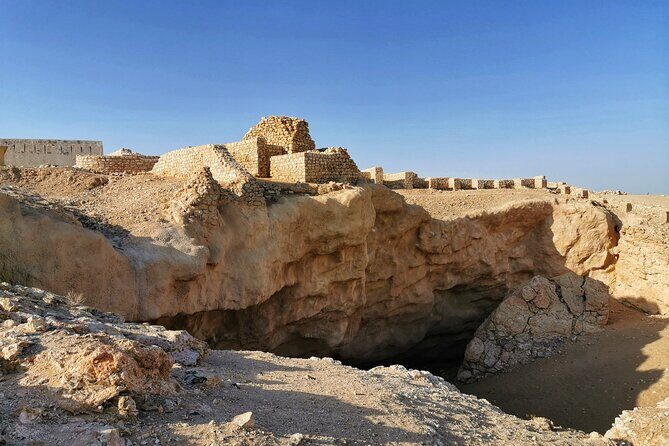
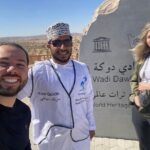
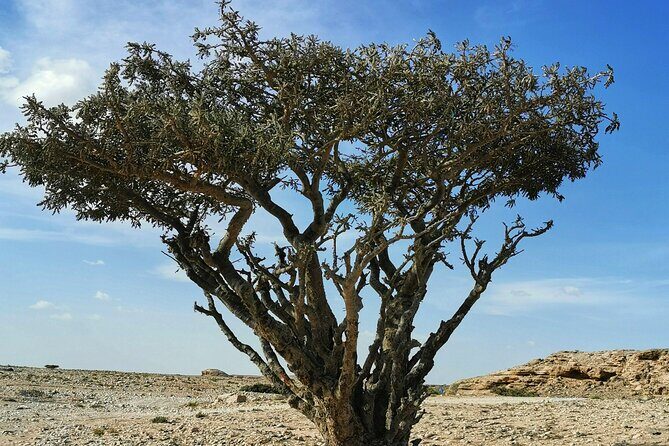
Wadi Dawkah is the first major stop, and it’s the one that sets the tone. You get around 1 hour here, and it’s tied to UNESCO because it’s connected to the model valley where frankincense trees grow.
The tour also highlights the scale: a frankincense plantation area of about 5 square kilometers on the natural reserve. That detail matters because frankincense in Oman isn’t just a product in a museum label. It’s a living landscape with a specific environment.
What I like about starting here is that it gives you a baseline for everything else. When you later hear about Ubar and the old trade routes, you can connect the story to the source of the commodity. You’re not just visiting a named place—you’re understanding why the trade mattered.
Possible drawback: this stop is an hour-long visit with admission included, so wear comfortable shoes and be ready for sun exposure depending on the season. Bring a light layer too; desert evenings can cool down faster than you expect.
Shisr and the Ubar story: the Lost City that links trade, dunes, and myth
Next comes Shisr and the Frankincense Trail stop. You’ll spend about 1 hour 30 minutes here, with admission included, and the focus is the Ubar Archaeological Site.
In the tour framing, Ubar goes by several evocative names: the Lost City, Ubar, the Atlantis of the Sand, or the city of the pillars. The core story is tied to frankincense trade—described as once traded like gold and silver. That framing helps you understand why this location would attract caravans and why it would leave traces worth discussing centuries later.
Even if you’re not the type to love archaeology for its own sake, I think this stop works because it turns the day into a narrative. You’re seeing how people moved resources across harsh terrain, and the dunes stop feeling random. The “why” sticks.
My practical tip: keep an open mind about the myth versus history angle. This is one of those places where storytelling has power, and the value is in connecting the myths to the real-world trade economy and routes.
Thumrait’s black camel farm: quick, photogenic, and rooted in the frankincense era
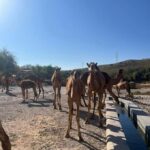
After the longer cultural stops, you get a shorter stop near Thumrait city—about 30 minutes. The highlight here is the black camel presence, often tied to the dromedary camels used for transport connected to frankincense.
This stop is quick, so don’t expect a full activity. But it’s memorable because it breaks up the pace after Wadi Dawkah and Shisr and gives you that animal connection the desert day can use.
From a traveler’s point of view, a 30-minute animal stop is a sweet spot: you see something distinctive without eating the whole schedule. It’s also helpful if you’re traveling with mixed ages, since it gives everyone a legible “win” early enough to stay excited.
What to watch for: keep your expectations realistic. It’s a farm viewing moment, not a guaranteed extended interaction session. If you want animal time, ask your guide what’s possible on your specific departure.
A few more Salalah tours and experiences worth a look


Empty Quarter sunset + dune driving: where the day turns into a memory
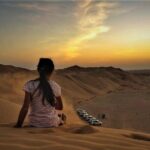
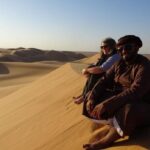
Now you reach the Empty Quarter portion, about 1 hour 30 minutes. This is the heart of the Rub Al Khali experience: big dunes, open sky, and the kind of silence you can feel in your chest.
The tour is designed for sunset. That’s not a casual “we drove past the sky.” The dune choices matter. Guides aim for strong viewing spots so you can watch the light change and see dunes pick up shadows.
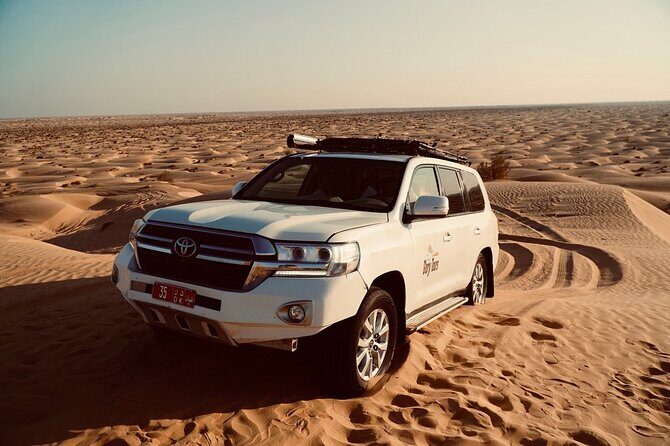
A big plus from the experience feedback: the guides and drivers are experienced in desert driving. That shows up in how confidently the 4×4 handles the dunes, especially when sand bashing is chosen. Safety is also explicitly called out, and it shows in the way the driving is presented—rules first, fun second.
Optional sand bashing (choose your comfort level)
Sand bashing is optional, so you don’t have to ride every bump. If you like adrenaline, this is where you get it—those controlled climbs and drops that make you grip the side rail and laugh at the same time.
If you prefer a calmer ride, you can still enjoy:
- the stop-and-look breaks,
- the sunset viewing,
- and the chance for sand time near the dunes.
Some departures also include sandboarding, depending on how the day runs and what’s available. If that matters to you, ask your guide what’s being offered on your date.
Snacks, tea, and photo moments
The desert portion often includes small comforts like tea and snacks. Many people also mention getting traditional-style outfits for photos—simple, but effective if you want pictures that look like Oman, not just a desert postcard.
And because you’re out near sunset, the sky can turn starry later on. Some departures add an evening meal and coffee, which makes the whole experience feel more complete. If you’re hoping for that, check with the operator when you confirm your booking.
Price and value: what $164 buys you (and what extra to plan for)
At $164 per person, this is not a budget throw-together safari. But for what you’re getting, it can be good value.
You’re paying for:
- a private 4×4 experience (not a shared bus),
- multiple major stops tied to UNESCO and important Oman stories,
- experienced desert driving with safety in mind,
- and the core “big moment” of a Rub Al Khali sunset.
The small cost surprise to plan for is the entrance fee listed as about 3 OMR per person for the sites, not included. That’s the kind of detail that can sting if you budget only the headline price, so it’s smart to add a buffer.
Also, keep timing in mind. This tour is often booked around 40 days in advance on average. If your travel dates are fixed, start early so you don’t get stuck with only less convenient departure times.
Who this safari suits best (and who may want a different option)
I think this is a strong fit if you want a desert day that has structure. If you like the idea of seeing frankincense country, Ubar at Shisr, black camels near Thumrait, and then finishing with dunes at sunset—this hits all of those.
It’s especially good if you:
- enjoy guided context (not just driving),
- want a private-group vibe,
- or travel with a family where you want flexibility (sand bashing is optional).
You might consider a different approach if you’re looking for a purely relaxing nature walk. This is a drive-heavy day with multiple stops. You’ll move, stop, drive, and repeat—great for many people, but not the quietest option.
Should you book the Salalah Rub Al Khali sunset safari?
Book it if you want a real desert experience that’s more than a single dune viewpoint. The combination of Wadi Dawkah frankincense terrain, Ubar’s Shisr story, the black camel moment near Thumrait, and then the Empty Quarter sunset is a well-built afternoon arc.
Skip or re-check the fit if you’re trying to avoid extra costs beyond the headline price. Budget for the mentioned entrance fee (about 3 OMR per person) and be clear about whether sand bashing, sandboarding, or added evening meals are included on your departure.
If you’re going, do one thing that makes the day easier: dress for the sun in the afternoon, but pack for desert evening temperatures. And when your guide starts mapping the dunes for sunset photos, trust the plan. That’s usually where the best light happens.
FAQ
How long is the Desert Safari, Sunset & Sand Bashing experience?
It lasts about 8 to 9 hours.
Is pickup offered from Salalah?
Yes, pickup is offered.
Do I visit Wadi Dawkha and Ubar during the tour?
Yes. You stop at Wadi Dawkha (about 1 hour) and the Frankincense Trail / Ubar Archaeological Site at Shisr (about 1 hour 30 minutes).
Is sand bashing included?
Sand bashing is optional, so you can choose whether to do it.
Are there any entrance fees?
An entrance fee is mentioned as about 3 OMR per person, and it is not included.
Is this a private tour?
Yes. It’s listed as a private tour/activity, so only your group participates.
What happens if weather is poor?
The experience requires good weather. If it’s canceled due to poor weather, you’ll be offered a different date or a full refund.
Can I cancel and get a full refund?
Yes. You can cancel up to 24 hours in advance for a full refund, but cancellations within 24 hours of the start time aren’t refunded.