REVIEW · SALALAH
Sunset desert safari Salalah with Dinner in a Bedouins camp
Book on Viator →Operated by Ciao Salalah · Bookable on Viator
Sunset hits the Empty Quarter like a switch. On this Salalah sunset desert safari, you glide from frankincense groves to historic Wubar, then finish with dinner at a Bedouin camp. It’s an 8-hour plan that packs big scenery and culture into one afternoon.
What I like most is the guided structure. You stop at Wadi Dawkah for UNESCO-level frankincense trees, then you get context at the Lost City of Wubar, with an English and Italian speaking guide.
One thing to consider: the Lost City of Wubar admission fee is not included (3 OMR per person). So budget a little extra, and plan for a day that’s active but not rushed.
In This Review
- Key points before you go
- How this Salalah sunset safari fits an afternoon
- Pickup, timing, and what 8 hours feels like
- Wadi Dawkah: UNESCO frankincense trees and the meaning behind the grove
- Thumrait: the souk and farm life side of Dhofar
- The Lost City of Wubar (Ubar): ruins shaped by frankincense trade
- Empty Quarter at sunset: your main show of the day
- Bedouin camp dinner: where the ride becomes a night out
- Price and value: what $150 buys you (and what costs extra)
- Who should book this (and who might not love it)
- Should you book this Salalah sunset desert safari?
- FAQ
- What time does the sunset desert safari start?
- How long is the experience?
- Is pickup included?
- Is the tour private?
- What language will the guide speak?
- What’s included in the price?
- Is dinner included?
- Are any admission fees included?
- Do I need a physical ticket?
- Can I cancel for free?
Key points before you go

- UNESCO frankincense stop at Wadi Dawkah: thousands of ancient frankincense trees and traditional harvesting context
- Thumrait break for daily life: a town stop with a souk and farm products like dates, mangoes, and pomegranates
- Wubar ruins with an extra entry fee: Lost City admission costs 3 OMR per person
- Empty Quarter at sunset timing: big dunes and a rare chance to see Rub’ al-Khali’s scale
- Tea, coffee, and snacks included: comfort during the ride, not just at the camp
- Private group: only your group participates, with pickup available
How this Salalah sunset safari fits an afternoon
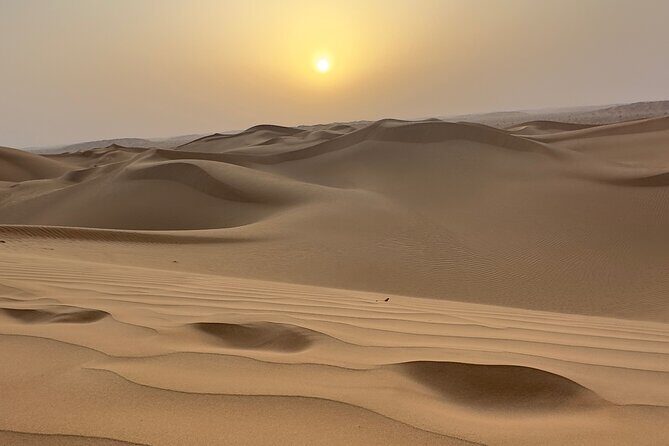
This tour is built for the classic Salalah rhythm: start in the early afternoon, drive through Dhofar’s key stops, and hit the sand when the light turns golden. You’re not just “going to the desert.” You’re also passing through places that explain how the region lived and traded long before modern roads.
The route also makes sense for first-time visitors. You get a major nature site first (Wadi Dawkah), then a town stop (Thumrait), then the archaeology of Wubar, and finally the Empty Quarter’s dunes. That order helps you connect the dots between frankincense trade, settlement history, and desert geography.
If you like practical travel days—where you feel like you used your time—this works. The whole thing is about 8 hours on the clock, starting at 1:00 pm, with a sunset payoff.
You can also read our reviews of more tours and experiences in Salalah.

Pickup, timing, and what 8 hours feels like
Pickup is offered, and the tour runs for about 8 hours. With a start time of 1:00 pm, you’ll likely spend the first part of the day in transit between stops, then shift into site time and sunset pacing.
Because it’s a private tour, you’re not stuck waiting for a long string of other groups. That usually means fewer awkward gaps and more time when it counts—especially once you’re on the dunes and heading toward the Bedouin camp.
You’ll also want to plan for the fact that you’re covering multiple areas in one day. Wadi Dawkah and Thumrait are both described as part of the Dhofar region north of Salalah, and Wubar is another stop before the Empty Quarter portion. So you should treat this as an active half-day, not a slow sightseeing stroll.
Wadi Dawkah: UNESCO frankincense trees and the meaning behind the grove

Wadi Dawkah (about 40 km north of Salalah) is the first real highlight, and it’s special for a reason. The wadi is known for its vast frankincense trees, and the area is recognized as a UNESCO World Heritage Site. That matters because it’s not just pretty trees—you’re seeing a landscape tied to one of the region’s most important historical resources.
In practice, you’ll have about 2 hours here. Expect a stony, semi-desert valley feel, then a walk through frankincense groves where you can take in the scale of the trees. The guide portion is key: you’re not only looking—you’re learning about traditional frankincense harvesting methods and why this aromatic sap mattered enough to shape trade routes.
My practical tip: wear comfortable shoes. Even when it’s not described as difficult terrain, wadi areas can feel uneven underfoot. Also, bring sun protection. You’re outdoors for a good chunk of time before sunset plans take over.
Thumrait: the souk and farm life side of Dhofar
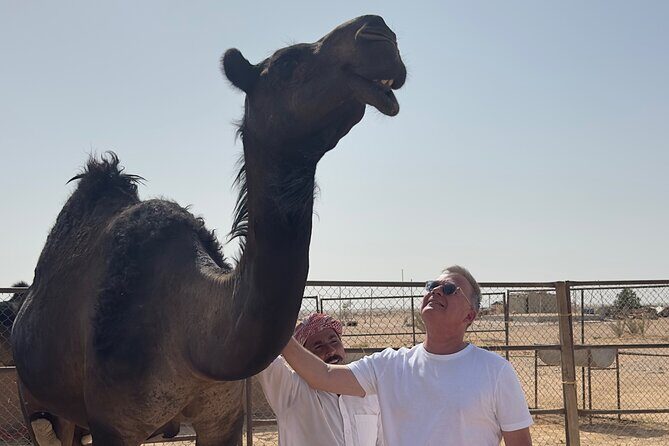
Next comes Thumrait, about 100 km north of Salalah. This stop is different from Wadi Dawkah because it shows daily life rather than historical ruins. Thumrait is described as a major commercial hub in Dhofar, with a livestock market, farming activity, and a souk.
You get about 2 hours here, and the idea is simple: stretch your legs, see local commerce, and pick up small food or craft items if that’s your thing. The tour information points out products like dates, mangoes, and pomegranates from surrounding fertile plains, plus handicrafts and traditional Omani textiles.
Is this the same kind of “wow” as the frankincense trees or the dunes? Not exactly. But it’s valuable in a different way: it helps you understand what Oman feels like beyond the scenic stops.
Possible drawback: if you’re the kind of traveler who wants nonstop monuments, this may feel more like a break than a highlight. I’d call it a worthwhile pause, not a must-shop market.
The Lost City of Wubar (Ubar): ruins shaped by frankincense trade
The Lost City of Wubar is one of those sites that gives you goosebumps for a very non-magic reason. It’s sometimes called the Atlantis of the Sands, and it was once a trading hub tied to the frankincense trade linking the Arabian Peninsula with older civilizations.
You’ll have about 2 hours at Wubar. The key features listed for the site include well-preserved ruins such as ancient buildings and fortifications, plus an extensive network of underground irrigation channels. The big idea is that people built and farmed enough to sustain a trading center in a harsh environment—then, for reasons historians can’t pin down with certainty, it was mysteriously abandoned.
Here’s the most important practical note: admission is not included. The fee is 3 OMR per person for the Lost City of Ubar. If you like clean budgeting, set aside that amount before you go.
Also, ruins time is best when you bring curiosity. If you enjoy archaeology and trade history, you’ll get more out of the explanations. If you prefer scenery only, you might want to keep expectations realistic and treat it as a structured history stop.



Empty Quarter at sunset: your main show of the day
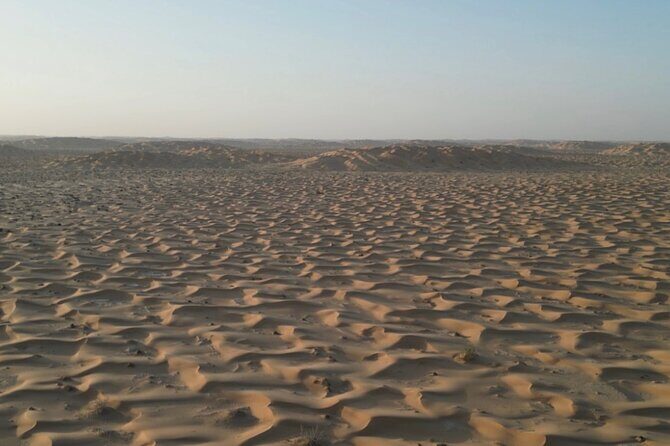
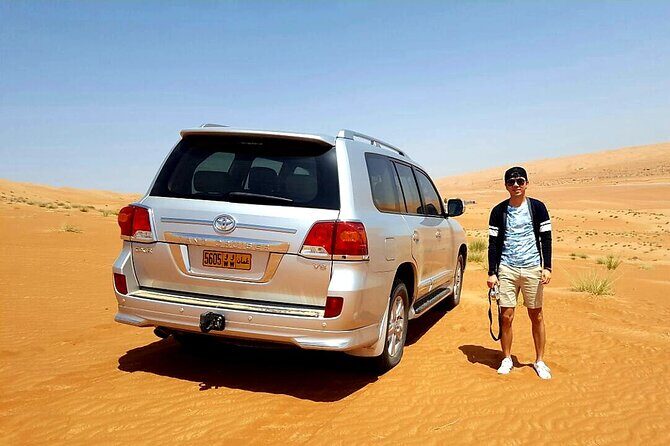
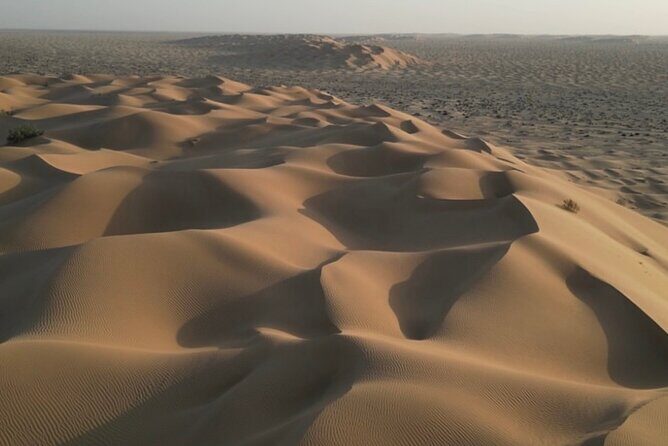
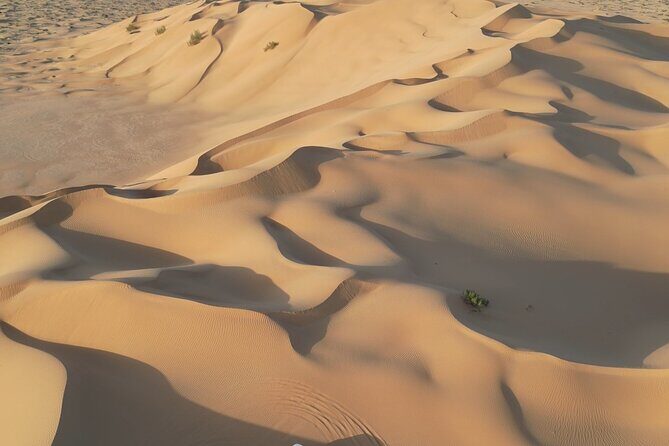
After Wubar, the day pivots into the Empty Quarter (Rub’ al-Khali). In Oman, this part of the sand sea creates dramatic dune scenery, and the tour gives you a 2-hour segment here.
The Empty Quarter is described as the largest continuous sand desert in the world, spanning parts of Saudi Arabia, Oman, Yemen, and the UAE. In terms of scale, dunes can reach over 300 meters. That number is hard to picture until you’re standing near the rise and watching the light travel across the sand.
This is where the tour name makes sense. With a sunset-focused safari, you’re timing your best views for when the desert changes color and shadows stretch out. Even if you’re not a photographer, it’s the moment that turns “this is a desert” into “this is a place with its own rules.”
What to do with the time: take a slow walk and let your eyes adjust. The dunes look simple at first glance, but the texture and depth shift minute by minute as the light changes.
Bedouin camp dinner: where the ride becomes a night out
The tour ends in a Bedouin-style camp experience with dinner. While the exact menu isn’t spelled out in the details I have, the included comfort and the reviews’ tone make one thing clear: the evening is meant to feel like more than a snack stop.
You’ll already have had Omani local tea, coffee, and snacks included during the tour. Then dinner in the camp is your “reset button.” You’re done with driving and site walking, and you can slow down enough to enjoy the setting.
One of the strongest review impressions tied to this part of the day is the combination of a friendly, well-run evening plus genuinely good food. Also, if your guide is Mohammed (as one guest noted in the feedback), you can expect explanations that make the day’s stops feel connected rather than random.
Practical dinner advice: if you tend to get chilly later in the evening, bring a light layer. Desert evenings can feel cooler once the sun goes down, even when daytime is warm.
Price and value: what $150 buys you (and what costs extra)
At $150 per person, this safari is in the mid-range for Oman day experiences, and the value comes from what’s bundled:
- Pickup offered
- A guide speaking English and Italian
- Snacks plus Omani tea and coffee
- Multiple major stops in one day (Wadi Dawkah, Thumrait, Wubar, Empty Quarter)
- Dinner in a Bedouin camp
- A private tour (only your group participates)
- Mobile ticket
The main “extra” is transparent: Lost City of Wubar admission is 3 OMR per person, and that’s the only listed admission fee not included. The other stops in the provided details show free admission (Wadi Dawkah and the Empty Quarter portion), while the Thumrait stop is also listed with free admission.
You’ll also appreciate that this tour is private. In areas where public tours can feel crowded, paying a little more for a group that’s just yours can be worth it—especially when you want your sunset timing to be flexible.
And since the experience is canceled for free up to 24 hours in advance, you can book with less stress if your plans are still shifting.
Who should book this (and who might not love it)
Book this if you want a single-day loop that connects nature, history, and desert scenery. It’s also a strong choice if you like guided context—frankincense harvesting at Wadi Dawkah and the reason Wubar mattered are the kind of stories that reward paying attention.
It’s also a great fit for couples or friends who want the privacy of only their group. A private setup makes the experience feel calmer, especially during the transition from ruins to dunes and then to dinner.
You might consider a different option if you dislike site visits with entry fees, since Wubar adds 3 OMR per person. Also, if you want a slower pace with lots of free time at each location, this is more structured—about 2 hours per major stop.
Should you book this Salalah sunset desert safari?
Yes, I’d book it if you want a well-paced desert day with more than one reason to stop along the way. The biggest reasons are the combination of Wadi Dawkah’s frankincense trees, the structured visit to Wubar, and the payoff of the Empty Quarter during sunset, capped by a Bedouin camp dinner.
Before you book, do two simple things: plan for the 3 OMR Wubar admission fee, and pack for an active afternoon outdoors. If you do that, you’ll end the day with the kind of memories that feel earned, not rushed.
FAQ
What time does the sunset desert safari start?
The tour start time is 1:00 pm in Salalah.
How long is the experience?
The duration is about 8 hours.
Is pickup included?
Pickup is offered.
Is the tour private?
Yes. It’s a private tour/activity, and only your group will participate.
What language will the guide speak?
The guide provides English and Italian.
What’s included in the price?
Included items are snacks, Omani local tea and coffee, and the guided tour.
Is dinner included?
Yes. Dinner in a Bedouin camp is part of the experience.
Are any admission fees included?
Admission is not included for the Lost City of Ubar. The fee is 3 OMR per person.
Do I need a physical ticket?
You’ll receive a mobile ticket.
Can I cancel for free?
Yes. You can cancel up to 24 hours in advance for a full refund. If you cancel less than 24 hours before the start time, the amount is not refunded.