Salalah feels different when you walk it slowly. This 4.5-hour city route connects the big sights with real local texture, so your morning has meaning instead of just stops. I love the Sultan Qaboos Mosque grounds for calm photos, and I love how the plan threads through old-city Haffa without making you pay entry fees.
One thing to know up front: Al Hosn Palace is exterior-only, so you will not get to tour inside. Also, you spend a good chunk of time outdoors, so pack sun protection even if the pace feels relaxed.
In This Review
- Key highlights worth planning around
- A half-day Salalah city tour that actually feels like Salalah
- Sultan Qaboos Mosque: the Dhofar showpiece you can enjoy at an easy pace
- Al Hosn Palace in Haffa: exterior views, clock tower details, and coconut gardens
- Souq al Hafa: open-air market streets and straightforward local shopping
- Ain Razat: a year-round spring, pool views, and why Khareef changes everything
- Salalah Central Market: spices, herbs, produce, and hands-on souvenir hunting
- Price, timing, and private-tour logic that makes sense
- What the guide quality looks like in real life
- Who this Salalah city tour fits best
- Should you book this Salalah City tour with Ciao Salalah?
- FAQ
- What does the Salalah City tour cost?
- How long is the tour?
- Does the tour include pickup?
- What time does the tour start?
- Is this a private tour?
- Do I need to buy tickets at the stops?
- Is bottled water included?
- Will I get a mobile ticket?
- Is free cancellation available?
- What if I want to participate but I’m not sure I fit the group?
Key highlights worth planning around
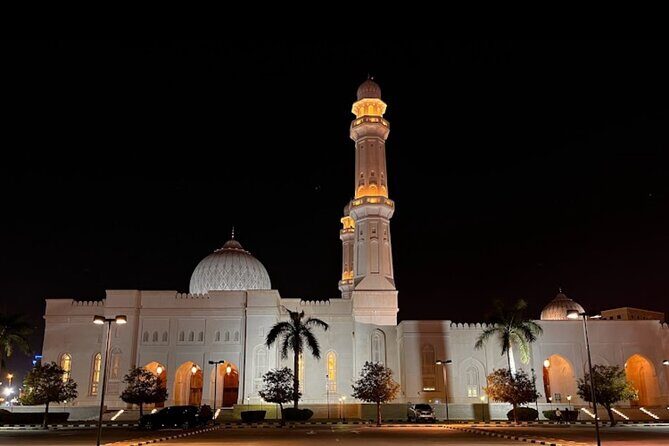
- Sultan Qaboos Mosque: large, modern Islamic architecture plus landscaped grounds for an easy stroll
- Old-city Haffa: you’ll see the palace gardens with coconut trees Salalah is known for
- Souq al Hafa style: open-air market streets, with shops lined on both sides
- Ain Razat spring year-round: water flows into a pool and falaj watercourse
- Central Market (since 1979): produce, spices, herbs, clothing, and handicrafts in one place
- Private tour + pickup: your group stays together with a guide who tells the story of the places
A half-day Salalah city tour that actually feels like Salalah
A good city tour should do two things: save you time, and help you notice details. This one keeps the route tight in Salalah, with a start time of 9:30 am and about 4 hours 30 minutes on the clock. It’s private, so you’re not squeezed into someone else’s pace, and pickup is offered, which is a big deal in a place where you’d rather not play taxi roulette.
Price is $60 per person. For that, you’re getting a guide-led morning, bottled water included, and a sequence of sights where you can focus on seeing rather than budgeting for separate entrances. If you want a straightforward way to experience Salalah’s mix of architecture, markets, and nature, this format hits the mark.
You can also read our reviews of more city tours in Salalah

Sultan Qaboos Mosque: the Dhofar showpiece you can enjoy at an easy pace
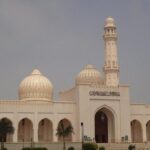
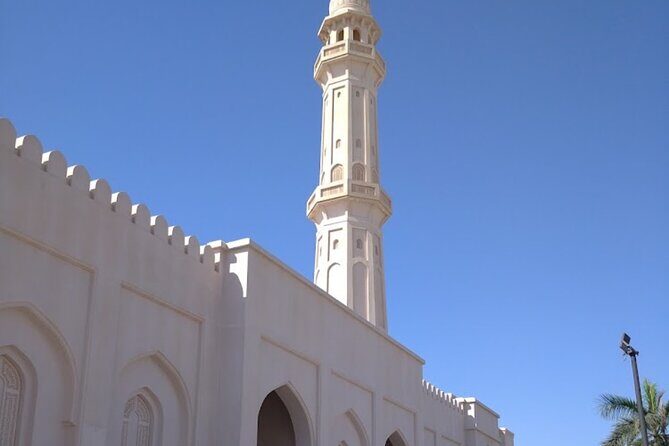
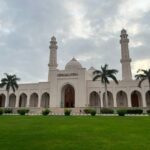
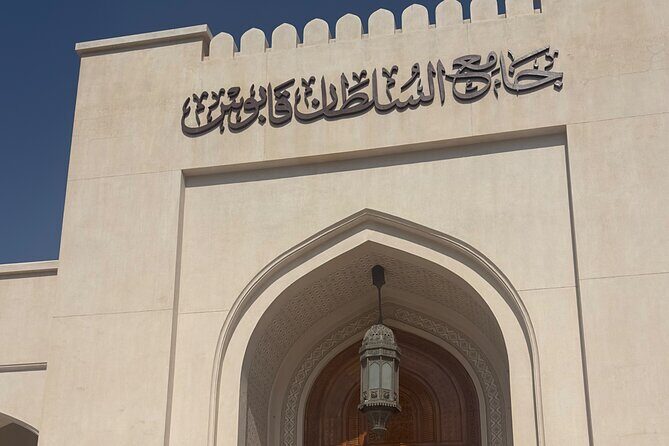
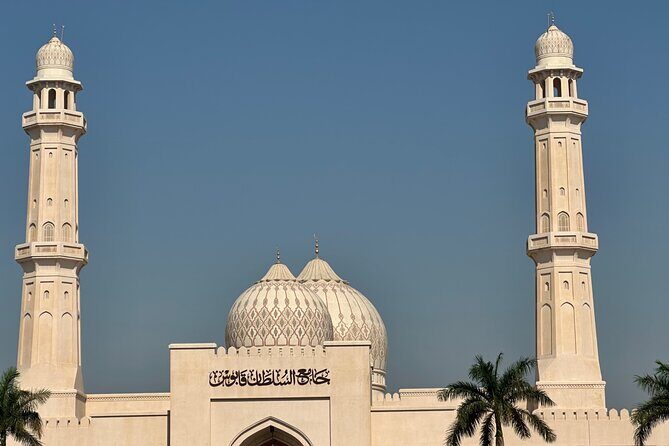
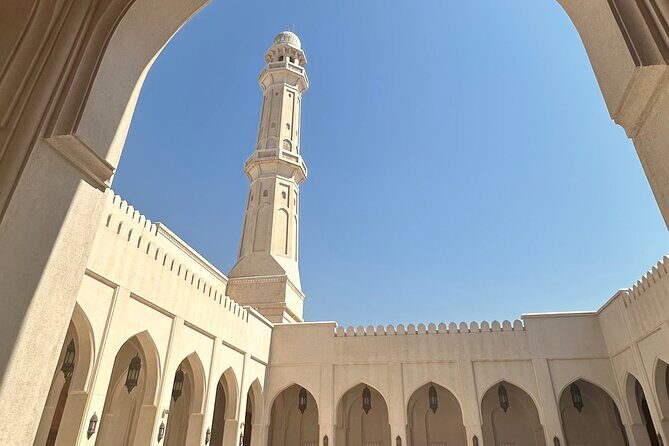
The Sultan Qaboos Mosque is a highlight for a reason: it’s the largest mosque in the Dhofar Governorate. Even from the outside, you get a strong sense of scale, thanks to the grand central dome and two tall minarets. The design blends modern touches with Islamic architecture, which makes it feel current instead of stuck in the past.
What I like for real-world sightseeing is that you’re not rushed through a single photo spot. The landscaped grounds around the mosque create a calmer buffer between the city and the big building, so you can slow down, take in details, and reset before the rest of the day. You’ll spend about 1 hour here, which is enough time to look closely without feeling like you’re on a conveyor belt.
Tip: If you care about photos, aim for the time when light is still soft. A morning visit usually helps.
Al Hosn Palace in Haffa: exterior views, clock tower details, and coconut gardens
From the mosque, the route heads into Salalah’s old-city section in the Haffa District. Al Hosn Palace is a royal palace, and the practical note is simple: it’s not open to the public, so you can only admire what’s outside. That can sound limiting, but the exterior is worth it.
Look for the grand entrance, the clock tower, and the high walls that give the complex a fortress-like feel. Then shift your attention to the gardens. The gardens include coconut trees, and that’s a big clue that Salalah’s climate and growing conditions shape what you see. From outside, you can also make out the tops of domes and minarets, which helps you understand the palace as more than just walls.
Expect about 30 minutes. That time is perfect for a quiet circuit: look once for overall structure, then again for smaller details.
Souq al Hafa: open-air market streets and straightforward local shopping
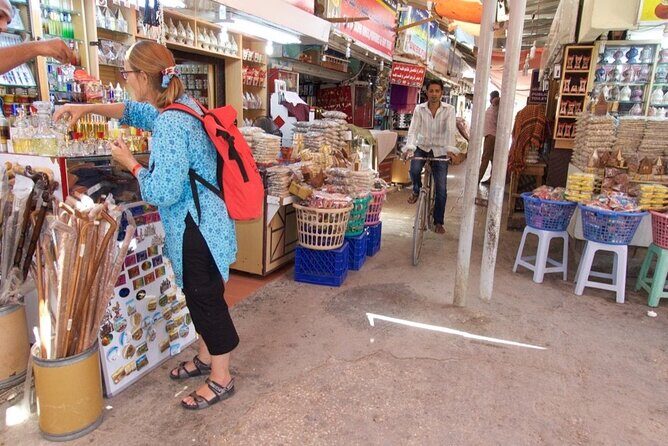
Next comes Souq Shati Al Hafa, also known as Souq al Hafa or Al Husn Souq. One reason this market works well on a half-day plan is the layout. It’s open-air, unlike some traditional souqs that are all narrow, covered alleys. Shops line both sides of the street, so you can walk without feeling boxed in.
This is where Salalah’s daily commerce shows up. You get the sights and smells of local retail: goods displayed along the walkway, vendor calls, and the everyday energy of people trading what they need. It’s also a good place to pick up small, useful souvenirs if you like buying things that feel tied to place rather than mass-made.
Plan on about 1 hour. That gives you time to browse, ask questions, and move on without turning the day into a shopping marathon.
Ain Razat: a year-round spring, pool views, and why Khareef changes everything
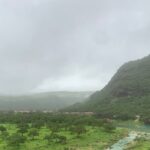
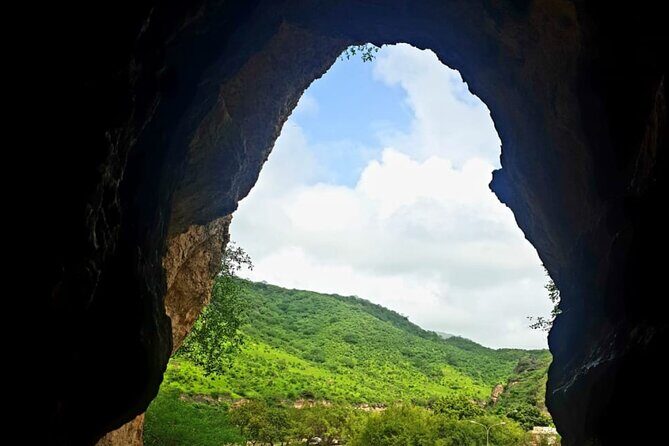
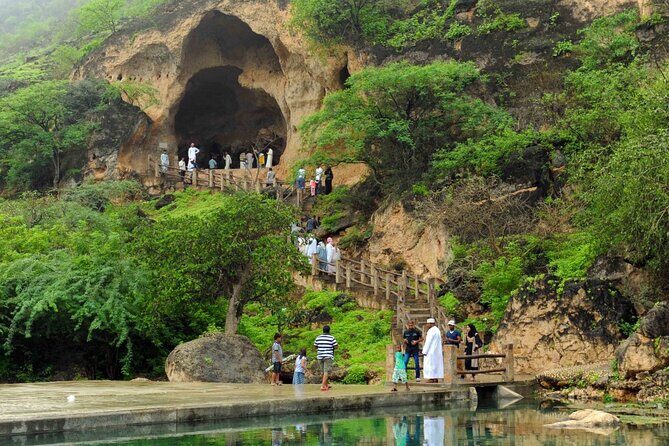
After city sights, you get a nature break at Ain Razat, a popular spring outside Salalah. This spring is perennial, meaning the water runs year-round. That matters because seasonal stops can disappoint when water levels drop. Here, you’re more likely to get the real thing.
The water doesn’t just sit there. It flows into a long pool and then into a falaj (a watercourse) that travels for several kilometers. Falaj systems are one of those local details that make Oman feel engineered and intentional, not accidental.
The greenery around the spring is the mood-booster. People come here for picnics and relaxing outdoors, and it’s the kind of place where you can understand why the area gets special attention during Khareef season (Oman’s monsoon). During Khareef, the flow is described as heaviest, so if your timing lines up with that season, the spring can feel even more impressive.
Expect about 1 hour here. It’s long enough for a calm walk and a breather, not so long that it drags.
Practical note: This is still outdoors, so bring water and wear shoes that handle uneven ground.


Salalah Central Market: spices, herbs, produce, and hands-on souvenir hunting
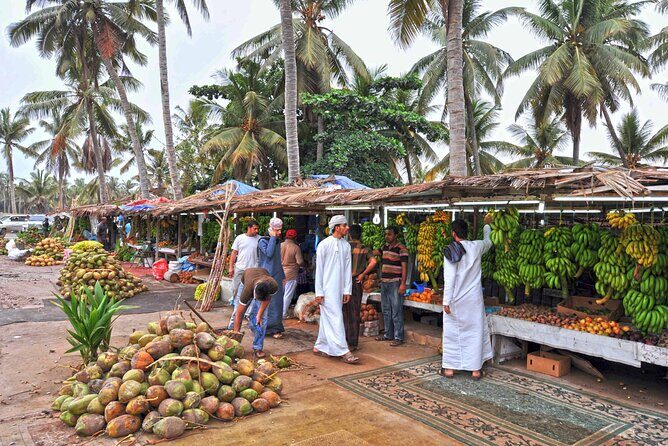
To wrap the city side, you end at Salalah Central Market, established in 1979. If you want a market that covers a lot of categories in one stop, this is it. You’ll find fresh produce, spices and herbs, traditional Arabian clothing, and handicrafts.
The atmosphere is sensory in a good way: vendor calls, aromas from incense and spices, and lots of color from merchandise. It’s the kind of place where bargaining culture feels normal, not staged. Even if you don’t plan to buy much, the market helps you understand what locals actually look for.
You’ll have about 1 hour. Use that time smart:
- Browse first without committing.
- Ask what something is used for if you’re unsure.
- Buy later if it still feels right.
Price, timing, and private-tour logic that makes sense
Let’s talk value in plain terms. $60 per person sounds simple, but what you really get is fewer moving parts. With pickup offered and a private format, you’re not spending your morning coordinating transport between mosque, old-city sights, and the spring. That alone can save time and stress.
Also, the sights on this route are set up so you are not constantly wondering about paid entrances. The information provided for the stops points to no ticket payments required for these destinations, so you can budget the tour price and then just enjoy the day. Bottled water is included, which sounds small until you’re already walking.
Timing helps too. Starting at 9:30 am is usually a sweet spot in warm climates: you get cooler air earlier, and you’re not stuck in the midday heat for the entire 4.5 hours.
One more detail I appreciate: this is a mobile-ticket tour with confirmation received at booking. That removes the guessing game that ruins good tours. You show up with your ticket and move.
What the guide quality looks like in real life
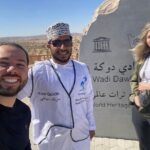
A standout theme from the guidance style for this tour is storytelling. The guide name Mohammed comes up specifically, and the descriptions around him are consistent: he’s praised for being very prepared, for sharing the meaning behind what you’re seeing, and for bringing local context into the conversation. There’s also mention that he can speak Italian, which is a nice perk if that’s your comfort language.
For you, the practical takeaway is simple. When a guide can explain architecture at the mosque, the purpose of a palace exterior, and the logic of water at Ain Razat, your photos come out better and your brain keeps more of the day. It’s not just sightseeing. It’s getting bearings.
Who this Salalah city tour fits best
This works best if you want a structured half-day that hits both city and nature. It’s ideal for:
- First-time visitors who want the main Salalah highlights without driving
- People who like walking but not long hikes
- Couples or small groups that want a private pace
- Travelers who prefer a guide who can add context, not just point
It might be less ideal if you strongly prefer palace interiors and museum-style stops, since Al Hosn Palace is exterior-only. It’s also not a great fit if you dislike outdoor time, because mosque grounds, souqs, and the spring all take place outside.
Should you book this Salalah City tour with Ciao Salalah?
If your goal is a smooth, morning-length introduction to Salalah, I’d book it. For $60 per person, you get pickup, a private group, bottled water, and a route that balances architecture, markets, and a real nature stop at Ain Razat. You also avoid the annoyance of stacking paid admissions on top of sightseeing.
Book it especially if you want your guide to explain what you’re seeing, including the bigger story behind sites like the Sultan Qaboos Mosque and the old-city Haffa area. And if you’re traveling with people who get impatient with vague tours, a tight 4.5-hour plan usually keeps everyone on the same page.
If you tell me your travel month (Khareef season or another time), I can help you decide how much to prioritize Ain Razat for water-flow impact and what kind of timing to aim for.
FAQ
What does the Salalah City tour cost?
The tour costs $60.00 per person.
How long is the tour?
It runs for about 4 hours 30 minutes.
Does the tour include pickup?
Yes, pickup is offered.
What time does the tour start?
The start time is 9:30 am.
Is this a private tour?
Yes. Only your group will participate, so it’s a private tour/activity.
Do I need to buy tickets at the stops?
The provided details indicate there is no ticket payment needed for these destinations, so you should not face additional entrance costs for the listed stops.
Is bottled water included?
Yes, bottled water is included.
Will I get a mobile ticket?
Yes, the tour offers a mobile ticket.
Is free cancellation available?
Yes, free cancellation is available. You can cancel up to 24 hours in advance for a full refund.
What if I want to participate but I’m not sure I fit the group?
The tour states that most travelers can participate, and it’s rated as suitable for a wide range of visitors.