REVIEW · MUSCAT
Private Muscat City Tour – Full Day
Book on Viator →Operated by Get Your Omani Guide · Bookable on Viator
Muscat’s sights come fast on this full day loop. In about 8 hours, you’ll see major landmarks, ride through key neighborhoods, and learn the stories behind Muscat’s modern identity and older roots with an English-speaking guide.
I especially like the stop at the Sultan Qaboos Grand Mosque, highlighted by that 21-ton, one-piece handmade carpet. And I love how Mutrah Souq gives you a real sense of daily life, not just a photo moment.
One thing to plan for: lunch isn’t included, and the day is packed, so you’ll want to eat before you start or budget time to grab something after.
In This Review
- Key highlights you’ll actually feel
- How the 8-hour Muscat loop fits a lot of landmarks
- Sultan Qaboos Grand Mosque: the 21-ton carpet fact you’ll remember
- Royal Opera House area: a culture stop from the window and the drive
- Bait Al Zubair museum: weapons, khanjar, and an outdoor village/souk setup
- Al Qurum beach photo stop: good views, short time, busy surroundings
- Mutrah Souq: souvenirs in a market with 200 years of momentum
- Al Alam Palace and the Old Muscat harbor forts: Portuguese dates and Omani control
- Al Alam Palace (Palace of the Flag)
- Al Jalali Fort (Ash Sharqiya Fort)
- Mirani Fort
- Price and included entrances: what your money buys
- Who should book this Muscat city tour
- A quick note on guides and what “helpful” looks like
- Book it or pass: my decision guide
- FAQ
- How long is the Private Muscat City Tour?
- What time does the tour start?
- Is pickup and drop-off included?
- What vehicle do you use?
- Are entrance fees included?
- Is lunch included?
- Is this a private tour?
- Do you get water during the tour?
- Is free cancellation available?
- Is the tour weather dependent?
Key highlights you’ll actually feel
- Pickup + private pacing: Pickup and drop-off in the Muscat area, and it’s truly private for your group.
- Grand Mosque scale: A one-piece handmade Iranian carpet weighing 21 tons and designed to hold up to 20,000 worshippers.
- Old Muscat harbor forts: Portuguese-era forts at the waterline, tied to Ottoman sacks, Omani recapture, and later conflicts.
- Mutrah’s 200-year-old market: A long-running souq experience where you can shop for souvenirs.
- Museum with outdoor village + souk: Bait Al Zubair pairs weapons, costumes, and household items with a full-scale Omani village outside.
- Al Qurum beach is short: You get a photo stop in a busy area near shopping and restaurants.
How the 8-hour Muscat loop fits a lot of landmarks
This is built for a first-time (or short-stay) Muscat visitor who wants a strong hit of the city without spending your day figuring out transport. You start around 8:30am, and the total duration is about 8 hours, with travel time included.
The rhythm is simple: drive to the next area, spend focused time at each stop, then move on. Because it’s private, you don’t get the stop-and-go feeling that often comes with larger group tours. You’ll still want to keep expectations realistic: this is a lot of places in one day, so you’re touring, not lingering.
Also, your guide is English-speaking and you get water during the tour. That helps a lot in a full-day schedule.
You can also read our reviews of more city tours in Muscat


Sultan Qaboos Grand Mosque: the 21-ton carpet fact you’ll remember
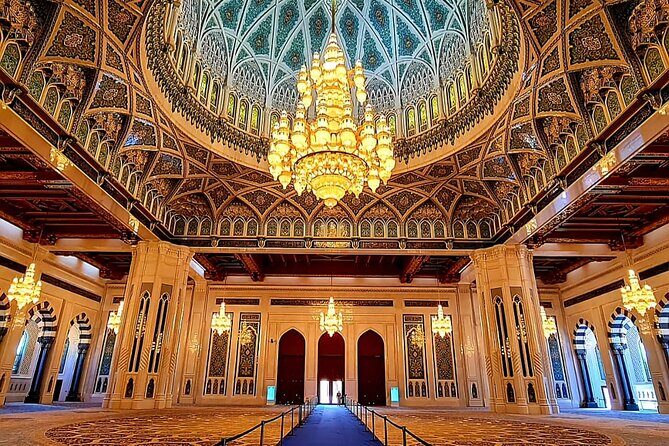
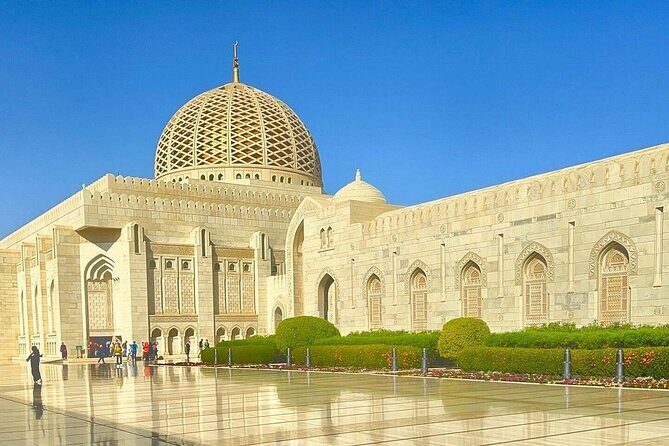
Your day kicks off at the Sultan Qaboos Grand Mosque, one of Muscat’s most impressive sights. The highlights here aren’t subtle. You’re talking about a carpet described as one of the biggest one-piece handmade Iranian carpets in the world, with a weight of 21 tons.
The tour notes the mosque can accommodate up to 20,000 worshippers, which makes the scale feel real, not just decorative. And the visit includes admission ticket access listed as free, so you’re not juggling extra payment before you even get your bearings.
What I like about this start: it sets the tone for the city. You’re seeing a place that anchors modern Oman with a sense of tradition and craftsmanship. It also frames the rest of the day—after the mosque, the forts and palaces don’t feel random. They feel like parts of one long story.
Practical downside: it’s a full-day schedule, so this is one of the stops where you’ll benefit from paying attention right away. If you’re tired or rushed, you’ll miss the point of what you’re seeing.
Royal Opera House area: a culture stop from the window and the drive
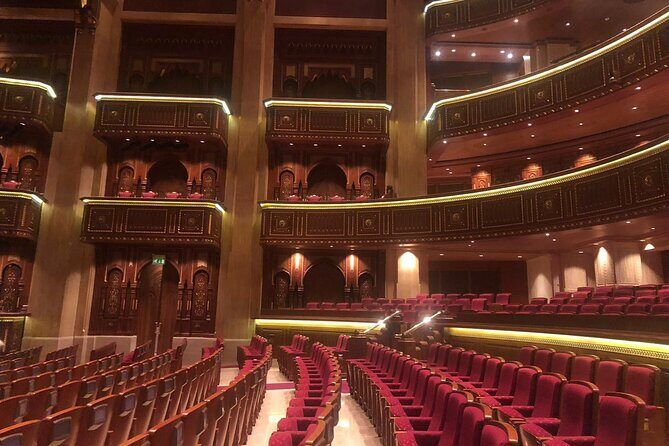
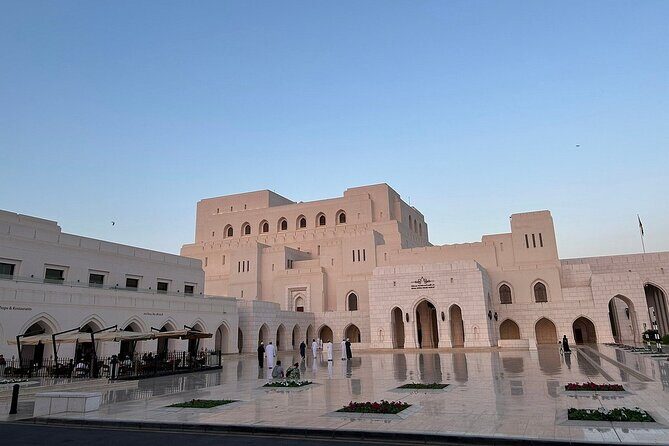
Next up is time around the Royal Opera House area. The schedule calls for about 45 minutes, and it’s described as a drive-by/area viewing rather than a long sit-down visit.
The details you’ll hear are about the role the Opera House plays in the Sultanate’s arts and cultural direction—framed as a center for global cultural engagement. That’s useful context, especially if you’re wondering how a city with deep history also supports modern cultural institutions.
Important money note: the admission ticket for the Royal Opera House is listed as not included. So you should assume this is more about seeing the area and learning the idea, not paying to go inside as part of the base tour.
Bait Al Zubair museum: weapons, khanjar, and an outdoor village/souk setup
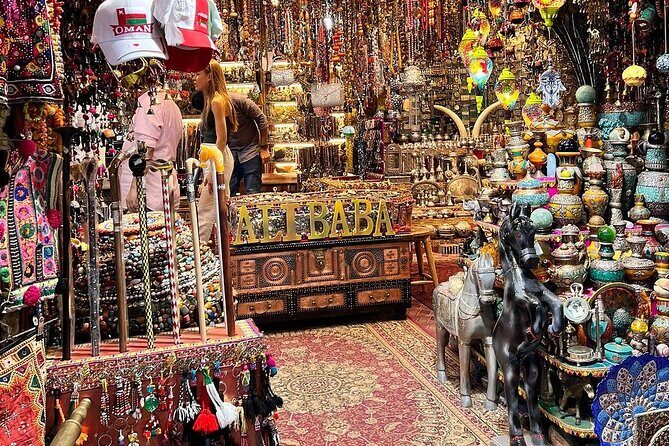
If you want something a bit more hands-on than palaces and forts, Bait Al Zubair is the mid-morning pivot point. It’s a museum on Al Saidiya Street in Old Muscat.
What makes it interesting is the variety. Inside, you’ll find an extensive collection of ancient weapons, including the khanjar (the traditional curved dagger), plus household equipment and costumes. That mix gives you more than just royal history. It hints at everyday life—what people wore, what they used, and what they carried.
Then comes the outdoor piece: outside the museum, the tour describes a full-scale Omani village and souk. So even if you’re not spending all your time reading displays, you still get a strong sense of Old Muscat ambiance.
Time-wise, you get about 1 hour here.
One cost detail to double-check: the stop notes mention admission as not included, but the tour inclusions list Bait Al Zubair entrance fees as included. Since those two lines conflict, I’d treat this as a quick confirmation item when you book—either way, you’ll want clarity on whether the museum ticket is handled for you.
Al Qurum beach photo stop: good views, short time, busy surroundings
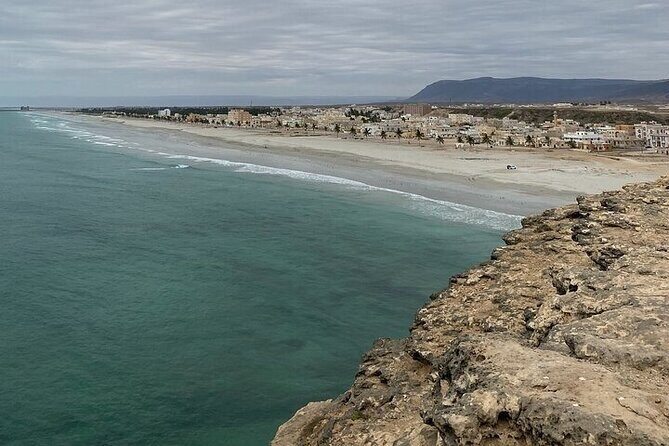
Not every stop is meant to be a full experience. The tour includes a photo stop at a beach in the Al Qurum area. The description is clear: it’s one of Muscat’s busier beaches because it’s near shopping centers and restaurants, and you’re there mainly for the view.
You get time to take photos and enjoy the scenery, but don’t expect a long hangout. This is a break in the route, not a destination you’ll explore on foot.
If you prefer quieter places, keep expectations realistic. The value here is convenience and the chance to see a different side of Muscat—sea-front city life—before you go back into Old Muscat history.
You can also read our reviews of more private tours in Muscat





Mutrah Souq: souvenirs in a market with 200 years of momentum
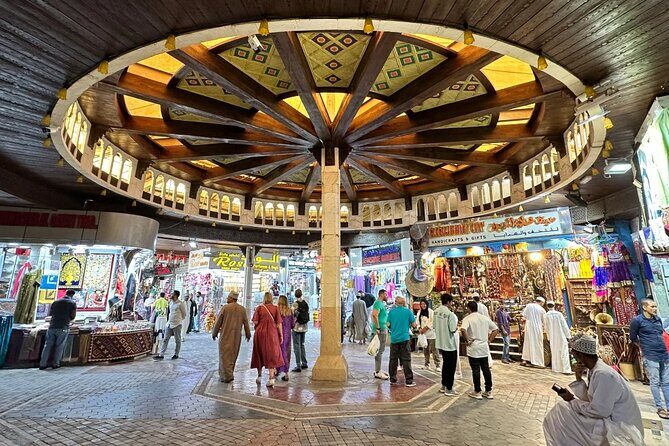
Then you hit Mutrah Souq, and this is where the tour shifts from monuments to marketplaces. It’s described as one of the oldest marketplaces in Oman, dating back about two hundred years.
You’ll spend about 1 hour here, and the practical payoff is straightforward: this is where you can browse for souvenirs. Since it’s a souq, expect an active atmosphere and lots of visual stimulation. If you want something cultural and practical—like gifts, small keepsakes, or locally themed items—this is the stop that fits the bill.
I also like that it’s timed after the museum and beach. By then, you’ve seen the grandeur and you’ve seen the culture indoors. Now you get the real-life commercial heartbeat of the city.
Al Alam Palace and the Old Muscat harbor forts: Portuguese dates and Omani control
The afternoon leans heavily into Old Muscat, with ceremonial sites and forts that look out over the harbor.
Al Alam Palace (Palace of the Flag)
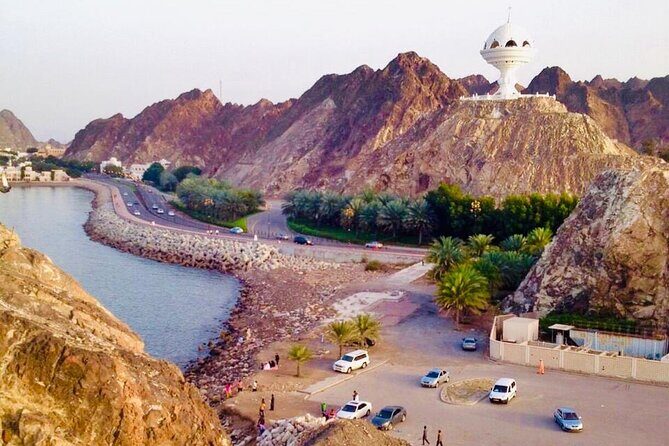
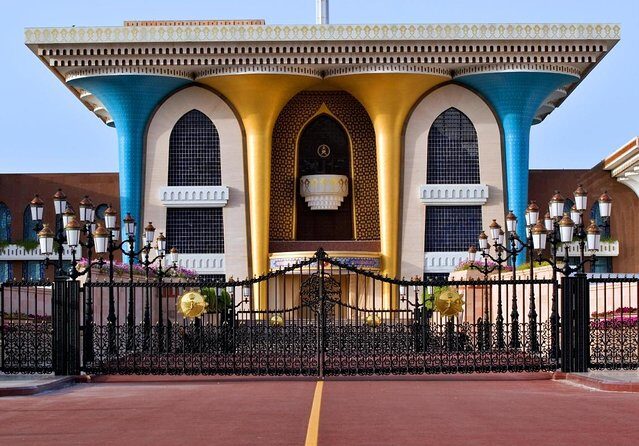
You’ll visit Al Alam Palace, known as the Palace of the Flag. The tour frames it as a ceremonial palace used by Sultan Qaboos bin Said Al Said.
It’s described as one of six sultanic residences, with a history of over 200 years. The palace was built under the watch of Imam Sultan bin Ahmed, the 7th direct grandfather of Sultan Qaboos.
Time here is about 30 minutes, and it’s one of those stops where the context matters. When you understand the ceremonial role and the family lineage, the palace stops feeling like a background building and starts feeling like a symbol.
Al Jalali Fort (Ash Sharqiya Fort)
Next is Al Jalali Fort, also called Ash Sharqiya Fort, in the harbor area of Old Muscat. This is where the historical story gets dramatic.
The tour notes the fort was built by the Portuguese in the 1580s, under Philip I of Portugal, meant to protect the harbor after Muscat had been sacked twice by Ottoman forces. Later, it fell to Omani forces in 1650.
Then it gets more tangled during civil wars between 1718 and 1747, when the fort was twice captured by Persians invited to assist rival imams. Eventually, it was extensively rebuilt.
Your visit is short—about 15 minutes—so it’s not about reading every stone. It’s about getting the timeline and seeing the location that shaped those events.
Mirani Fort
Right after, you’ll also see Mirani Fort. Like Jalali, it’s Portuguese in origin, also described as built in the harbor of Old Muscat.
With two forts close together, you get a sense of how the Portuguese viewed Muscat’s harbor as something worth fortifying—and how long the place stayed strategically important.
These harbor stops are a big reason this tour feels like more than a checklist. Forts aren’t just scenery here; they’re the visible proof of centuries of shifting control.
Price and included entrances: what your money buys

At $149.40 per person, you’re paying for more than sightseeing stops. You’re paying for a guide, transportation, and key site access—plus the convenience of pickup/drop-off.
What’s included:
- Water during the tour
- English-speaking Omani tour guide
- Pick-up and drop-off to hotel/port/airport in the Muscat area
- 4WD vehicle / comfortable
- Salon car for 2 pax
- Royal Entrance fees
- Bait Al Zubair entrance fees
What’s not included:
- Lunch
- Royal Opera House admission ticket (explicitly listed as not included)
So the value equation is pretty reasonable if you want structure. Many of the major stops are listed with free admission in the itinerary notes: the mosque, Mutrah Souq, Al Alam Palace, and both forts. The tour still includes the “paid” museum piece and handles important entry-related logistics for you.
The biggest practical cost you should factor in is lunch. The second is any choice you make related to the Opera House if you decide you want to go in and the ticket isn’t covered.
Who should book this Muscat city tour
This private full-day tour fits best if:
- You’re short on time and want a clean route through mosque, souq, palace, and forts.
- You care more about learning context than collecting just Instagram spots.
- You want private pacing (only your group participates) and an English-speaking guide.
- You like the idea of Old Muscat harbor history in one afternoon chunk.
It’s also a good confidence-builder tour. If you’re new to the city, having a guide handle navigation and timing helps you feel steadier once you start exploring on your own.
If you’re the type who hates tight schedules and needs lots of free time, this might feel like a lot. It’s a “see a lot” day, not a “slow travel” day.
A quick note on guides and what “helpful” looks like
One review specifically praised a guide named Majid I for being kind and helpful. That matches what you want on a day like this: clear explanations, smooth transitions, and the confidence to answer questions as you move through different parts of the city.
You’ll likely notice this most around the historical stops, where the details matter. The forts and palace stories land better when the guide can explain the why, not just the what.
Book it or pass: my decision guide
Book this tour if you want a smart, structured full-day route that covers Muscat’s key identity markers: a major mosque, Old Muscat forts, a palace, and Mutrah Souq. The inclusion of transport, an English-speaking guide, and multiple entrance-related items makes the price feel more practical than paying for everything separately.
Skip it or adjust expectations if:
- You want a long, relaxed lunch break (since lunch isn’t included).
- You’re hoping the Opera House stop is a full ticketed experience (admission isn’t included in the tour notes).
- You prefer quiet beaches over photo stops in busier areas.
FAQ
How long is the Private Muscat City Tour?
The tour duration is about 8 hours (approx.).
What time does the tour start?
The start time is 8:30am.
Is pickup and drop-off included?
Yes. Pickup and drop-off to the hotel/port/airport is included for the Muscat area.
What vehicle do you use?
The tour uses a 4WD vehicle / comfortable transportation, and there is also a salon car for 2 pax.
Are entrance fees included?
Royal entrance fees are included, and Bait Al Zubair entrance fees are listed as included. Admission for the Royal Opera House is not included.
Is lunch included?
No. Lunch is not included.
Is this a private tour?
Yes. It’s a private tour/activity, so only your group participates.
Do you get water during the tour?
Yes. Water is included during the tour.
Is free cancellation available?
Yes. You can cancel up to 24 hours in advance for a full refund.
Is the tour weather dependent?
Yes. This experience requires good weather, and if it’s canceled due to poor weather, you’ll be offered a different date or a full refund.