REVIEW · MUSCAT
Muscat Tour Half Day
Book on Viator →Operated by Choolo Tour By Nasser · Bookable on Viator
Half a day can still feel complete. This tour strings together the big architectural stops and a real local market so you get context, not just photos. I like the way it moves at a practical pace: you see major landmarks, then you get time to wander Mutrah Souq and shop without feeling rushed.
Two things I especially like: the Sultan Qaboos Grand Mosque visit (with admission included) and the guided city framing that makes places like the Bait Al Zubair museum and the palace area easier to understand. One consideration: extra entrances are not included for some stops, and a couple of venues can be limited by opening timing (Al Alam Palace is only open twice a year).
In This Review
- Key highlights if you want the best bang for your $80
- Price and Logistics: what $80 buys (and what to budget extra)
- How the 4-hour schedule actually feels on the ground
- Stop 1: Sultan Qaboos Grand Mosque and the art of a perfect first impression
- Stop 2: Royal Opera House—modern Oman, not just monuments
- Stop 3: Mutrah Souq—shopping with atmosphere and enough time to enjoy it
- Stop 4: Bait Al Zubair—Omani heritage in a time-efficient format
- Stop 5: Al Alam Palace—free, but only if you catch the opening
- The guide makes the difference: Said keeps the day moving (and meaningful)
- What to do if you’re short on time (but want the real Muscat feel)
- Simple planning tips before you go
- Should you book Muscat Tour Half Day?
- FAQ
- How long is the Muscat Tour Half Day?
- Is pickup included?
- What is the price per person?
- How big is the group?
- Is bottled water included?
- Are tickets included for every stop?
- What ticket format will I use?
- Can I cancel for a full refund?
- What happens if the weather is bad?
Key highlights if you want the best bang for your $80
- Compact 4-hour route covering major Muscat landmarks plus market time
- Pickup offered and a small group size (max 12) for less waiting around
- Sultan Qaboos Grand Mosque admission included so you’re not juggling add-on fees
- Mutrah Souq hour for real wandering and shopping in narrow lanes
- Guide-led storytelling with a real name behind it (Said / Said Alsadi)
Price and Logistics: what $80 buys (and what to budget extra)
For $80 per person, you’re paying for a guided half-day circuit built around top Muscat stops, with a couple of helpful inclusions. You get pickup (so you’re not figuring out timing and parking), a bottle of bottled water, and the entry ticket for the Sultan Qaboos Grand Mosque is included.
What you’ll likely need to budget for are the add-on admissions. The Royal Opera House and Bait Al Zubair are marked as admission not included, and Al Alam Palace is free when it’s open. So think of the price as covering the structure of the day and the guide time, not necessarily every ticketed entry.
Group size matters here. With a maximum of 12 people, the tour doesn’t feel like a long cattle line. That tends to make it easier to ask questions—especially when your guide is Said (Said Alsadi is specifically mentioned in the feedback).
You can also read our reviews of more tours and experiences in Muscat.



How the 4-hour schedule actually feels on the ground
This is an approximate 4-hour tour with set time blocks per stop. That’s the point. You’ll get a guided overview first, then you’ll have just enough breathing room at the market to look, compare, and buy.
The trade-off is simple: there isn’t time for long museum-style wandering. Each site is designed for seeing key features and understanding the why behind them. If you’re the type who wants to linger for hours inside every building, you might feel a little pressure. If you’re the type who wants to cover the highlights efficiently, this timing is a win.
Also note the tour runs best with workable weather. The experience is described as requiring good weather, and if it’s canceled for poor weather, you’ll be offered a different date or a full refund.
Stop 1: Sultan Qaboos Grand Mosque and the art of a perfect first impression
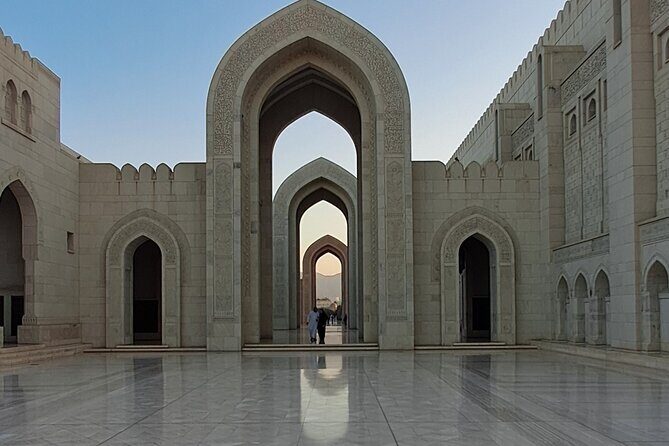
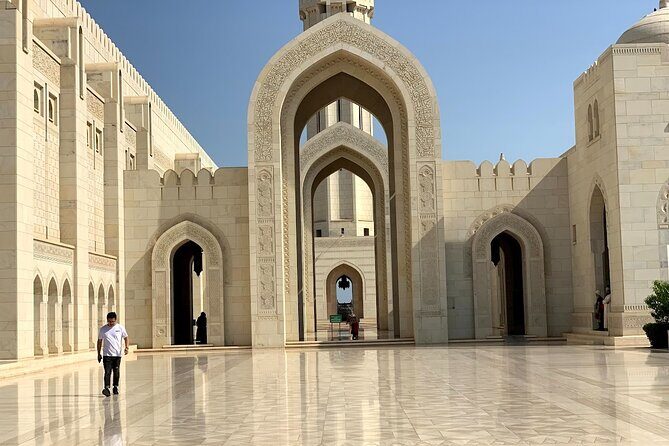
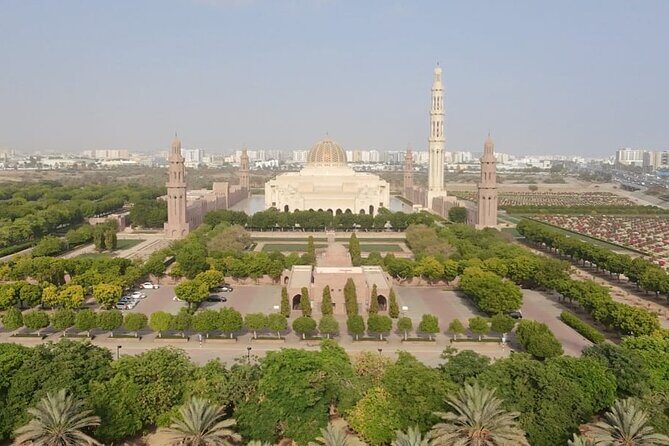
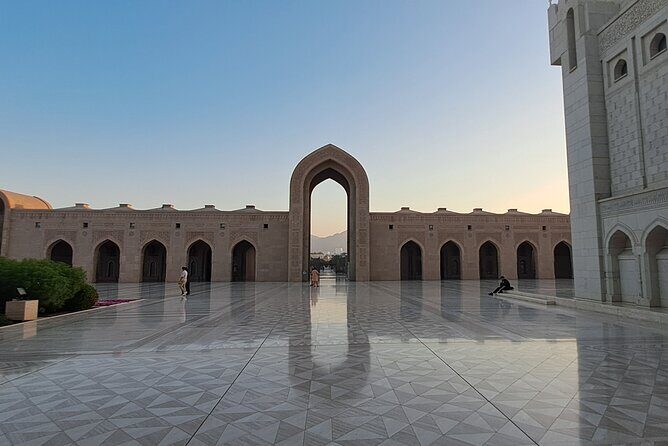
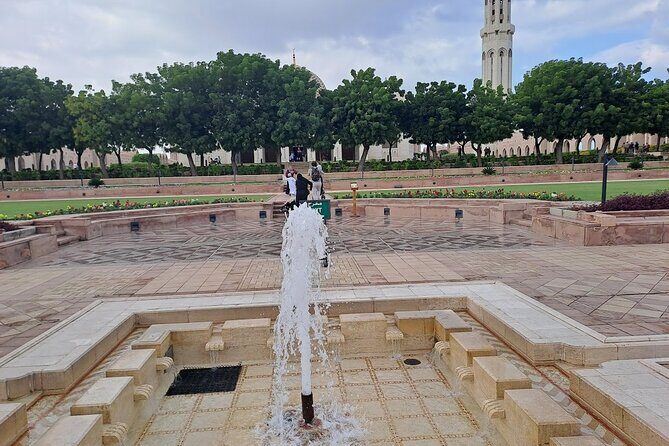
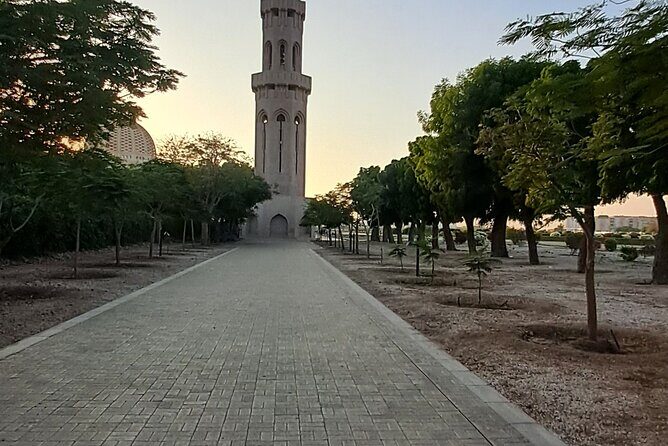
You start at the Sultan Qaboos Grand Mosque, and that sets the tone fast. It’s described as the largest mosque in Oman, and the numbers are striking: the courtyard can accommodate up to 20,000 worshippers. Even if you’re not there for religious services, it’s still one of the most powerful “place first” introductions you can get in Muscat.
It’s also built in classical Islamic style with three main entrances leading into a spacious courtyard. This matters for your visit because you’re not just staring at one façade—you’re seeing the approach, the layout, and the scale.
The time here is about 1 hour, and the admission ticket is included. So you avoid the awkward end-of-tour scramble of collecting last-minute payments just to get into the main highlight.
Practical consideration: because it’s a mosque, you may encounter entry rules that are stricter than at museums. The tour structure helps, but you should still plan for slower entry moments if security checks happen.
Stop 2: Royal Opera House—modern Oman, not just monuments
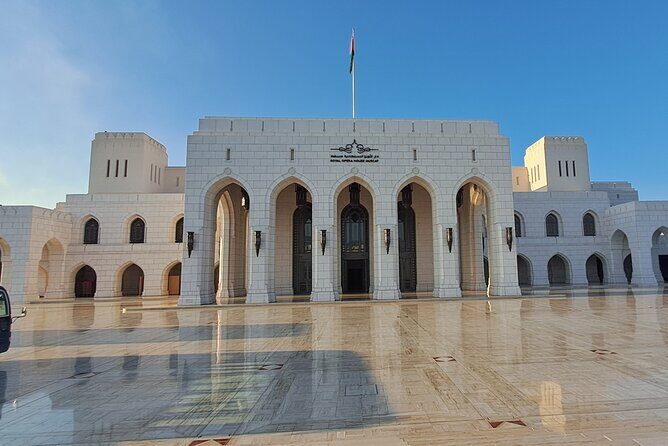
After the mosque’s monumental scale, you jump into a very different Muscat mood: the Royal Opera House in the Shati Al Qurum district. It’s described as state-of-the-art, and the exterior gets attention for its detailed patterns. Inside, the Grand Hall seats 1,100.
This stop is a good “contrast” moment in the itinerary. It nudges you beyond the idea that Muscat is only about old city walls and heritage buildings. It shows the modern side—Oman investing in performance spaces where music, theatre, and cultural programming happen.
Timing is about 1 hour, but here’s the key catch: admission is not included. So if you’re planning your day around this building, budget for the entry ticket.
One more heads-up from the real-world experience: the schedule can shift, and it’s possible for this venue to close earlier than expected. Even so, the overall tour is designed to keep you moving through Muscat highlights without turning it into a lost afternoon. Still, if the Royal Opera House is a top priority for you, it’s smart to carry some flexibility.
Stop 3: Mutrah Souq—shopping with atmosphere and enough time to enjoy it
Then you hit one of the most rewarding parts of the half-day: Mutrah Souq. This is a historic market area, one of the largest and oldest souqs in the region. It’s known for narrow lanes, alleyways, and traditional buildings—so you’re not stuck in a single open plaza.
Your about 1-hour here is built for wandering. You can browse items from jewelry to spices to souvenirs, and you can also watch how locals use the space for everyday supplies and socializing. That local element is what makes the souq hour feel more than just a tourist shopping stop.
Also, Mutrah Souq is listed as free for admission, so you don’t need to worry about extra entry charges for this part.
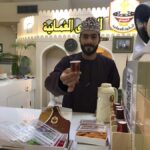
A nice bonus: the route often leaves space for a short food or coffee break around this area. There’s mention of coffee with helva and special tea during the souq time. Even if you don’t order that exact snack, you’ll at least have the chance to regroup and recharge before the heritage stops.

Stop 4: Bait Al Zubair—Omani heritage in a time-efficient format
Next is Bait Al Zubair, the National Museum of Oman, focused on traditional Omani heritage and culture. If you’re the kind of visitor who likes to connect what you see to a bigger story, this is where the tour becomes more than a photo run.
The museum includes artifacts that explain the story of Oman’s ancient civilizations and how culture evolved. It also has a library and audio-visual materials, plus modern exhibits covering history, art, architecture, and lifestyles.
What makes this stop work inside a tight half-day schedule is the way it balances heritage buildings and museum displays. You’re not just looking at objects behind glass—you’re also seeing traditional spaces connected to the idea of daily life and cultural practice.
Time here is shorter: about 30 minutes, and admission is not included. That shorter window means you’ll need to be strategic. Focus on the parts that catch your interest first rather than trying to read every label end-to-end.
The museum is a strong choice if you want one stop that gives context to the other places you’ve already seen—especially after the mosque and before the palace area.
Stop 5: Al Alam Palace—free, but only if you catch the opening
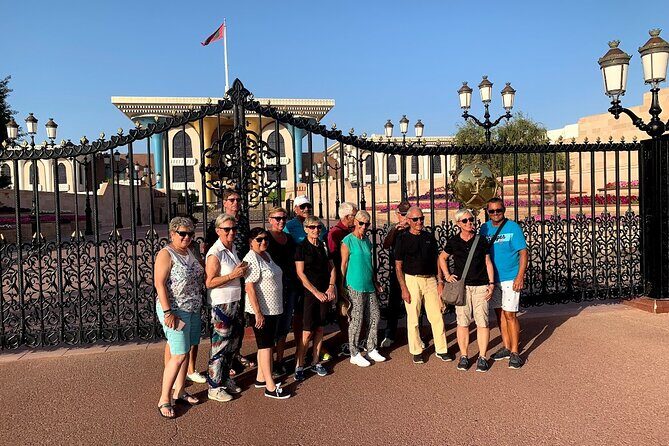
Al Alam Palace is one of those places that sounds simple on paper and needs a timing reality check. It’s the ceremonial palace area of the Sultan of Oman, and it’s made up of two parts: the Al-Saidiyah Palace (residential wing) and the Al-Sharifiyah Palace (meeting and receiving hall plus advisers’ and courtiers’ offices).
There’s also mention of a large gardened area and a traditional majlis. That’s the kind of detail that makes the palace area feel more ceremonial and grounded in local tradition, not just political symbolism.
Here’s the important practical detail: the palace complex is only open to the public twice a year, and tours are conducted on those days only—with reservations required. Even though the tour lists this stop as free, it may not be accessible in the way you expect unless your date matches one of those open periods.
The time block is about 30 minutes. If the palace isn’t open, don’t panic; the tour plan is built to keep you seeing key Muscat highlights in a compact circuit.
The guide makes the difference: Said keeps the day moving (and meaningful)
A half-day tour lives and dies by its guide. In this case, the standout name is Said Alsadi (also referred to simply as Said or Mr Said). The feedback highlights him as friendly, helpful, and truly invested in making sure the day works for you.
What I like about this kind of guiding style is the balance. You get enough structure to understand what you’re looking at, but you also get enough freedom at the souq to act like a normal Muscat visitor. The most common reason this tour earns top ratings is that it stays productive without feeling mechanical.
Also, the group is small (max 12). That tends to make the guide’s attention feel more personal, especially if you have questions about what you’re seeing—mosque architecture, how heritage spaces are used, or what’s worth stopping for in the market lanes.
What to do if you’re short on time (but want the real Muscat feel)
This tour is a smart fit if:
- You have only a day or two in Muscat and want a fast overview that still includes the must-sees.
- You like guided context, not just wandering.
- You want a market stop that’s long enough to shop and reset.
It’s also ideal for first-timers who want to understand Muscat’s mix: religious landmarks, major civic architecture, heritage interpretation, and the everyday texture of a souq.
On the other hand, if you want to spend hours deep in museums or you hate structured time blocks, you might prefer a slower, more flexible plan. This one is about efficiency with good pacing, not unlimited linger-time.
Simple planning tips before you go
- Plan for extra admissions at the Opera House and Bait Al Zubair since those are marked not included.
- Keep your schedule flexible for opening timing, especially for Al Alam Palace (open only twice a year).
- Since you’re visiting a mosque, expect entry procedures to be different than a typical attraction. You might find it helps to arrive with a calm mindset and time in hand.
- If shopping is a priority, treat the Mutrah Souq hour as your main browsing window. That’s where you’ll get the time to actually move through lanes.
Should you book Muscat Tour Half Day?
If you want the highest-value use of a short stay in Muscat, I’d book it. The strongest case is the combination of major sights in a tight time window, a small group size, and a guide like Said Alsadi who keeps the day organized and friendly. The mosque inclusion is also a practical win since admission is already covered.
The only reason to hesitate is if you specifically need guaranteed access to venues where entry can be limited by timing—especially Al Alam Palace—and you’re not comfortable budgeting for admissions that aren’t included at the Opera House and museum.
FAQ
How long is the Muscat Tour Half Day?
It runs for about 4 hours.
Is pickup included?
Yes. Pickup is offered.
What is the price per person?
The price is $80.00 per person.
How big is the group?
The tour has a maximum of 12 travelers.
Is bottled water included?
Yes. Bottled water is included.
Are tickets included for every stop?
No. Sultan Qaboos Grand Mosque admission is included, while Royal Opera House and Bait Al Zubair admissions are not included. Mutrah Souq and Al Alam Palace are free when accessible.
What ticket format will I use?
You’ll receive a mobile ticket.
Can I cancel for a full refund?
Yes, you can cancel up to 24 hours in advance for a full refund.
What happens if the weather is bad?
The tour requires good weather. If it’s canceled due to poor weather, you’ll be offered a different date or a full refund.