REVIEW · SALALAH
Ultimate Tour – Salalah city highlights
Book on Viator →Operated by Amazing Salalah Tourism · Bookable on Viator
Salalah has a way of hooking you fast. This private half-day plan mixes classic Islamic architecture with market life and coastal nature, all with the freedom to set your own pace. I like that the day doesn’t feel like a checklist march; it’s structured, but you’re not locked into a rush.
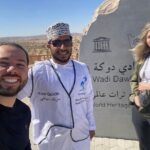
Two big wins: you get an English-speaking guide/driver (and for this tour, Hamed is a standout) who keeps things clear and even funny, and you’re finished in time to enjoy the rest of your day on your own. One thing to keep in mind is the mosque timing rules and weather dependence—if conditions aren’t good, your visit gets reshuffled or refunded.
In This Review
- Key Highlights That Make This Tour Worth Your Time
- A Smart Way to Start Salalah: 5–6 Hours, Then Freedom
- Pickup from Dhofar and How the Half-Day Route Stays Comfortable
- Sultan Qaboos Mosque: When Architecture Is the Main Event
- Central Market + Al-Husn Souq: Souvenirs with Real Purpose
- Al-Baleed Archaeological Site: The Frankincense Trail Story Gets Physical
- Halwa and Arabian Coffee Break: A Tiny Stop That Changes the Mood
- Dahariz Beach (Khor End): A Lagoon Stop That’s About More Than Photos
- Salalah City Viewpoint + Cave Walk: Short Legs, Big Views
- Price and Value: When $150 Makes Sense
- Who This Tour Fits Best (And Who Might Skip It)
- Should You Book It? My Decision Guide
- FAQ
- What sites are included in the Salalah city highlights tour?
- How long is the tour?
- Is pickup included, and where does it come from?
- Is this a private tour?
- Are there any visiting-time limits for the Sultan Qaboos Mosque?
- Is frankincense land museum open all weekend?
- What should I expect if the weather is bad?
Key Highlights That Make This Tour Worth Your Time
- A half-day highlights route with a real breather afterward: you’ll see plenty without burning the whole day
- Hamed’s guide style: history with humor, plus a pace that doesn’t wear you out
- Major Salalah stops in logical order: mosque and city views first, then markets, Al-Baleed, and the coast
- Sultan Qaboos Mosque details matter: chandeliers, garden setting, and prayer hall access rules
- Souqs with useful shopping targets: frankincense, incense (bukhoor), traditional jewelry, and khanjar
- Khor Dahariz bird-and-lagoon stop: a nature break in the middle of the city sights
A Smart Way to Start Salalah: 5–6 Hours, Then Freedom
This tour is built for people who want the highlights without spending your vacation trapped in a schedule. You’ll be out for about 5 to 6 hours, and then the rest of your day is yours to handle the way you like—extra time at the beach, a longer lunch, or just wandering.
The “private” part matters more than you might think. Your group is the only one riding in the air-conditioned vehicle with your guide, so you can ask questions, linger where something catches your eye, and skip what doesn’t. That’s the difference between a tour that feels like transport and one that feels like a curated day with choices.
You can also read our reviews of more city tours in Salalah

Pickup from Dhofar and How the Half-Day Route Stays Comfortable
You get pickup from the Dhofar region, which is a practical advantage if you’re not staying right in the thick of Salalah city. A guide/driver also handles the driving, which keeps the day focused on sights instead of navigating.
The vehicle is air-conditioned, and the route is designed around short-to-mid stops (often 20 to 60 minutes). That’s helpful in Salalah, where weather can shift and you’ll likely want frequent shade and water breaks. You’ll also have bottled water included, so you’re not stuck paying for essentials mid-day.
One more practical note: you’ll want to plan for modest dress. This isn’t just a “nice to have.” The tour requires dressing modestly, and women are asked to cover their hair for appropriate places of worship.
Sultan Qaboos Mosque: When Architecture Is the Main Event
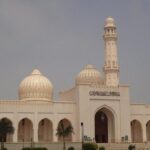
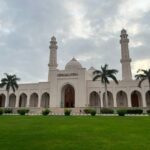
The Sultan Qaboos Mosque is the kind of place where you slow down without forcing it. Even before you go inside, the two minarets and dome colors create a strong visual impression, and the surrounding garden setting helps the whole scene feel balanced—not just monumental.
Inside, the focus shifts to craftsmanship. Expect details like chandeliers and a well-fitted carpet area made for prayer. You’re also visiting a mosque named after His Majesty the former Sultan of Oman, Qaboos bin Said, so there’s a clear connection between place and national identity.
Timing is the key practical challenge. Visiting hours are 8:00am to 11:00am, and after that, access is limited to outside the prayer hall. Also, this mosque spot is excluded on Friday tours, so if Fridays are your travel days, plan for a modified route.
Tip: if you’re taking photos, go slow. The best shots usually come from letting the guide explain what you’re looking at—then you can frame it instead of snapping while walking past.
Central Market + Al-Husn Souq: Souvenirs with Real Purpose
After the mosque’s calm, the markets bring Salalah’s everyday rhythm back fast. The Salalah Central Market dates to 1979 and was built to answer commercial needs for Salalah and nearby areas. That means it’s not just tourist decorative shopping—it’s a working market where local life shows.
What I like most here is the mix of items that connect to Dhofar’s identity:
- frankincense and incense (bukhoor)
- jewelry and bells
- the traditional Omani dagger (khanjar)
- local crafts and traditional dress
You’ll also find a good practical payoff: you can stop for a casual outdoor meal in the market area. Think fresh grilled fish and other seafood options. Even if you don’t plan to eat on every stop, having that choice nearby keeps the day flexible.
Then you move to Al-Husn Souq (Al Hafah Souq), set about 3 kilometers from the city and surrounded by coconut trees. This is a great shift in atmosphere—less “city center,” more “slow stroll.” Here you’ll still find gum and incense, plus traditional textiles and jewelry.
Shopping tip: if you’re interested in incense and frankincense, ask the guide what to look for and how people typically use it. The tour context helps you shop smarter, not just louder.
Al-Baleed Archaeological Site: The Frankincense Trail Story Gets Physical
One of the strongest reasons to take this tour is Al-Baleed, a site tied directly to the Frankincense Trail and maritime history. The area traces back to periods before 2000 BC, and research suggests the city’s prosperity reached into the Iron Age. UNESCO recognized Al-Baleed City as a World Heritage Site in 2000.
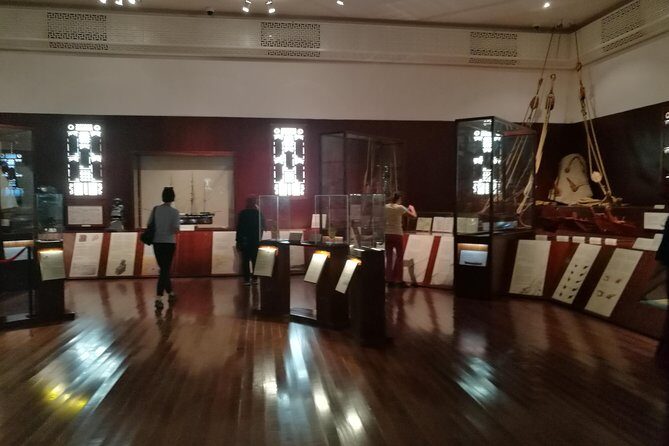
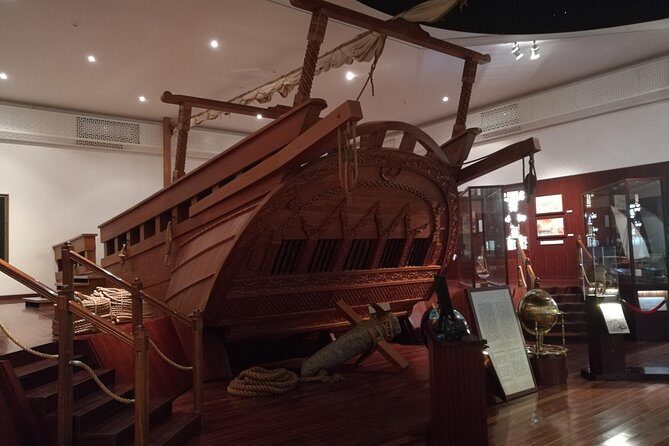
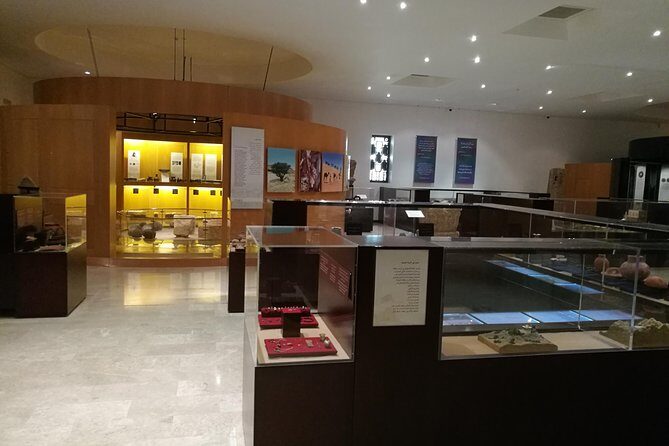
What you’ll see on the day blends outdoors archaeology with museum storytelling. There’s an open-air archaeological component, plus a museum focused on two big themes: Dhofar’s historical and archaeological heritage, and the maritime history of Dhofar and Oman.
This stop lasts about 1 hour, and since admission is included, it’s a low-risk add-on. I find this timing works well: you get the big picture without feeling trapped inside. It’s also a chance to connect the dots between trade routes and the goods you’ll see in the souqs—frankincense isn’t just a smell here; it’s a chapter of history.
If you like visuals, pay attention to how the port story is presented. Even without going deep into dates, you can understand why a coast like this mattered.


Halwa and Arabian Coffee Break: A Tiny Stop That Changes the Mood
This is a short detour that feels surprisingly satisfying: an Omani sweet experience with Arabian coffee. The sweet is halwa, described as a sticky, gelatinous treat commonly served during celebrations and Ramadan.
The interesting part for me is that halwa isn’t one flavor only. Ingredients vary by maker, but the base typically includes things like water, sugar, ghee butter, and cornflour, with flavors such as rosewater or saffron. You’ll taste it alongside kahwa (coffee), which is a classic pairing in Omani culture.
At only about 20 minutes, it doesn’t eat your schedule. It also gives you a reset between cultural stops—mosque and markets on one side, nature and city views on the other.
Dahariz Beach (Khor End): A Lagoon Stop That’s About More Than Photos
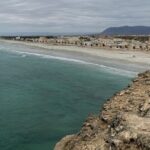
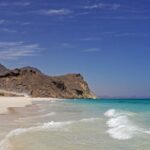
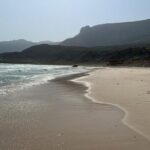
Then you shift toward nature at Dahariz Beach / Khor End, a lagoon area at the eastern entrance of Salalah city. It’s known as a wetland and a major spot for migratory birds.
You might spot species like:
- ibis
- flamingo
- ducks
- grey heron
- white heron
There are also indigenous animals like fish and crustaceans that call the lagoon home. Even if you don’t see every bird, the point is the setting: it’s a calmer moment that breaks up the day’s culture-heavy rhythm.
This stop is about 30 minutes with free admission. I suggest treating it like a real pause—stand, watch, and let your eyes adjust. The birds are the star, but the lagoon’s quiet also makes the later city viewpoint feel more rewarding.
Salalah City Viewpoint + Cave Walk: Short Legs, Big Views
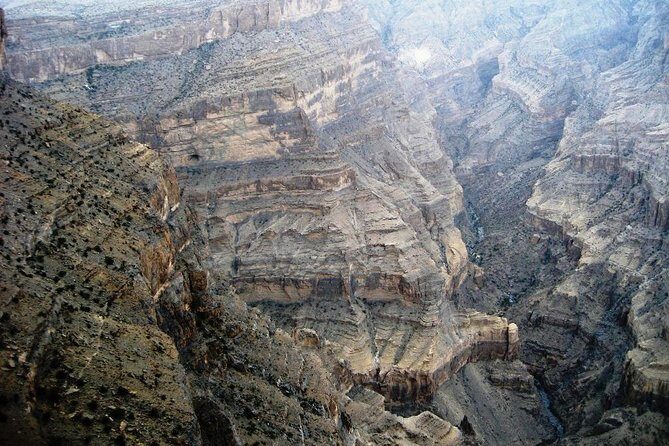
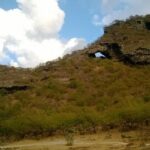
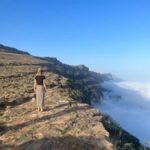
For the city perspective, you drive about 23 km toward a mountain area above Salalah. You’ll stop at a viewpoint near the Itin restaurant balcony area, where you can enjoy the view over the city for a few minutes.
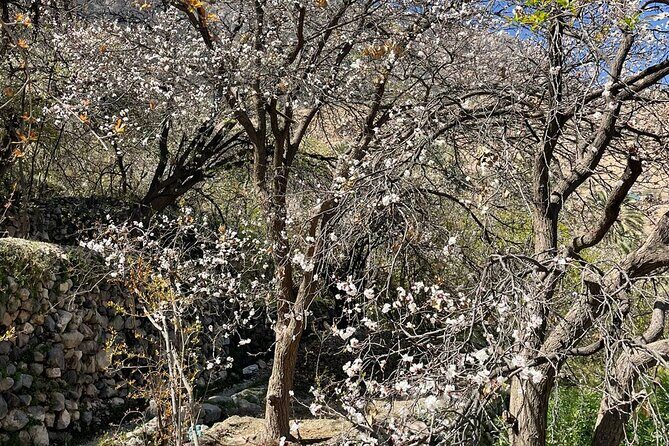
Then comes a short walk to a cave. Your guide explains the cave’s formation history and brief geo-information, plus what’s growing around it. At about 20 minutes total, this isn’t a long hike day. It’s more like a “see it, understand it, move on” moment.
Practical tip: bring what you need for a short walk (comfortable shoes). You’re not going far, but you’ll likely want grip and comfort for the cave-adjacent paths.
Price and Value: When $150 Makes Sense
At $150 per person, this tour works best if you value four things: convenience, a guided explanation, multiple key stops, and not losing your whole day.
Here’s why it can be good value:
- you get pickup from the Dhofar region
- an English-speaking guide/driver handles everything
- the route covers major highlights you’d otherwise piece together yourself
- admissions are included where they matter (like Al-Baleed) and many other stops are free
- bottled water and an air-conditioned vehicle are part of the package
You can think of it like buying time and clarity. If you want to self-plan, you’d still need transport, someone to interpret the sites, and a sensible route order. This tour gives you that in a compact half-day.
Who This Tour Fits Best (And Who Might Skip It)
This is a great match if you:
- want a starter day to understand Salalah’s main themes (religion, trade, archaeology, coast)
- like having a guide explain details instead of guessing
- prefer an easy pace with time left afterward
It might be less ideal if you:
- only travel with strict schedule constraints around mosque timing
- need a lot of beach time (this is short)
- dislike modest dress rules for places of worship
Should You Book It? My Decision Guide
Book this tour if you want a smooth, half-day way to see the best of Salalah without turning the day into chaos. I’d especially recommend it for first-time visitors who want context at the Sultan Qaboos Mosque, a meaningful stop at Al-Baleed, and a calm nature break at Khor Dahariz.
Skip it only if your plans can’t flex around the mosque access rules, or if you’re traveling during uncertain weather. Otherwise, this is the kind of day that leaves you feeling oriented—then you can enjoy the rest of Salalah your way.
FAQ
What sites are included in the Salalah city highlights tour?
The tour includes stops at the Sultan Qaboos Mosque, Salalah Central Market, Al-Husn Souq (Al Hafah Souq), Al-Balid Archaeological Site, an Omani halwa and Arabian coffee stop, Dahariz Beach (Khor End / Khor Dahariz), and a Salalah city viewpoint with a short cave walk.
How long is the tour?
It runs for about 5 to 6 hours (approximately).
Is pickup included, and where does it come from?
Yes. Pickup is offered from the Dhofar region for convenience.
Is this a private tour?
Yes. It’s a private tour/activity, and only your group participates.
Are there any visiting-time limits for the Sultan Qaboos Mosque?
Yes. Mosque visiting hours are 8:00am to 11:00am. After that, visiting is limited to the outside prayer hall. The mosque is also excluded on Friday tours. If you select a 2:00pm start time, you won’t be able to enter the prayer hall.
Is frankincense land museum open all weekend?
No. For Friday & Saturday bookings, the frankincense land museum is only open at 3:00pm.
What should I expect if the weather is bad?
This experience requires good weather. If it’s canceled due to poor weather, you’ll be offered a different date or a full refund.