REVIEW · MUSCAT
Muscat : Special tour for Muscat visitors from cruise ships
Book on GetYourGuide →Operated by OMAN CITY TOURS · Bookable on GetYourGuide
Muscat is all about quick city wins. This cruise-focused tour is built for short port days, with pickup and drop-off from Sultan Qaboos Port and a guide-led route that hits major sights without wasting time. I like that it includes the practical stuff that matters on a ship schedule, like express security and bottled water, plus a real plan for what to see. The main thing to watch for is the Sultan Qaboos Grand Mosque timing: if it’s closed when you arrive, your time there may be mostly exterior viewing.
What makes this one feel different is how tightly it’s structured for cruise arrivals. You’ll start at Sultan Qaboos Port, move through the central highlights, then return before you’re thinking about re-checking the ship departure board. I also appreciate the simple, clear dress guidance, because it helps you avoid last-minute outfit stress.
If you’re traveling with a small private group, this tour is one of the easier ways to get more Muscat per hour. Just go in expecting a fast-paced sampler, not a slow linger-and-stroll day.
In This Review
- Key highlights and what they mean for you
- Cruise-Port Logistics: Getting From Your Ship to Muscat Without Stress
- Price and Time: Is $187 per Group Good Value for 4 Hours?
- Sultan Qaboos Grand Mosque Entry: Dress Smart and Expect a Possible Schedule Swap
- Royal Opera House Muscat and Al Alam Palace: Short Stops That Still Tell You the Story
- National Museum and Al Jalali Fort: Turning Photos Into Context
- Muttrah Souq: The Best Place to Use Your Own Curiosity
- Comfort Features for a Tight Day: Guide, Water, Wi‑Fi, and Express Security
- What to Pack and How to Make the Most of 4 Hours
- Should You Book This Muscat Cruise-Specific City Tour?
- FAQ
- What’s the price for this Muscat tour?
- How long is the tour in Muscat?
- Where does the tour pick you up from?
- Does the tour include a guided component and language?
- What should I bring for mosque visits?
- Is there wheelchair accessibility and is there a way to avoid long security lines?
Key highlights and what they mean for you
- Cruise-optimized timing: designed for European-style cruise arrivals with port-to-port convenience.
- English live guide: you get context for what you’re seeing, not just drive-by photos.
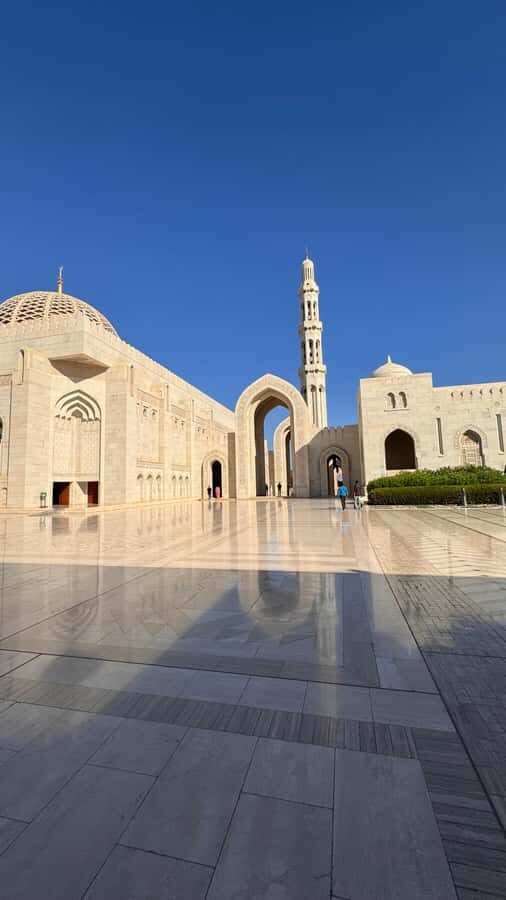
- Sultan Qaboos Grand Mosque focus: scheduled time for one of Oman’s most iconic landmarks.
- Al Alam Palace photo stop: quick but scenic viewing near the fort area.
- National Museum + Al Jalali Fort: adds culture and fort history beyond the typical mall-and-mosque circuit.
- Muttrah Souq time: a shopping and atmosphere stop built into the route.
Cruise-Port Logistics: Getting From Your Ship to Muscat Without Stress
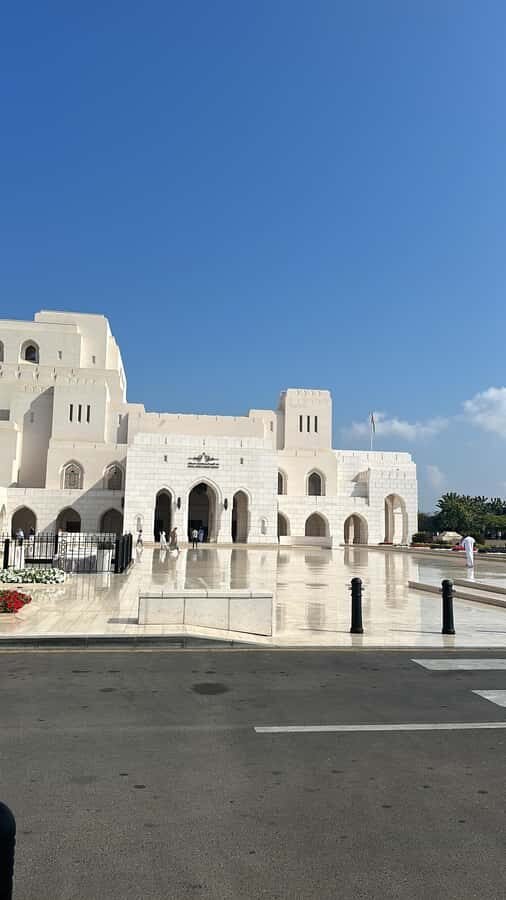
The biggest win with this tour is that it’s designed around how cruise passengers actually arrive and move around. Your start point is Sultan Qaboos Port, and the meeting flow is spelled out in a practical way.
After you get off the ship, you use the free buses to reach the port gate. There, a driver meets you and holds a paper with your name. That small detail matters. On cruise days, confusion is what eats time, and time is what you don’t have.
Once you’re with the guide, the day is simple: you go out, you see the planned sights, and you get brought back to the port. No hunting for taxis, no trying to figure out where buses stop, and no guessing how long it takes to get back before boarding.
If you’re the kind of traveler who wants to spend your energy on Muscat instead of transportation puzzles, this structure is a good match.
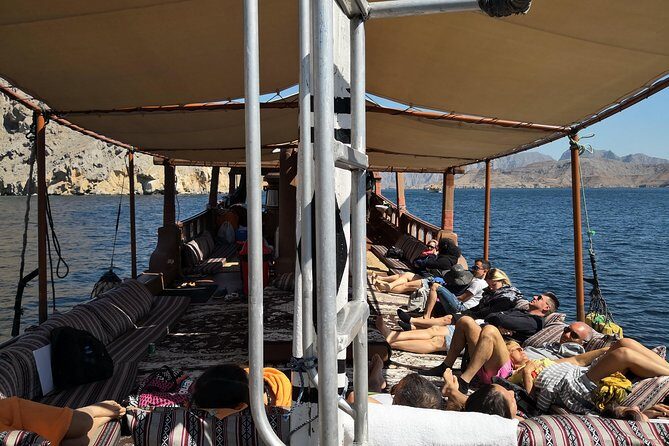
You can also read our reviews of more boat tours in Muscat



Price and Time: Is $187 per Group Good Value for 4 Hours?
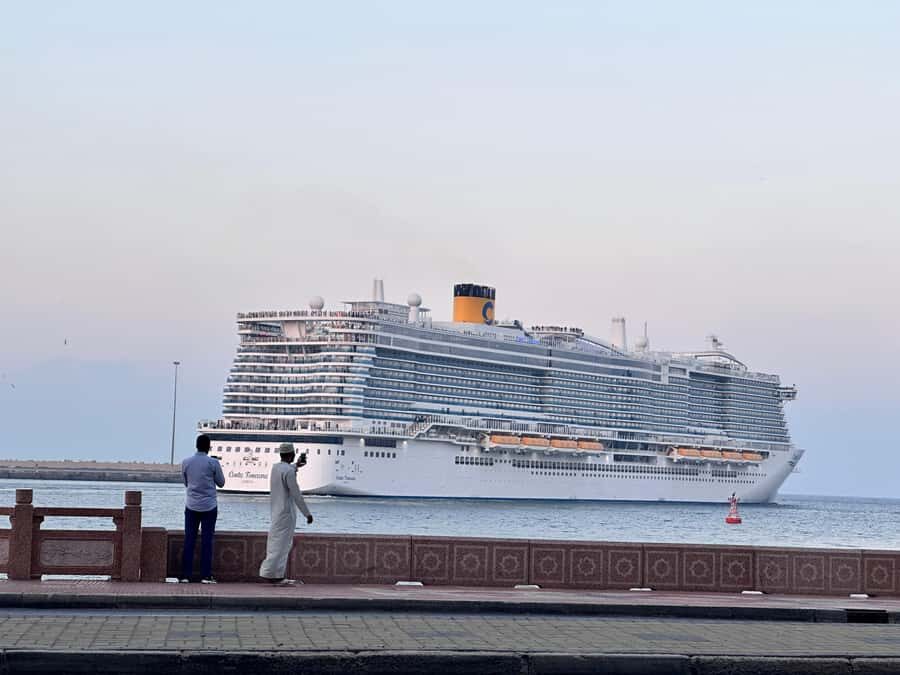
The price is $187 per group (up to 4 people) for about 4 hours. That works out to roughly the cost of a mid-range guided outing, but with an important twist: it’s not “per person” pricing in the usual way.
For cruise visitors, value often comes from two things:
- You pay for someone else to handle the route, timing, and port pressure.
- You gain time savings from express security rather than lining up and hoping you make it.
This tour includes fees and taxes, a guide, bottled water, and free Wi‑Fi. Wi‑Fi won’t replace good roaming, but it helps when you want to message family, check translation apps, or quickly look up what you’re seeing next.
One reason I think the price makes sense: Muscat’s top sights aren’t spread out in a way that’s convenient for a short stop unless you’ve planned carefully. A guided, cruise-paced route gives you less uncertainty for the same time on shore.
The only drawback is the timing. Because it’s a 4-hour plan, you’ll move between stops fairly quickly. If you love shopping or want a long sit-down at a café, you’ll need to do that before or after this tour—or choose a different experience that gives more time in fewer places.
Sultan Qaboos Grand Mosque Entry: Dress Smart and Expect a Possible Schedule Swap
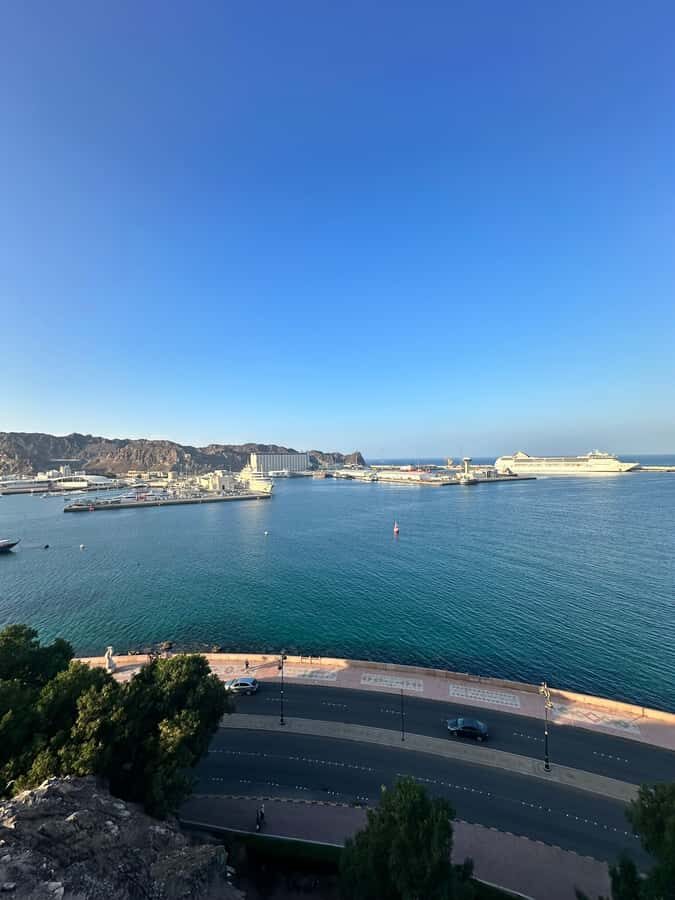
The tour’s first big scheduled highlight is Sultan Qaboos Grand Mosque, with about 30 minutes there. This mosque is famous for impressive architecture, including intricate chandeliers and a world-famous interior centerpiece: the world’s second-largest handwoven carpet.
For entry, the rules are straightforward but strict enough that you should plan ahead:
- Bring a head covering (a kippah works)
- Wear a long-sleeved shirt
- Wear long pants
The guidance also emphasizes modest coverage for women (including covering hair, shoulders, and knees). Men also need long pants and should follow the same modest approach.
Here’s the practical point: cruise tourists sometimes arrive with outfits that are comfortable on the ship but not mosque-ready. If you pack the right clothing, you avoid delays at security or entry checks.
One more reality check: there’s a known possibility that the mosque may not be open at the time your schedule arrives. Even though your tour is timed for the mosque, closure can happen. So I’d treat the mosque as the planned highlight, not a guarantee of indoor viewing.
If the mosque is limited or inaccessible, the day can still be worthwhile because the rest of the route focuses on major cultural landmarks. But if mosque access is your #1 priority, keep that in mind and stay flexible.
Royal Opera House Muscat and Al Alam Palace: Short Stops That Still Tell You the Story
After the mosque, the tour moves to a modern landmark: Royal Opera House Muscat for about 30 minutes. Even if you’re not seeing a performance, you can still appreciate the building itself. It’s the kind of stop where photos help, but context helps more, and having a guide keeps it from feeling like just a photo-brake.
Then you get to Al Alam Palace for a photo stop of about 15 minutes. The palace area is also associated with the surrounding fort landscape, including forts like Al Jalali and Al Mirani. The palace itself isn’t described as a visitor open site, so think of this stop as a chance to capture the ceremonial setting and understand why the area matters.
What I like about this pairing is the balance: you go from a dramatic spiritual interior space to an Omani cultural venue, then to a ceremonial government area. In a single 4-hour block, you see how Oman blends tradition and modern design.
The only consideration is how quick it all is. These stops are designed for viewing, photos, and short learning, not long lingering. If you want deep time in one location, you’ll feel the squeeze here.
National Museum and Al Jalali Fort: Turning Photos Into Context
Next up is National Museum, Muscat, scheduled for about 30 minutes. This is the kind of stop that can make the whole day click, because it gives you a framework for what you’re seeing around the city.
The museum is highlighted as a place that shows Oman’s heritage through items like traditional weapons, costumes, and household goods. That means you’re not only learning architecture and city geography. You’re also learning how people lived, worked, and expressed culture.
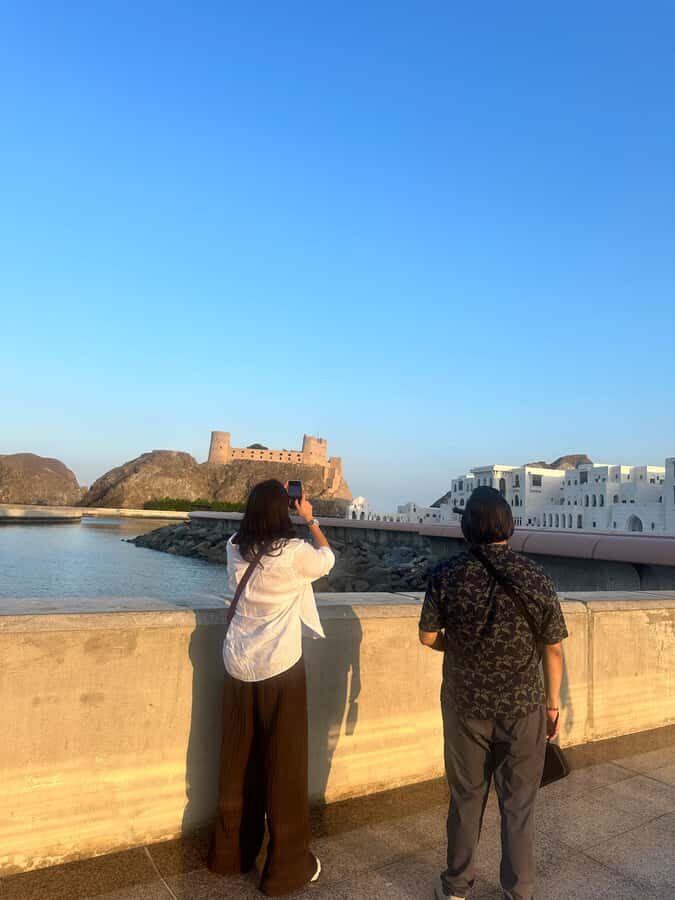
After the museum, you visit Al Jalali Fort. The itinerary lists a visit there, and the fort area is part of the same broader setting that includes the ceremonial palace neighborhood. Even when time is limited, forts help you understand why Muscat’s coastline and strategic positions mattered.
If you’re the type of traveler who likes to “read” a city with your eyes, these stops are the payoff. Mosques and souqs are memorable. Museums and forts tell you what’s behind the memory.




Muttrah Souq: The Best Place to Use Your Own Curiosity
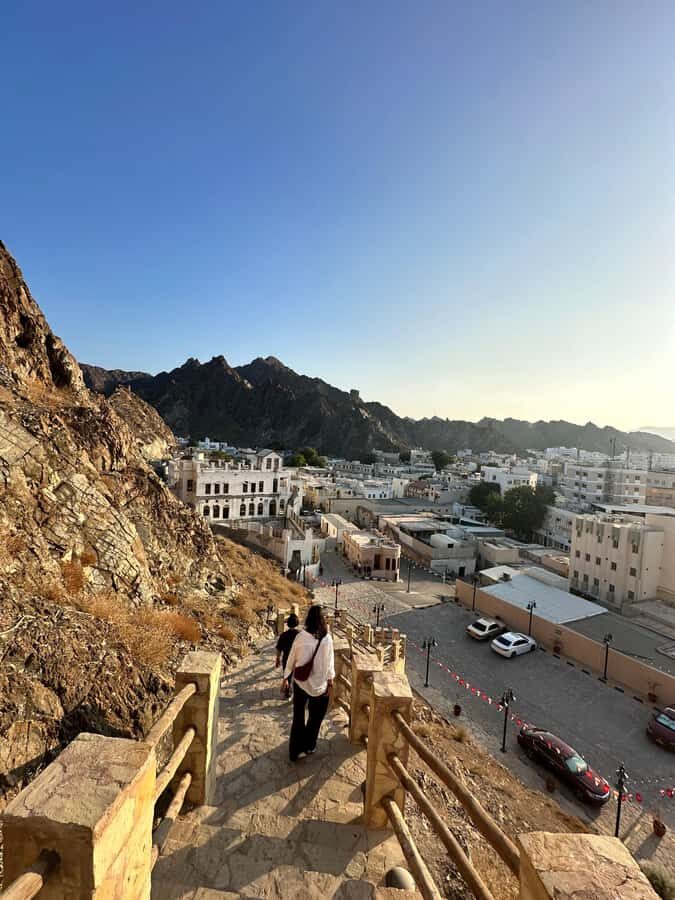
The final major city stop is Muttrah Souq. You’ll have time to look around and shop, with the best approach being to go a bit slow even if the tour moves quickly. This is where Muscat turns into everyday life: the scents, the textures, and the goods you can’t easily replicate anywhere else.
Muttrah Souq is known for traditional products such as:
- frankincense
- silver jewelry
- handicrafts
- spices and perfumes in the air
A guided stop helps here because you’re not trying to decide what’s worth your time when the market is full of distractions. You can ask quick questions, get direction, and focus your shopping rather than getting lost.
One important practical note: you’ll want to bring spending money if you plan to buy anything. The tour includes bottled water and a Wi‑Fi connection, but shopping is on you.
Also, your time in the souq will be limited by the 4-hour day. If you love bargaining and you want a long loop through every lane, this might feel short. If you want to sample the souq, pick up a small souvenir, and still see the big landmarks, it’s a strong fit.
Comfort Features for a Tight Day: Guide, Water, Wi‑Fi, and Express Security
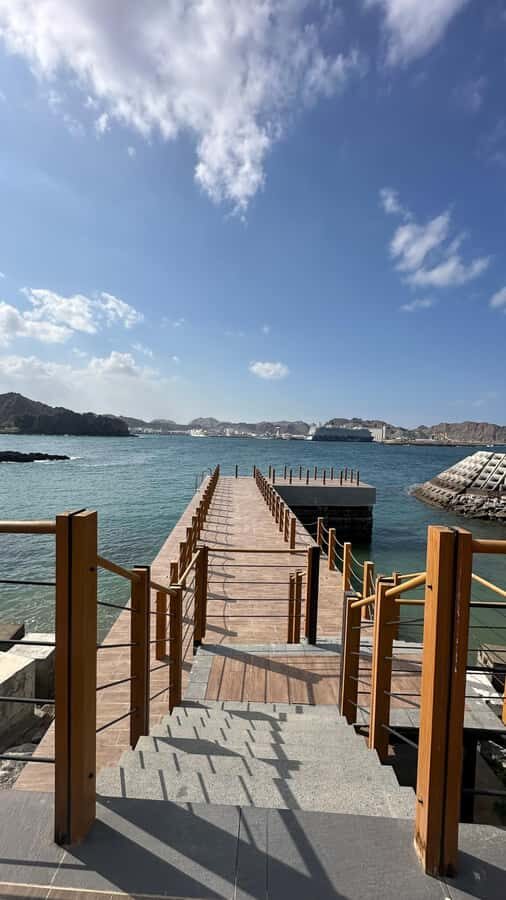
This tour includes several small comforts that matter more on cruise days than on land trips.
You’ll get:
- Pick-up and drop-off from the port
- a live English tour guide
- bottled water
- free Wi‑Fi
- skip the line through express security check
- wheelchair accessible support (as stated for the activity)
- a private group format
The English guide is a big deal here. Muscat’s sights are visual, yes, but the value comes from understanding what you’re looking at—why a mosque is designed a certain way, why palaces sit near forts, and why a souq is arranged the way it is.
The express security piece is also a practical win. Cruise passengers are often dealing with crowds and rules. Anything that reduces waiting helps you stay on schedule.
Wi‑Fi is a bonus if you want to keep in touch with family or quickly translate signs as you walk.
If you’re sensitive to heat or walking fatigue, bottled water also helps you stay in the moment without worrying about buying something mid-route.
What to Pack and How to Make the Most of 4 Hours
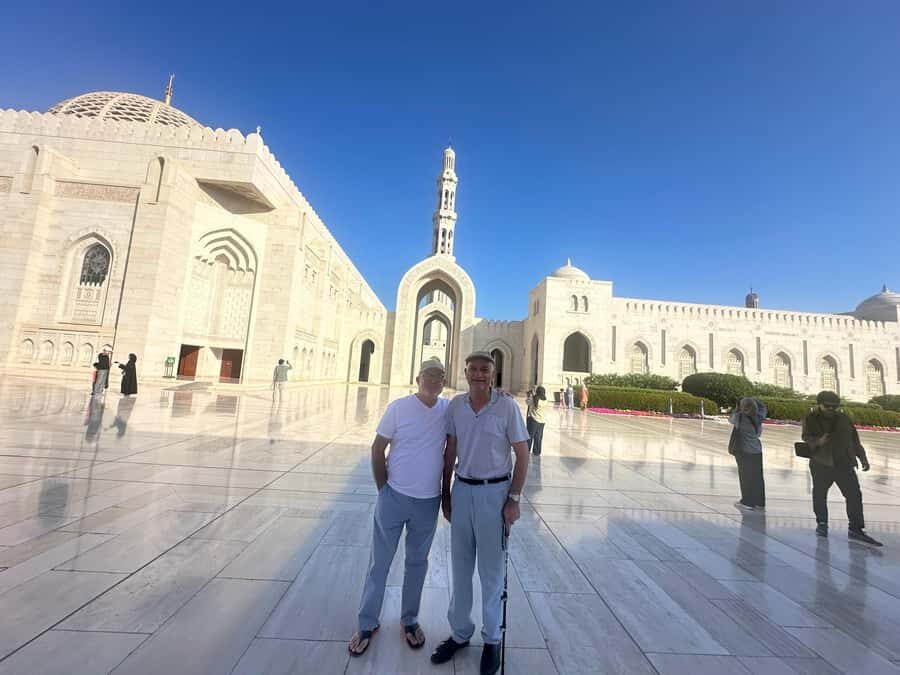
You already have most of what you need to be prepared, based on the stated entry and clothing guidance. I’d treat this as your packing checklist:
Bring:
- a head covering or kippah
- a long-sleeved shirt
- long pants (for men and women)
If your cruise day is hot and sunny, wearing breathable long sleeves can feel like a trade-off—but it’s worth it to avoid delays. The tour’s schedule depends on moving smoothly between stops, and mosque entry rules can be where delays happen.
A smart move: keep your mosque outfit ready, not buried in a suitcase. You want it within reach when you get on the vehicle.
In the souq, keep cash or card ready, and expect that shopping takes a bit of time even if you’re focused on a short list. If you’re only buying one item, tell yourself what that is before you walk in. It keeps your money from disappearing into “just one more stall.”
Finally, if you’re interested in perfume-making or luxury fragrances, note that Amouage Perfume Factory is listed as an optional element in the broader Muscat-city tour description. Your specific day’s schedule may not include it, but if it matters to you, ask the guide whether it can fit your timing.
Should You Book This Muscat Cruise-Specific City Tour?
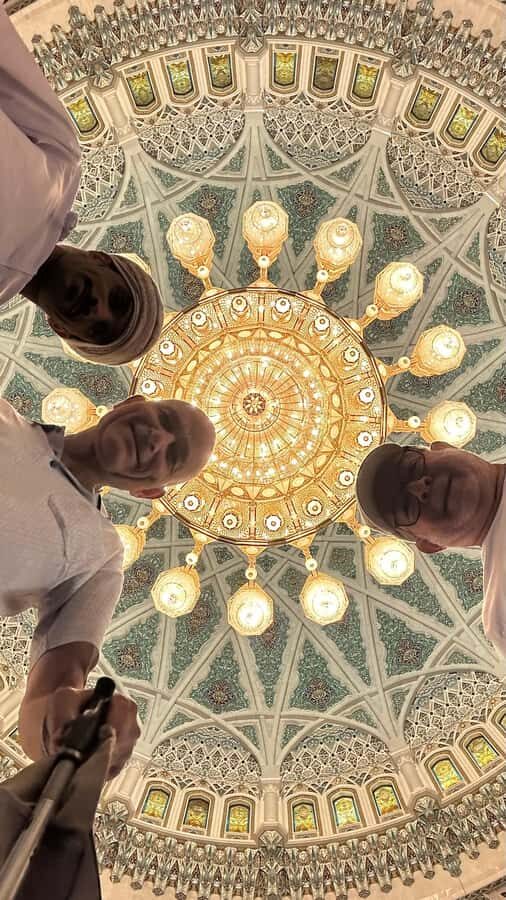
Book it if you want a guided, cruise-timed Muscat sampler that handles port logistics and security for you. I especially think it’s a good fit if you:
- have limited time and want the major highlights in one go
- prefer an English guide with context
- don’t want to plan transport back and forth between the port and city
Consider skipping or switching to a longer option if:
- you’re mosque-focused and indoor access is non-negotiable, since closures can happen
- you want deep time for shopping in Muttrah Souq
- you dislike fast pacing (this is built for 4-hour efficiency)
If your goal is to get bearings fast and still see Sultan Qaboos Grand Mosque, Royal Opera House Muscat, Al Alam Palace, National Museum, Al Jalali Fort, and Muttrah Souq, this tour has the right mix.
FAQ
What’s the price for this Muscat tour?
The price is $187 per group, up to 4 people, for a 4-hour tour.
How long is the tour in Muscat?
The duration is 4 hours.
Where does the tour pick you up from?
The starting point is Sultan Qaboos Port. The tour includes pick up and drop off.
Does the tour include a guided component and language?
Yes. The tour includes a live tour guide, and the listed language is English.
What should I bring for mosque visits?
You should bring a head covering (kippah works), a long-sleeved shirt, and long pants.
Is there wheelchair accessibility and is there a way to avoid long security lines?
The activity is listed as wheelchair accessible, and it also says you can skip the line through an express security check.