REVIEW · SALALAH
Private Full-Day East Oman Tour from Salalah with Lunch
Book on Viator →Operated by Go Salalah Tour · Bookable on Viator
Salalah’s east side feels like another world. I love how this full-day drive stacks Wadi Darbat waterfalls with a proper traditional Omani lunch in one day. You’ll also get a real private-tour feel, with time to ask questions and tweak what you do along the way. One consideration: some of the stops are short, so you’ll want to move with the day’s pace for the best photos.
What makes it work well is the “local guide” approach. In at least one shared experience I heard about, Abdulaziz was patient, knowledgeable, funny, and good at answering questions without rushing anyone. If you’re the type who likes context while you’re driving—why things are where they are, and what people used to trade—this kind of guide time pays off fast.
You’re not just sightseeing. The day includes natural sights (waterfalls, sinkhole, mountain viewpoints) plus cultural stops (Taqah and Mirbat), and many locations list free admission. That means you can spend more of your energy on seeing, not counting costs at every turn.
In This Review
- Key highlights you’ll actually feel
- East Oman from Salalah: why this day route makes sense
- Taqah Castle and the short walk through 300-year-old daily life
- Taqah Beach: white sand, clear water, and a cliff-side viewpoint
- Wadi Darbat Waterfalls in the Quara Mountains: the day’s nature anchor
- Jebel Samhan: the Dhofar viewpoint where clouds can feel close
- Teeq Cave and Tawi Ateer sinkhole: short time, big scale
- Baobab trees in Salalah, plus the Earth gravity point
- Mirbat lunch and the hilltop view near Mirbat Castle
- Price and value: is $234 per person fair for this day?
- Who should book this private East Oman day trip
- Quick verdict: book it, if you want variety with a local guide
- FAQ
- How long is the Private Full-Day East Oman Tour from Salalah?
- Is pickup included?
- Is this a private tour?
- What’s included with lunch?
- Do I need to pay admission fees at the stops?
- Are there any timings or short-stop durations I should know?
- Will I receive a ticket on my phone?
- Is there free cancellation?
- Are service animals allowed and is the tour suitable for most people?
Key highlights you’ll actually feel
- Wadi Darbat in the Quara Mountains: waterfalls, rock formations, and a riverbed where animals gather to drink
- Jebel Samhan summit views: a high point in Dhofar where you can feel above the clouds
- Tawi Ateer sinkhole and Teeq Cave stop: a quick-hit jaw-drop, including scale (1 km long, 200 m deep)
- Taqah Castle and Taqah Beach: a 300-year-old castle plus white-sand, clear-water beach views
- Mirbat lunch by a local restaurant picker: lunch and drinks (coffee or tea included), matched to your preferences
East Oman from Salalah: why this day route makes sense
This tour is built around a simple idea: get you out of “Salalah town time” and into the east’s big natural and cultural highlights, without wasting your day on complicated logistics. Pickup is offered, and it runs about 8 hours, so you get a full feel for the region while staying realistic on travel time.
The “private” part matters more than you might think. Because only your group participates, the pace feels less like a conveyor belt and more like a day you control. Your guide can also take extra wishes into account, including adjusting the flow of the day. That’s great if you’re traveling with kids, grandparents, or anyone who hates being herded.
Also, the timing of the stops is very practical. You spend longer where you’ll want to look around (Wadi Darbat and the mountain viewpoint), and you keep “wow moments” shorter where parking, viewpoints, or viewing areas are naturally limited (gravity point, cave/sinkhole area, the beach). It’s a smart balance.
You can also read our reviews of more private tours in Salalah

Taqah Castle and the short walk through 300-year-old daily life
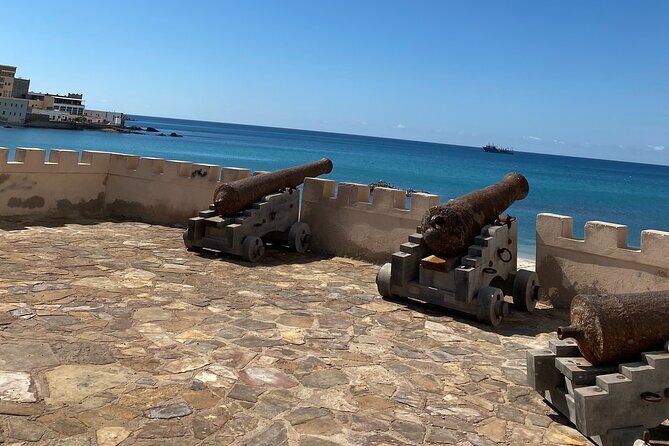
You start with Taqah Castle, a site built about 300 years ago by a Wali. The payoff here isn’t only the structure. It’s what you can see inside and around it: older everyday objects like daily-use items, furniture, clothing, and traditional jewelry.
Even if you’re not the museum type, this stop gives you context. It helps you understand what life used to revolve around—local rule, household goods, and identity expressed through clothing and adornment. The tour time is about 45 minutes, and admission is listed as free, so it’s a low-stress way to add culture without killing your schedule.
What I like about this kind of cultural stop on a nature-heavy day: it prevents the day from feeling like only photos. You get at least one moment where you can slow down and look at details that don’t exist only for tourists.
Taqah Beach: white sand, clear water, and a cliff-side viewpoint
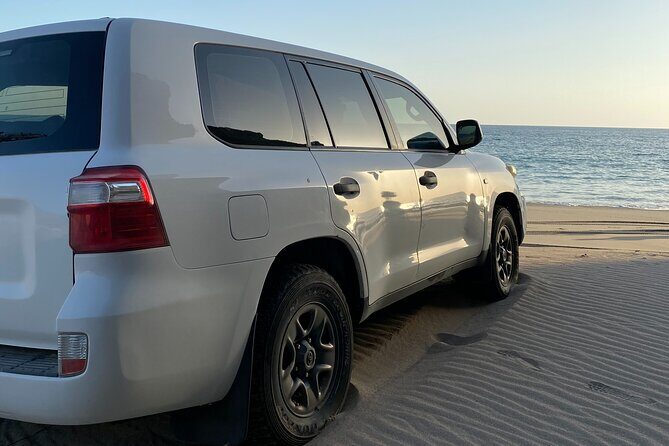
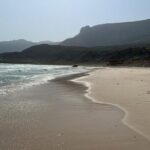
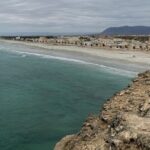
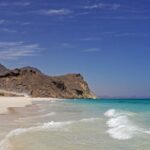
Right after the castle, you head to Taqah Beach. This is the part that feels like a reset button. The beach is described as having white sand and crystal-clear water, and right next to it there’s a cliff where you can get a wide view over the beach.
This is not a long beach hang (about 30 minutes). But it’s enough time to do the basics well: stand near the waterline, enjoy the view from the cliff, and get your photos before the light shifts too much. Admission is listed as free.
If you’re visiting during warmer months, bring sun protection and plan for quick stops outside the shade. The scenery is worth it; just don’t underestimate the sun.
Wadi Darbat Waterfalls in the Quara Mountains: the day’s nature anchor
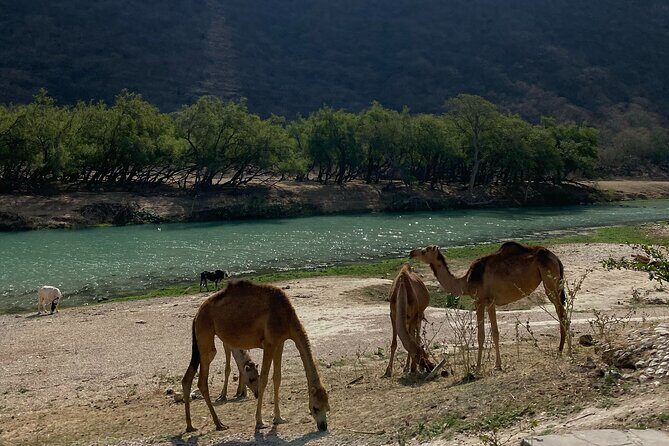
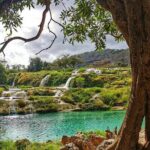
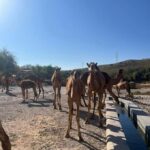
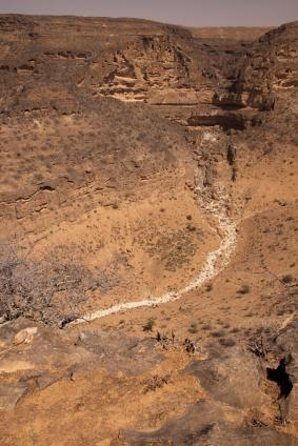
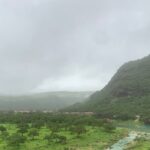
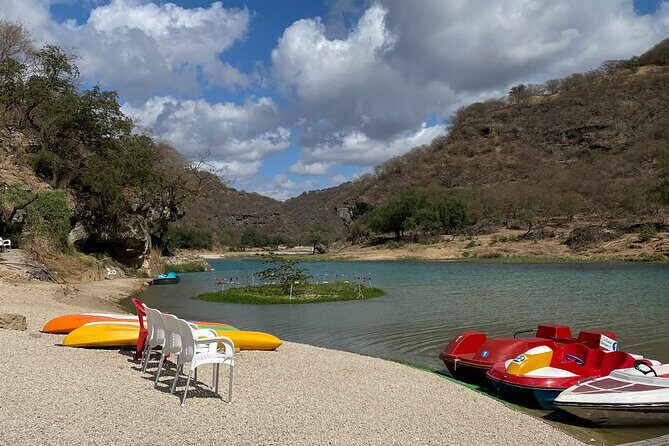
Wadi Darbat is the heavyweight natural stop. You’ll travel into the Quara Mountains, where you’ll see waterfalls and impressive rock formations. One of the more memorable elements described is that animals gather along the riverbed to drink.
The timing is about 1 hour, and admission is listed as free. That’s a good match for Wadi Darbat because it lets you watch the water, take photos, and move around without feeling like you need a full hike day. If you like scenery with motion—water in layers, greenery, rocks that look shaped over time—this is where your camera gets its cardio.
Practical tip: wear shoes you feel good walking in if the ground is slick near water. You don’t need trekking boots, but you do want grip and comfort. Wadi Darbat is the type of place where one careful step can mean a better photo.
Jebel Samhan: the Dhofar viewpoint where clouds can feel close
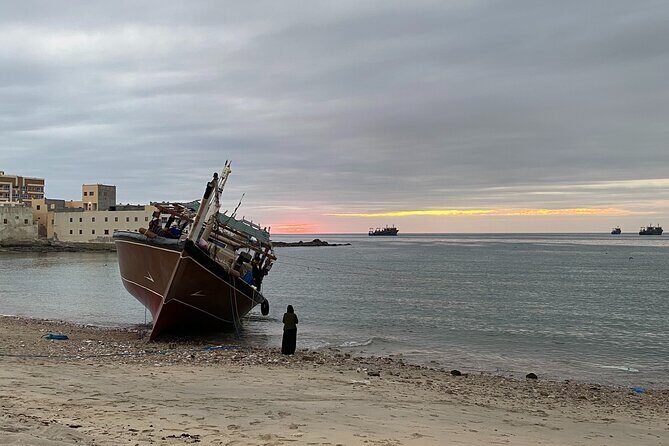
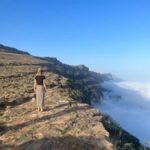
Next comes Jebel Samhan (جبل سمحان), described as the highest point in the Dhofar region. The standout detail: the peak is high enough that you can often find yourself higher than the clouds, making the view feel almost unreal.
You get about 30 minutes here, and admission is listed as free. It’s a short stop, but that’s typical for mountain viewpoints. You’re here for angles, horizon lines, and the moment your brain finally accepts you’re looking from real elevation.
If you’re prone to rushing, this is worth slowing down anyway. Sit, look, and let your eyes adjust. Mountain views are less about snapping and more about reading the distance.
A few more Salalah tours and experiences worth a look


Teeq Cave and Tawi Ateer sinkhole: short time, big scale
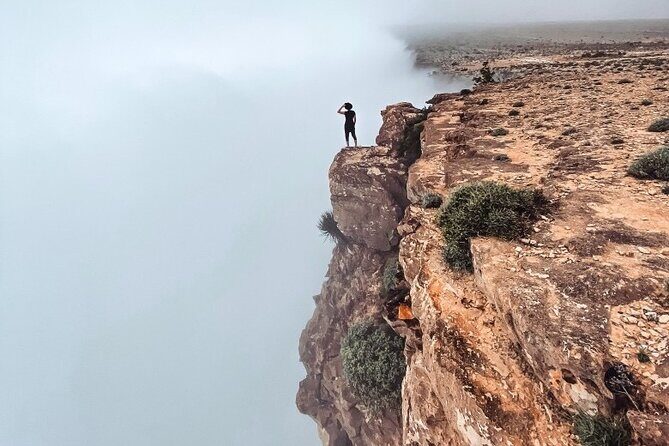
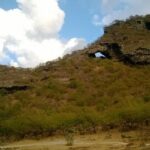
After the mountain, you’ll hit a quick “wow” pairing: Teeq Cave and Tawi Ateer Sinkhole. Tawi Ateer means well of birds, and it’s compared to a Jurassic-style setting, which tells you what kind of visuals you’re in for.
Here are the scale details you should know because they make the stop land:
- The Taiq sinkhole (Tawi Ateer) is listed as the world’s third largest sinkhole
- It measures about 1 km in length and 200 m in depth
You only have 10 minutes for this stop, with admission listed as free. So plan for a quick loop: arrive, take in the size, get photos from the best viewing spots you’re allowed, and then move on. This is not the time for a long wander.
If you hate short stops, you might feel a little rushed here. But if you’re okay with a fast “I can’t believe that’s real” moment, this is one of the most memorable parts of the day.
Baobab trees in Salalah, plus the Earth gravity point
Back in the Salalah area, you’ll make a couple of brief but genuinely interesting stops.
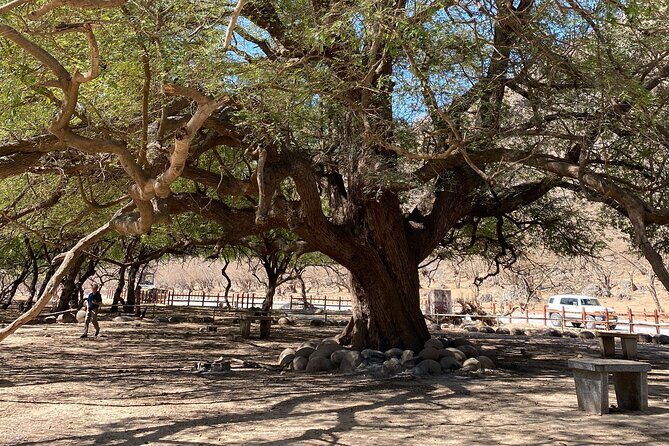
First are the baobab trees. These are more common in African flora, but they grow in Dhofar too. The information provided says they’re threatened with extinction, and about 200 exemplars grow in the region, with some estimated to be over 300 years old. You’ll have about 10 minutes here, with admission listed as free.
Then comes the science-meets-suspense stop: Earth Gravity Controversial, also called an anti-gravity point. The phenomenon described is that if a car is put into neutral, it can drive up to 35 km/h uphill. Several theories exist, and the experience encourages you to form your own opinion.
This is about 10 minutes as well, with admission listed as free. It’s short, yes, but that’s kind of the point. People come here for a single, weird moment that makes the day feel less predictable.
Quick reality check: because theories are mentioned, treat it as an observed phenomenon you’re seeing—not a guaranteed explanation you’ll solve on the spot. Still, it’s a fun break from the natural sights.
Mirbat lunch and the hilltop view near Mirbat Castle
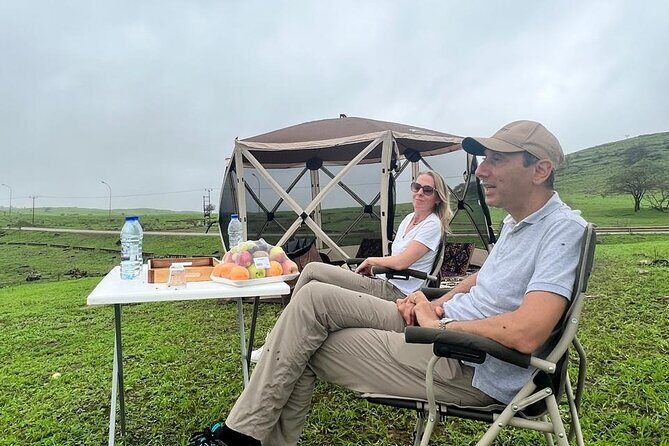
In the early afternoon, the day shifts into the “fuel and culture” lane with Mirbat. Before you get to the castle viewpoint, you’ll stop at a traditional Arabic restaurant for lunch. Your guide will recommend the restaurant and choose based on your preferences.
Lunch and drinks are included. The information says lunch and drinks, plus coffee or tea, are part of the tour price. You’ll have about 1 hour at the restaurant area.
This is a real value add. Many tours claim to include food but make it vague. Here, you know you’ll get a full meal stop and drink options, and you can ask for what you like through your guide.
After lunch, you visit Mirbat Castle from a viewpoint area. Mirbat itself is described as the horse market, named from historical trade in horses, spices, and frankincense. Even today, magnificent trading houses remind you of that earlier wealth. The fortress of Mirbat was built in the 18th century, but it’s unfortunately not open to tourists. You’ll still get impressive views from the hill where the castle stands, and admission is listed as free.
You’ll have about 30 minutes here. This stop is great if you like coastal towns with trade history. It’s also a nice closing scene because the sea and old structures naturally complement the earlier mountain-and-waterday feeling.
Price and value: is $234 per person fair for this day?
At $234.00 per person, this tour is positioned as a private, guided day with meaningful inclusions. The best way to judge value here is to count what’s actually included versus what you’d likely pay on your own.
What you’re getting that adds up:
- A full-day guided route (about 8 hours) with pickup offered
- A true private setup where only your group participates
- Lunch at a traditional Arabic restaurant, plus drinks and coffee/tea included
- Multiple major sights, and many locations list free admission
The tour also mentions group discounts, which can bring the per-person cost down if you’re traveling with family or friends. That’s often the sweet spot: one paid guide and car, split among a small group, while you stay flexible on timing.
Where price can feel harder to justify: if you’re traveling solo and don’t benefit from group discounting, you’re paying a full private rate. If that’s your situation, ask yourself if you’ll use the guide time for questions and small adjustments—or if you’d prefer to self-drive and go slower.
Either way, the structure is practical enough that you’re not just paying for transit. You’re paying for day planning, local context, and an efficient sweep of east Salalah’s top variety.
Who should book this private East Oman day trip
This tour fits best if you:
- Want a guided day through east Salalah without handling routing yourself
- Like a mix of nature and culture in one trip (waterfalls, beach, caves, baobabs, Mirbat)
- Travel as a family or small group where private pacing matters
- Prefer shorter stops at multiple places over long hikes and deep multi-day wandering
It’s also a good pick if you’re the kind of traveler who likes asking questions in the car. One of the strongest parts of the experience is the guide’s ability to answer, explain, and adapt.
Quick verdict: book it, if you want variety with a local guide
I’d book this tour if you want one strong day where you see the east’s highlights without the stress of planning each leg. Wadi Darbat gives you the day’s natural “wow,” Jebel Samhan adds height and perspective, and Mirbat rounds it out with lunch and old trade-town atmosphere. Even the odd stops—the gravity point and baobabs—make sense in a route that’s designed to keep variety high.
I might pause if you hate short stops or want a slow, lingering pace at just one or two places. This day moves. It’s designed for photos, quick impressions, and a well-shaped itinerary rather than long free time.
If that sounds like your style, you’ll probably have a very satisfying day in Dhofar.
FAQ
How long is the Private Full-Day East Oman Tour from Salalah?
It runs about 8 hours.
Is pickup included?
Pickup is offered.
Is this a private tour?
Yes. Only your group participates.
What’s included with lunch?
Lunch and drinks are included, and coffee or tea is also included.
Do I need to pay admission fees at the stops?
The provided details list admission as free for the stops mentioned (including Taqah Castle, Wadi Darbat, Tawi Ateer/Teeq Cave, and others).
Are there any timings or short-stop durations I should know?
Several stops are brief, including Teeq Cave/Tawi Ateer and the gravity point (about 10 minutes each), while Wadi Darbat is about 1 hour and Mirbat lunch is about 1 hour.
Will I receive a ticket on my phone?
A mobile ticket is included.
Is there free cancellation?
Yes. You can cancel up to 24 hours in advance for a full refund.
Are service animals allowed and is the tour suitable for most people?
Service animals are allowed, and most travelers can participate. The tour is also near public transportation.