REVIEW · SALALAH
East Salalah tour Full day (private tour)
Book on Viator →Operated by Ciao Salalah · Bookable on Viator
One day, three kinds of wow. This private East Salalah day strings together Mirbat’s 1806-era fort, the 2100-meter outlook of Jabal Samhan, and the sinkhole locals call the Bird Well. I especially love the high-cloud views from Jabal Samhan and the Bird Well stop with its 210-meter scale and bird-nesting story. The main trade-off: Mirbat Castle has an extra entrance fee (OMR 3 per person), and you’ll spend a good chunk of a six-hour day on the road.
What makes this feel good in real life is the private format. You’re not squeezed with strangers, and the guide style is easy to follow; Salem is known for explaining the key points clearly without piling on too much at once.
With included bottled water and snacks, you can focus on the sights rather than logistics. Still, it’s a full day of outdoor viewpoints and walking, so come ready for sun and comfortable shoes.
In This Review
- Key highlights you’ll care about
- East Salalah in one full day: a smart mix of history and wild scenery
- Mirbat Castle (1806) and old Mirbat streets: what you gain from paying the small fee
- Jabal Samhan (2100 m): the lookout that turns the sky into the main character
- Teeq Cave and Tawi Ateer Sinkhole: the “look up, look down” combo
- Wadi Darbat: boats, animals, and the kind of quiet that helps photos
- Sumhuram (UNESCO World Heritage Site): ancient coastal culture in the middle of the day
- Taqah sunset over the sea: a short stop with a big emotional payoff
- Price and time: is $100 per person good value for this private day?
- Comfort, pacing, and what to bring for a smooth day
- Should you book the East Salalah full-day private tour?
- FAQ
- How long is the East Salalah tour?
- Is pickup included?
- Is this tour private?
- What is the price per person?
- What tickets or entrance fees are included?
- Are mobile tickets used?
- How far in advance do people usually book?
- What is the cancellation policy?
- Is it suitable for most travelers?
- Where does the tour take place?
Key highlights you’ll care about
- Mirbat Castle (built in 1806) gives context for old Mirbat beyond quick photos
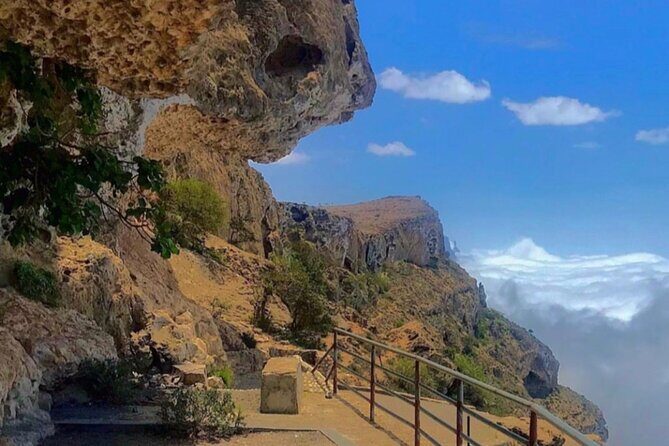
- Jabal Samhan (2100 m) rewards you with big sky and wide sea-and-city views when weather cooperates
- Teeq Cave’s stalactites are a classic “look closer” moment
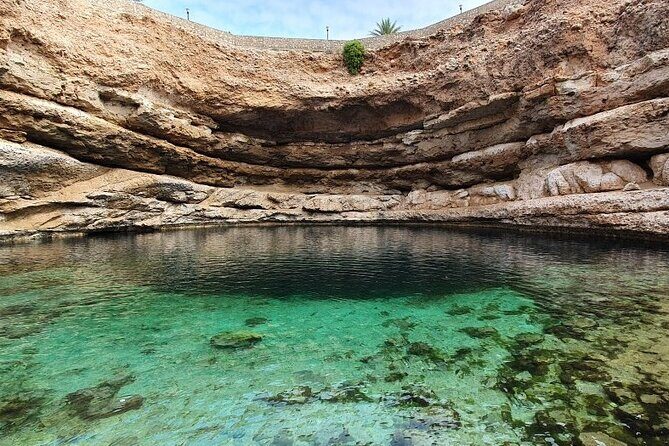
- Tawi Ateer Sinkhole (Bird Well, 210 m) is one of Oman’s deepest, tied to a local bird nesting name
- Wadi Darbat offers scenery plus boat time and chances to spot camels, cows, and goats
- Taqah sunset over the sea is a short stop with a payoff many people remember
East Salalah in one full day: a smart mix of history and wild scenery
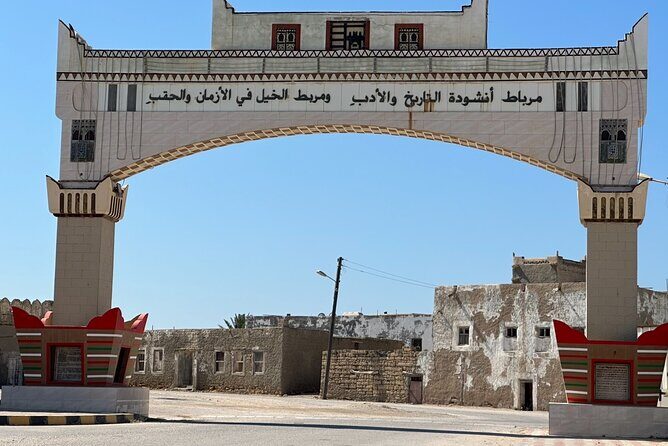
East Salalah has a way of rewarding variety. In a single day, you move from coastal heritage to mountains, then to caves and sinkholes, and finally back toward the sea for sunset in Taqah. It’s a great format if you’re thinking: I want more than one “type” of attraction, and I want it without wasting time bouncing between far-apart areas.
I like that the day is built around contrasts that make sense together. Mirbat Castle grounds the trip in local governance and settlement history, while Jabal Samhan and Teeq Cave shift the focus to nature’s spectacle. Wadi Darbat and Taqah bring you back to the softer rhythm of greenery and coastline.
Because this is private, you can also take the day at a pace that fits your group. If you want photos at lookouts and a slower wander through old streets, your guide can usually adjust. If you’re the type who likes to keep things moving, you can do that too.
You can also read our reviews of more private tours in Salalah

Mirbat Castle (1806) and old Mirbat streets: what you gain from paying the small fee
Mirbat Castle is the historical face of the city of Mirbat. It was built in 1806 and served as a home for the governor, so it’s not just a wall you pass by—it’s a clue to how authority and daily life used to work here.
This stop is also valuable because it pairs naturally with the idea of old Mirbat’s streets and nearby city texture. You get context before you start chasing the bigger nature scenes. In practical terms, it’s a good early anchor: once you understand what Mirbat used to be, the rest of the day feels more connected to the same region rather than random sightseeing points.
Cost note: the Mirbat Castle entrance fee is OMR 3 per person and is not included. Everything else in the day is listed as free, so this is one of the only pay-as-you-go moments you should budget for.
My tip: if you’re watching the clock, plan to spend a full hour here. It’s long enough to absorb the history without feeling rushed, and short enough that you won’t lose time later when the day’s sights get more weather-dependent.
Jabal Samhan (2100 m): the lookout that turns the sky into the main character
Jabal Samhan is the highest mountain peak in southern Oman at about 2100 meters. That altitude matters because it changes how the whole scene looks: from the top, you can see Mirbat and the Arabian Sea when the weather is clear. Even more fun for the curious eye, clouds can be seen from up there, which gives the viewpoint a moving, layered feel rather than a static photo backdrop.
This is one of those stops where timing and weather really affect your outcome. When visibility is good, you get the big panorama. When it’s not, you still learn something—mountain geography and cloud behavior become part of the experience, and you get a sense of why people call this a destination for everyone.
You’ll likely spend about an hour here, which is a sweet spot: enough time to reach viewpoints, take photos, and just stand there for a few minutes when the sky cooperates. This is also a good place to ask your guide questions, because the scenery makes geography feel real.
Quick consideration: if you’re traveling in a period where clouds roll in early, be flexible. The hour is designed to let you enjoy the mountain even when conditions vary.
Teeq Cave and Tawi Ateer Sinkhole: the “look up, look down” combo
This is the day’s most dramatic pair of geology stops. Teeq Cave is described as having glistening stalactites—an inside-the-earth moment where light and stone create an almost magical look. It’s the kind of place where you’ll see more detail the longer you pause. Don’t rush through; let your eyes adjust.
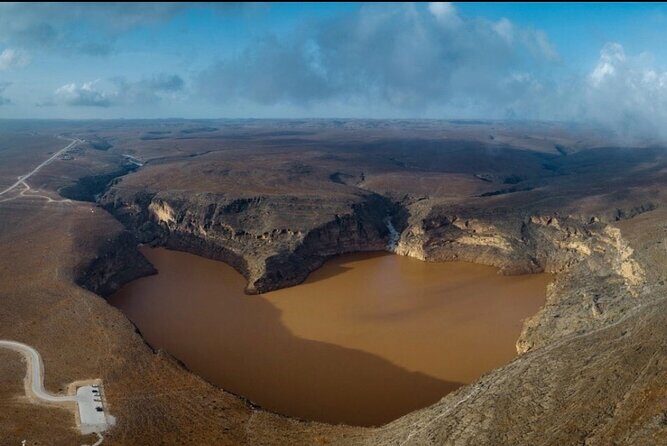
Then comes Tawi Ateer Sinkhole, also tied to the local name Bird Well. It’s listed as one of the deepest holes in Oman, with a depth of 210 meters. The bird angle is what makes it more than a math problem: locally, it’s called the Bird Well because birds come from all over to lay eggs.
That local story matters. You’re not only looking at scale; you’re learning how people interpret a natural feature and what they think it means in the cycle of life around here. It’s a great reminder that nature sites aren’t just scenery—they’re part of local understanding.
Admission note: both Teeq Cave and Tawi Ateer Sinkhole are listed as free stops. That makes this part of the day excellent value because the day’s big-ticket “wow factor” doesn’t require extra ticketing (except for Mirbat Castle).
My advice: bring a phone battery that’s ready and don’t depend on a perfect shot. In caves and sinkhole areas, lighting can shift, and your best photos might be the ones you take slowly, from the spot where your guide says the view is best.
Wadi Darbat: boats, animals, and the kind of quiet that helps photos
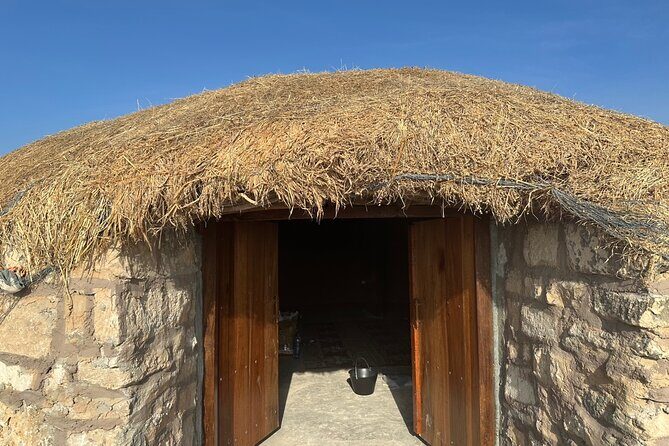
Wadi Darbat is described as the most prominent tourist destination throughout the year. That doesn’t mean it’s only for crowds; it reads more like the place where locals and visitors go because it works.
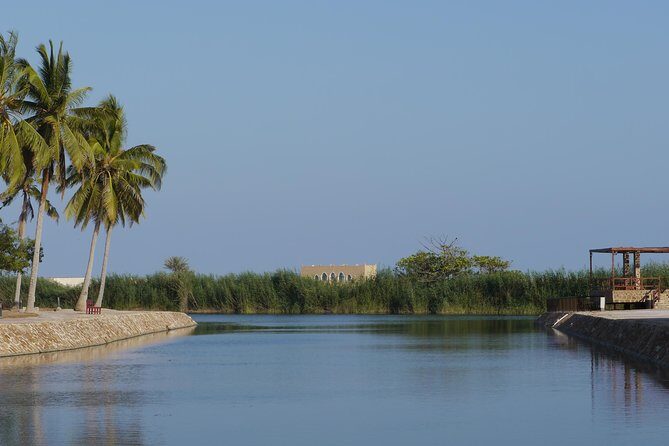
Here, you can ride boats and see animals such as camels, cows, and goats. That matters because it’s not only greenery and water—it’s also activity. And the setting is described as quiet and beautiful, which is exactly what you want when you’re switching from caves and sinkholes back to something calmer.
You’ll have about 30 minutes at Wadi Darbat. That’s short, but it’s realistic for a full-day schedule. In that time, you’ll want to prioritize either boat time or photos—if you try to do everything at once, you’ll end up with a rushed blur. Let your guide steer you toward the best moments.
Who this suits: If you like nature but also like easy, family-friendly experiences, Wadi Darbat is a strong mid-day reset.
A few more Salalah tours and experiences worth a look






Sumhuram (UNESCO World Heritage Site): ancient coastal culture in the middle of the day
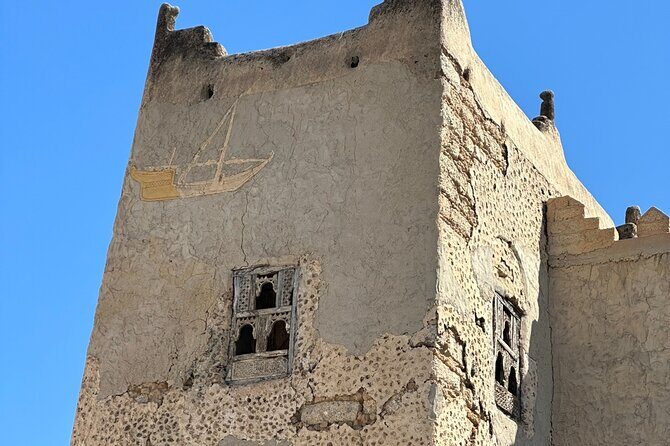
The trip also includes Sumhuram, a UNESCO World Heritage Site. This is the historical counterweight to all the geology and mountain views. While the day starts with Mirbat’s 1806 castle, Sumhuram shifts you further into deeper time.
Even if you’re not a “walk through every stone” person, UNESCO sites can change the way you look at the region. You start to connect the coastline, settlement life, and why places like this mattered. In a day that otherwise feels like it’s split between heights and caves, Sumhuram gives you a reason to slow down and think.
Because this part of the day is included, it also improves value. You’re not paying extra for a major cultural stop in addition to the free nature locations.
Practical note: UNESCO doesn’t always mean quick entry. Plan to follow your guide’s timing closely so you don’t lose momentum for the later stops, especially the sunset payoff.
Taqah sunset over the sea: a short stop with a big emotional payoff
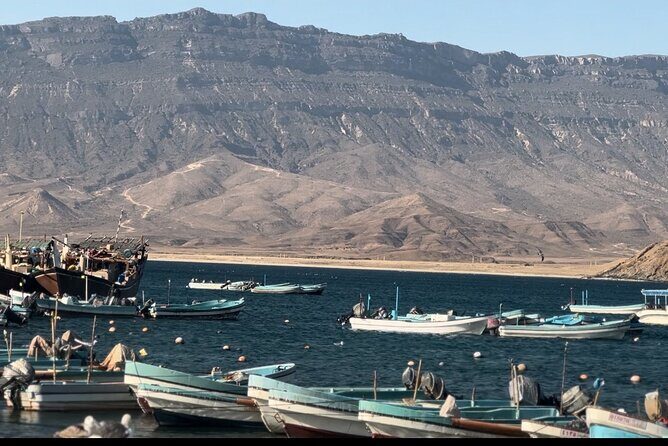
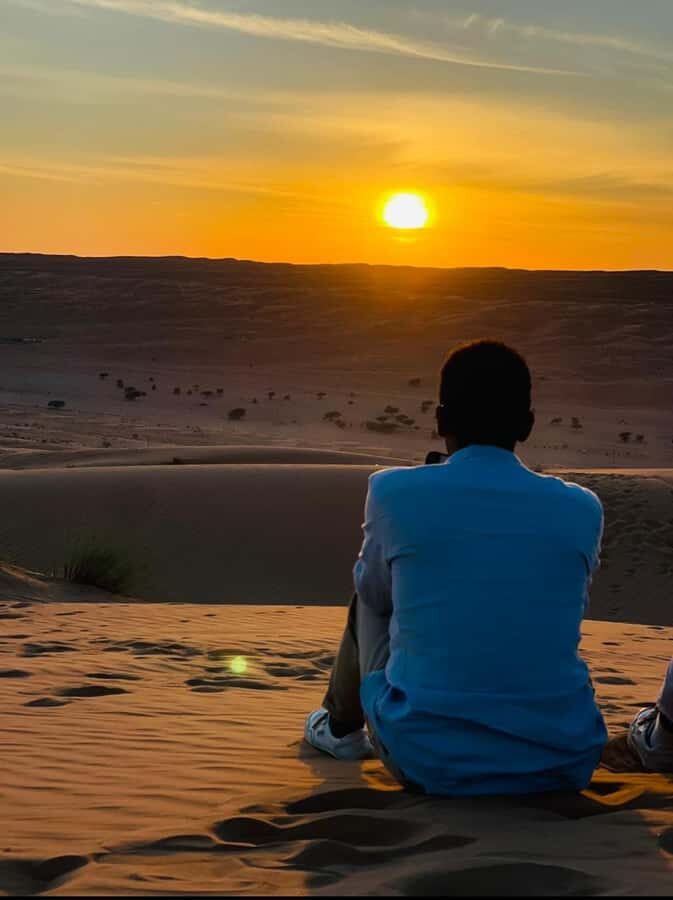
You finish in Taqah, a coastal town known as one of the best places to see sunset. Tourists come before sunset to watch from here, since the town overlooks the sea.
This is a smart end to the itinerary. After driving from mountain viewpoints down through valleys and heritage sites, sunset is the moment your eyes and brain can rest. The sky turns into the activity, and you don’t need to solve any logistics problem—just get into position with enough time to enjoy the changing colors.
You’ll have about 30 minutes here, so treat it like a “get there early, sit back, don’t over-plan” moment. If you want photos, do them without sprinting. If you just want the atmosphere, keep it simple and enjoy the view.
Tip: if you’re the type who likes to talk and watch, this is your stop. It’s a natural place to slow down, share your favorite part of the day, and compare notes with your group.
Price and time: is $100 per person good value for this private day?
At $100 per person for a private full day (about six hours), the value comes down to two things: how much variety you pack and how much decision-making you offload.
You’re getting:
- a private format with pickup offered
- bottled water and snacks included
- multiple free nature and scenery stops (as listed)
- a UNESCO site added in
- one paid entrance at Mirbat Castle (OMR 3 per person)
In other words, you’re paying for convenience and time efficiency more than for ticket fees. Private tours can be pricier than group buses, but here the structure makes it easy to justify: you get the “same-day best-of” flow instead of spending your energy figuring out routes.
Also, the fact that the tour can include more sightseeing than expected when timing works helps the value feel real. A day that runs efficiently is the difference between “I saw it” and “I actually enjoyed it.”
My take: if you’re traveling with just your group and you want a tidy East Salalah highlight day without juggling tickets, this is a fair price. If you’re solo on a tight budget and don’t mind planning your own transport, you could do cheaper independently—but you’d be trading away a lot of saved time.
Comfort, pacing, and what to bring for a smooth day
This tour is described as private, so you’ll be only with your group. Mobile ticket and pickup offered are also the kind of small things that prevent stress on travel days. Plus, bottled water and snacks mean you’re not stuck hunting for food mid-drive.
The best comfort move is to keep your day simple:
- Wear comfortable shoes for outdoor stops and viewpoints.
- Bring sun protection; you’ll spend time outside at high points and open areas.
- Bring a light layer if the mountain air feels cooler near the top.
Most travelers can participate, and the meeting area is near public transportation. That doesn’t mean you must use public transport, but it’s a sign the location is practical if plans change.
And about the guide: Salem’s style is described as clear and not overwhelming. In real terms, that means you’ll learn what matters without feeling like you’re stuck in a lecture.
Should you book the East Salalah full-day private tour?
Book it if you want one day that checks multiple boxes: history at Mirbat and Sumhuram, big nature at Jabal Samhan and in the cave/sinkhole pair, then an easy coastal finish at Taqah. It’s especially worth it for couples, small groups, and families who like a plan that stays flexible.
Hold off if you’re only after one specific theme—say, you only care about mountains or only want heritage—and you’d prefer to spend longer at fewer places. A six-hour format moves fast by design, even with a private pace.
If you do book, I’d decide based on your tolerance for variety. If you like swapping scenery every hour or so, this tour is built for your rhythm.
FAQ
How long is the East Salalah tour?
The tour lasts about 6 hours.
Is pickup included?
Yes, pickup is offered.
Is this tour private?
Yes. It’s a private tour/activity, so only your group participates.
What is the price per person?
The price is $100.00 per person.
What tickets or entrance fees are included?
Bottled water and snacks are included. The entrance fee for Mirbat Castle is not included (OMR 3.000 per person). The other listed stops are free.
Are mobile tickets used?
Yes, you get a mobile ticket.
How far in advance do people usually book?
On average, it’s booked 12 days in advance.
What is the cancellation policy?
You can cancel for free up to 24 hours in advance for a full refund. If you cancel less than 24 hours before the start time, you don’t get a refund.
Is it suitable for most travelers?
Most travelers can participate.
Where does the tour take place?
The tour is based in Salalah, Oman.