REVIEW · MUSCAT
Muscat City Tour Full Day – Private Guided Tour from Muscat
Book on Viator →Operated by Beautiful Salalah Tours · Bookable on Viator
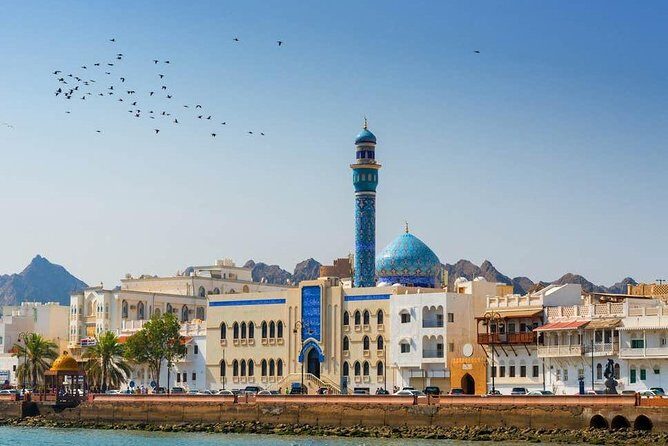
Mosques, forts, and souqs in one day. This private Muscat tour is a smart way to see the big sights without wasting time on directions or parking, and I like how it starts at the stunning Sultan Qaboos Grand Mosque and quickly moves you into old-city atmosphere at Mutrah Souq. You also get an easy rhythm: sightseeing, photo stops, and short walks, all tied together by air-conditioned driving.
Two things I really appreciate: round-trip pickup and drop-off make the day feel effortless, and the schedule is built for variety—from modern landmarks like the Royal Opera House to Portuguese-era fort views over the harbor. Your group stays private the whole time, so you can slow down for photos, or shorten a stop if you’re ready to move on.
One caution: not everything runs on the same timetable. The mosque has special visitor hours (including a Friday exception), and some places require separate entrance tickets that are not included—so you’ll want to plan for extra costs and a little flexibility.
In This Review
- Key highlights worth planning around
- A private Muscat day that actually saves energy
- What you’ll pay for (and what you won’t)
- The first wow: Sultan Qaboos Grand Mosque
- Non-Muslim visiting hours and dress rules
- Mutrah Souq: the old Muscat checklist for shopping
- A practical tip for Souq time
- Waterfront walking at Mutrah Corniche
- The Riyam Censer monument (quick but memorable)
- National Museum: a clear Oman context stop
- Budget for tickets
- Al Alam Palace: impressive facade, easy exterior viewing
- Mirani Fort and the Portuguese connection
- Al Jalali Fort: another viewpoint photo stop
- Shati Al Qurum: a calmer coastal break
- Royal Opera House: architecture and possible performance
- Transport style: how the day moves in cars
- The biggest drawback: Friday timing and entrance costs
- Who this tour fits best
- Should you book this private Muscat City Tour?
- FAQ
- Is pickup included?
- How long is the Muscat City Tour?
- Is this tour private?
- What’s included in the price?
- What isn’t included?
- Can non-Muslims visit the Sultan Qaboos Grand Mosque?
- Are there entrance fees for the sites on the itinerary?
- What if I need to cancel?
Key highlights worth planning around
- Morning access to the Sultan Qaboos Grand Mosque (free, with non-Muslim entry in the morning except Friday)
- Mutrah Souq shopping time for frankincense, Omani daggers, khanjer, silver crafts, and pashmina
- Harbor views in multiple ways from Mutrah Corniche to fort viewpoints near Al Alam Palace
- A museum stop that explains Oman at the National Museum (state-of-the-art, opened in 2016)
- Private, not shared: only your group travels with the guide and vehicle plan
A private Muscat day that actually saves energy
This tour is built for people who want to see a lot of Muscat in one go, without treating the day like a race. The core value is simple: you get pickup and round-trip transport (from Muscat or Seeb hotels, and port/airport pickups can be arranged). That means you’re not juggling rides, tickets, and logistics between scattered sites.
Because it’s private, the timing feels less rigid. You’re still following a route, but you control the pace inside each stop—time to look, time to rest, time to ask questions. In a city where weather and traffic can swing your day fast, that flexibility matters.
You can also read our reviews of more guided tours in Muscat


What you’ll pay for (and what you won’t)
The price is $200 per person, and the schedule is typically booked about 65 days ahead on average. It’s also listed with group discounts, which can make the per-person cost easier to swallow if you’re traveling with family or friends.
Here’s the split that matters:
- Included: air-conditioned vehicle, bottled water on board, and private transportation.
- Not included: lunch and all entrance tickets.
So the real comparison isn’t just the headline price. When you add entrance fees for sites like the National Museum, Mirani Fort, and the Royal Opera House (all listed as not included), you’ll want to budget for those during the tour day.
The first wow: Sultan Qaboos Grand Mosque
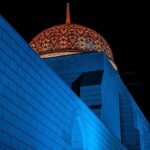
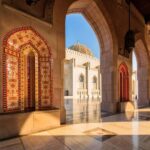
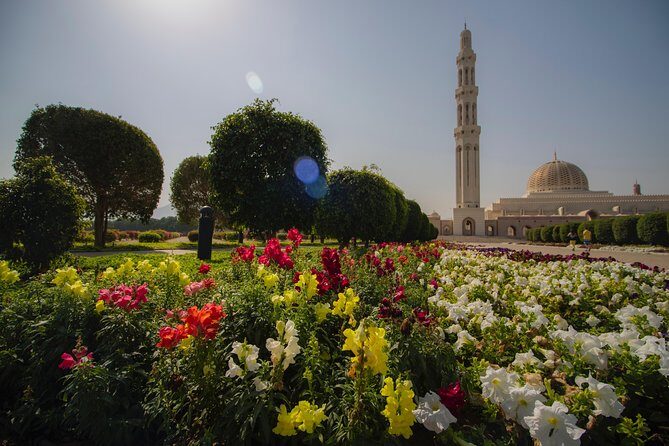
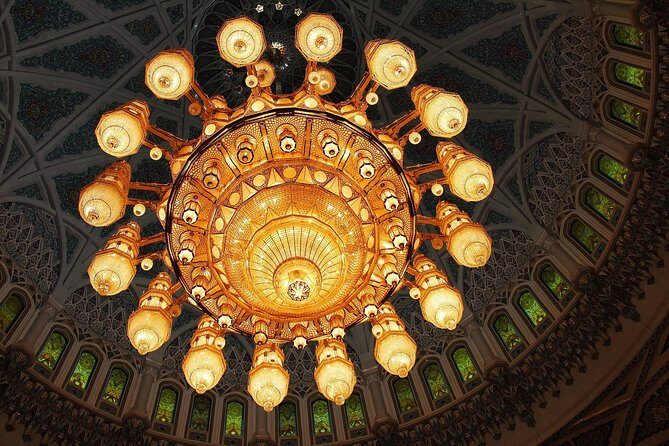
If you’re only going to pick one “anchor” stop, make it the mosque. The Sultan Qaboos Grand Mosque is described as a masterpiece of architecture, with a massive prayer hall, intricate mosaics, and the world’s second-largest handwoven carpet. Even before you step inside, the scale is the kind of thing that makes you pause.
Non-Muslim visiting hours and dress rules
You can visit during morning hours, and access is noted as not available on Friday. For anyone visiting who isn’t Muslim, the key detail is planning the day around that morning window.
Dress code is strict, and it’s not the time to wing it. You’ll need full-length trousers, a shirt that covers the arm, and for ladies, a head scarf is required. Plan to bring something appropriate or be ready to adjust on arrival.
The good news: the mosque stop is scheduled for about one hour, and the pace is gentle. You’ll have time to look around and appreciate the quiet.
Mutrah Souq: the old Muscat checklist for shopping
Next comes the old city feel, and Mutrah Souq is where Muscat shopping turns from souvenir hunting into real cultural texture. This is a traditional Omani market with stalls that focus on signature products.
This is where you’ll likely find:
- Frankincense
- Omani dagger types (including khanjer)
- Silver handicrafts
- Pashmina shawls
Even if you’re not buying much, I like the way the souq helps you understand daily life here. The streets tighten, the scents and textures change, and you see craftsmanship up close.
You can also read our reviews of more city tours in Muscat




A practical tip for Souq time
Because the souq stop is about one hour, treat it like a focused outing. If you want to compare prices, decide what you’re shopping for first—then walk with purpose.
Waterfront walking at Mutrah Corniche
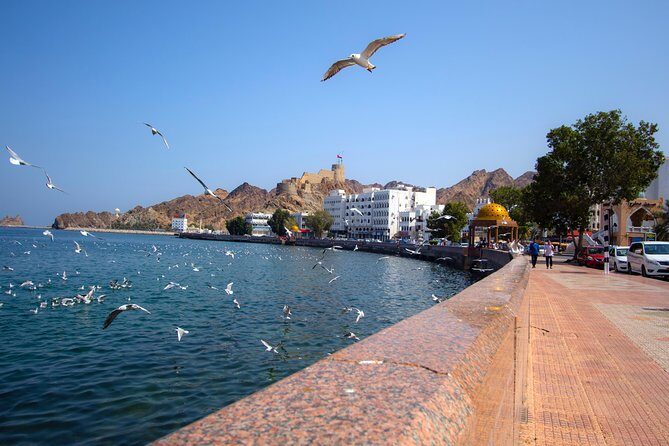
From the souq, the tour heads to Mutrah Corniche, described as the largest corniche in Oman and a major tourist spot. It’s a scenic waterfront with harbor views and the surrounding mountains.
This part of the day is shorter—about 30 minutes—but it’s a nice reset after market time. It’s also where you can take a breather if the heat is building or if you simply want a softer moment before more sightseeing.
The Riyam Censer monument (quick but memorable)
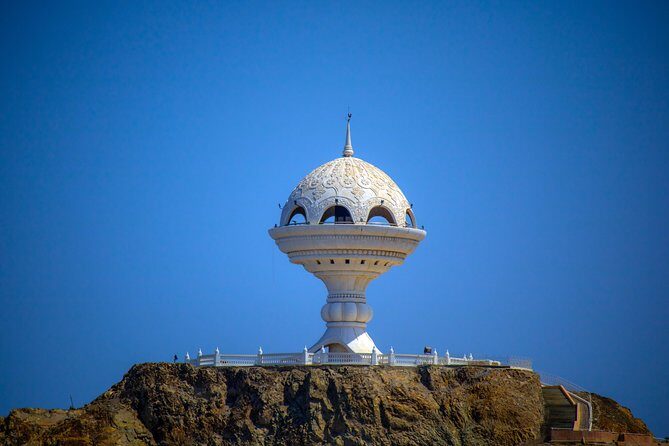
Along the way, you’ll pass the Riyam Censer, a striking monument designed to resemble a traditional Omani incense burner. It’s not positioned as a long stop, but it’s the kind of photo moment that makes the route feel curated.
If you care about details, look at the shape and proportions. It’s one of those modern public monuments that uses traditional design language.
National Museum: a clear Oman context stop
After you’ve seen a mosque and a souq, the National Museum helps connect the dots. This museum is state-of-the-art and opened in 2016, and it’s set up to explain Omani history, culture, and both tangible and intangible heritage.
The museum is said to be masterfully curated, with actual Omani antiquities as well as custom-made models of castles and important landmarks. That model-based approach matters: even if you’re not a museum person, you’ll likely still understand what you’re looking at.
Budget for tickets
Admission is listed as not included, and the museum stop is scheduled for about two hours. If you’re the type who likes to read everything, give yourself closer to the full time. If you prefer a faster pace, you can still see the big themes without lingering too long.
Al Alam Palace: impressive facade, easy exterior viewing
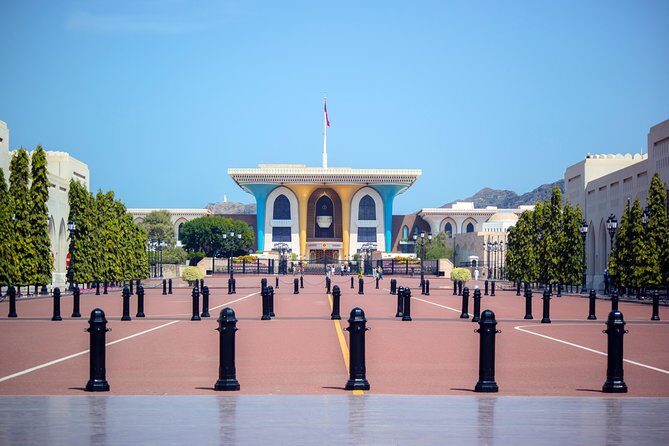
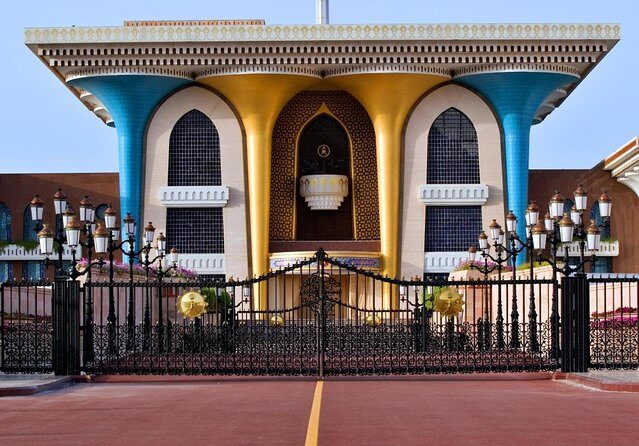
Al Alam Palace (Flag Palace) sits at the heart of Old Muscat. It’s built in 1972 and described as a flamboyant example of contemporary Islamic design.
Here’s the practical catch: the palace itself is not open to the public, but you can get a good view of the facade from the iron gates. The stop is about one hour, which gives you time to take photos from multiple angles without feeling rushed.
Mirani Fort and the Portuguese connection
Right behind Al Alam Palace is Mirani Fort, described as built by the Portuguese. Entrance inside is permitted with a ticket, and that’s listed as not included.
If you like fortifications and harbor geography, this is worth your attention. The fort’s location—so close to the royal district—makes it easier to understand how controlling sea access shaped power here.
Al Jalali Fort: another viewpoint photo stop
On the opposite side of the harbor, you’ll see Al Jalali Fort, also Portuguese-built. It’s not accessible to the public, so treat this as a short outside photo stop (about 10 minutes).
The value here is visual orientation. After you’ve seen Mirani from one side, your brain links the harbor scale and the defensive layout.
Shati Al Qurum: a calmer coastal break
Next, you’ll head to Shati Al Qurum on the Qurum Beach Corniche. This is a popular coastal spot with a long sandy beach and a scenic promenade. The scheduled stop is about 20 minutes, and the goal is simple: slow down, stretch your legs, and enjoy Arabian Sea views.
If you’re visiting in the middle of a busy day, these short coastal moments are more useful than they sound. They help prevent sightseeing fatigue.
Royal Opera House: architecture and possible performance
Muscat’s Royal Opera House is a major cultural venue, known for its architecture and world-class performances. The tour notes that you can visit inside with an entrance ticket, which is listed as not included. The stop time is about one hour.
Even if you’re not catching a show, the interior visit can be worthwhile for design lovers. If you do get inside, check what’s going on that day (performances aren’t mentioned as guaranteed). Plan for the ticket cost and the fact that schedules can shape what you see.
Transport style: how the day moves in cars
You’ll be on an air-conditioned vehicle, with bottled water on board—exactly the kind of comfort that keeps a full day from turning into a hot slog. Pickup and drop-off reduce time lost on logistics, and because it’s private, your day doesn’t depend on other groups’ delays.
One real-world detail you may want to consider: in group setups that split across more than one car, your guide may coordinate across vehicles. The tour is private, but larger groups can still mean more than one vehicle to move everyone efficiently.
The biggest drawback: Friday timing and entrance costs
The tour includes a mosque stop with clear rules: morning access for non-Muslims, except Friday. Since Friday is an off day in Muslim countries and some places can close or adjust hours, this matters more than it might on other travel itineraries.
If your dates include a Friday, I’d handle it this way:
- Ask ahead which stops will operate on your specific day.
- Be ready for alternative timing or shortened options.
- Pack appropriate clothing even if you’re not sure where you’ll stop first.
Also, don’t forget that entrance tickets for multiple sites are not included. If you’re budgeting tightly, you’ll want to know that the day can cost more once you add museum, fort, and opera house admissions.
Who this tour fits best
This private city tour is a good match if you:
- Want to see the key highlights of Muscat in one half-day-to-day chunk (listed 6 to 8 hours)
- Prefer hotel pickup and door-to-door convenience
- Like a mix of spiritual sites, old-city markets, and modern cultural landmarks
- Are traveling as a group and can use the private format efficiently
It’s also sensible for first-timers. You’ll come away with a clearer mental map: where old Muscat sits, how the harbor shapes the forts, and how national institutions frame Omani culture.
Should you book this private Muscat City Tour?
I’d book it if you want a guided route that makes Muscat easier on your feet and your schedule. The strongest reasons are the Sultan Qaboos Grand Mosque morning focus (when it applies), the Mutrah Souq shopping window, and the fact that transport and pickup are handled so you can stay in sightseeing mode.
I’d hesitate or prepare more carefully if your travel dates fall on a Friday or if you dislike paying extra for entrance tickets. In that case, ask what’s open for your day and plan your budget for museum and fort admissions.
For most visitors, this hits the sweet spot: lots of meaningful stops, reasonable time per location, and a private pace that keeps the day from feeling like a checklist.
FAQ
Is pickup included?
Yes. The tour offers round-trip transfers to and from Seeb or Muscat hotels. Port and airport pickups can also be arranged.
How long is the Muscat City Tour?
It runs about 6 to 8 hours (approx.).
Is this tour private?
Yes. It’s a private tour/activity, so only your group participates.
What’s included in the price?
Included items are an air-conditioned vehicle, bottled water on board, and private transportation.
What isn’t included?
Lunch and all entrance tickets are not included.
Can non-Muslims visit the Sultan Qaboos Grand Mosque?
Non-Muslim visitors can enter during morning hours, except on Friday. The dress code must be followed.
Are there entrance fees for the sites on the itinerary?
Some stops list admission as free, while others list admission as not included (such as the National Museum, Mirani Fort, and the Royal Opera House).
What if I need to cancel?
You can cancel for a full refund if you cancel at least 24 hours in advance of the experience’s start time.