REVIEW · NIZWA
A Mirage In The Mountain
Book on Viator →Operated by Bin Majid Tourism · Bookable on Viator
Wadi walks beat museum time in Oman. This 3-hour trek near Birkat Al Mouz blends dry river channels, mountain shrubs, and rock clues that can become a real waterfall after rain. I love the wadi geology and how the guide helps you read the trail, and I love the climb to Sarab, an abandoned village where you get a hands-on sense of how people lived.
The main catch is effort. This is a Level 3 hike with some steep or exposed sections, so you’ll want mid-to-good fitness and sturdy shoes, plus you’re dependent on good weather.
In This Review
- Key Things That Make This Hike Worth Your Morning
- Wadi Start Near Nizwa: How the Hike Gets Its Magic
- Reading the Dry River: Shrubs, Rocks, and Natural Clues
- The Rock Formation That Becomes a Waterfall (Sooner Than You Think)
- Up to Abandoned Sarab: Houses, Quiet, and Human Scale
- Level 3 Terrain: What You Need to Know Before You Go
- Time, Meeting Point, and How the 3 Hours Actually Feel
- Price and Value: Is $220 Per Person Fair?
- Trust Your Guide: The Difference Communication Makes
- Route Clarity: When Paths Fork and You Need Simple Directions
- Should You Book This Hike to Sarab and the Wadi?
- FAQ
- Where does the hike start and end?
- What time does the hike begin?
- How long is the experience?
- How hard is the hike?
- Is the tour private?
- What’s included in the price?
- Is pickup and drop-off included?
- Are entrance fees included?
- What should I do about weather?
- FAQ
- Can I cancel for a full refund?
Key Things That Make This Hike Worth Your Morning
- Dry-wadi scenery with a purpose: you’re walking natural channels that explain how water shapes the mountains
- A waterfall rock you only fully get in rainy season: still impressive even when it’s dry
- Sarab’s abandoned houses: you don’t just look—you walk the spaces and imagine daily life
- Level 3 terrain: expect steep, sometimes exposed spots that reward steady pacing
- An English/Arabic Omani guide: communication is straightforward, and routes stay clear
- Private group setup: it’s just your group, so the hike feels personal rather than rushed
Wadi Start Near Nizwa: How the Hike Gets Its Magic
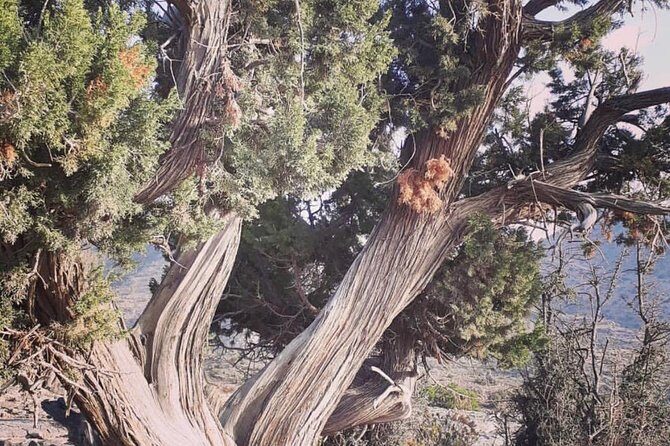
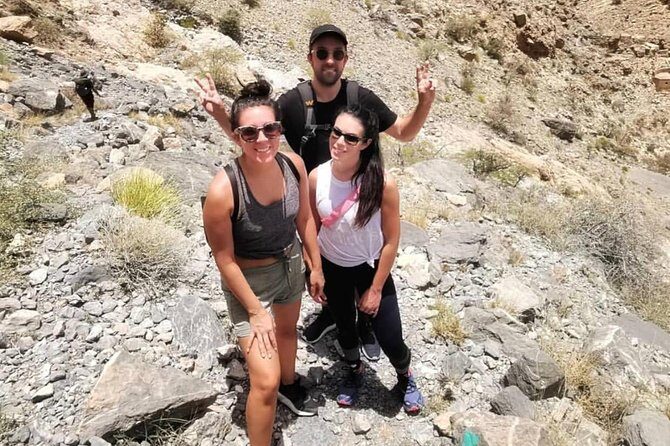
The hike begins at a wadi—a dry waterway—just minutes from the hotel grounds in the Nizwa area. That matters. You don’t burn time driving or hunting for the trailhead. You’re on the ground fast, and you start reading the place immediately: the way the rocks sit, where the ground dips, and how the wadi cuts through the mountain.
Once you start walking, the atmosphere shifts from “scenery” to “system.” In Oman’s mountains, dry wadis aren’t just empty paths. They’re evidence—of past rain, of flash water, and of how the land channels storms through narrow routes. Even on a dry day, you can see why this area matters.
Also, the timing helps. You start at 8:00 am, so you’re hiking in cooler morning air, with better footing and more energy for the climb later.
You can also read our reviews of more tours and experiences in Nizwa.

Reading the Dry River: Shrubs, Rocks, and Natural Clues
Early on, you’ll move through the wadi landscape and notice how the trail follows the ground’s logic. You’ll see rocky formations and shrubs that signal something important: this is a fertile mountain area, even when it looks dry from a distance. A good guide makes those details click.
Here’s what to pay attention to as you walk:
- Where the wadi narrows or widens: it tells you how water would spread versus rush through
- Rock breaks and layers: these often explain why some spots feel easier to step around
- Shrub clusters: they can mark sheltered micro-areas where moisture lasts longer after rain
This part is also your warm-up—mentally and physically. It’s not just walking downhill and uphill at random. The route is built to help you understand the place before you head toward the village climb.
The Rock Formation That Becomes a Waterfall (Sooner Than You Think)
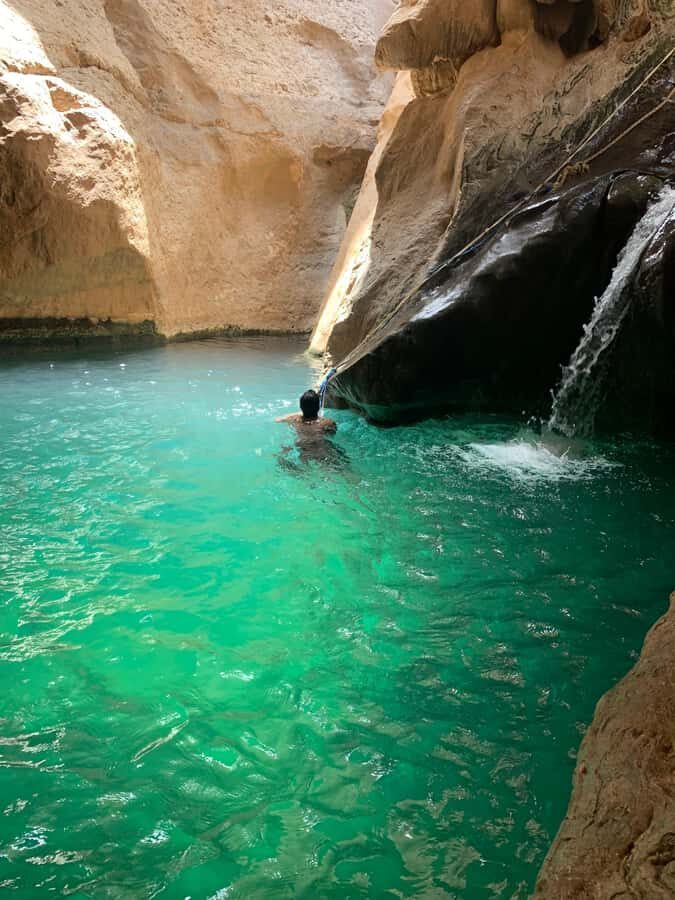
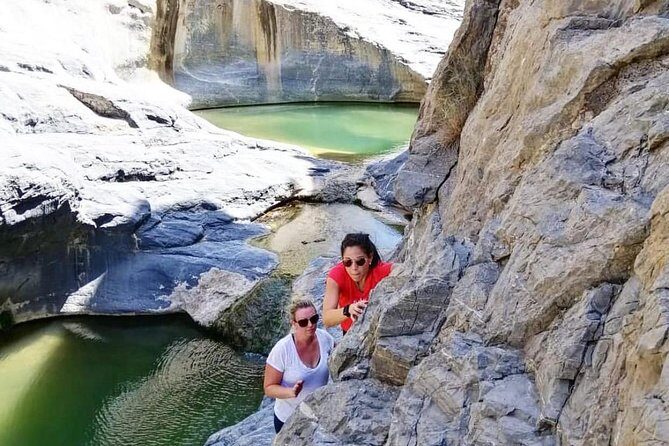
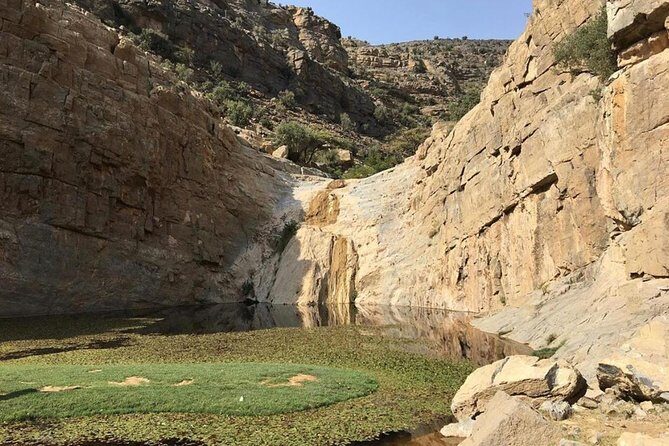
The hike ends near an impressive rock formation that becomes a spectacular natural waterfall in the rainy season. Even if your day is not rainy, it’s still worth slowing down here. The formation is dramatic for a reason: it’s built to receive and redirect water when storms hit.
Think of this stop as a “future scene.” You’re not waiting for the waterfall to start—because on most days it won’t. Instead, you’re standing at a spot where you can visualize the transformation. That mental picture is one of the best parts of hiking in Oman: you see the landscape in two states, dry today and reshaped by rain later.
If weather is good (or at least stable), this rock section also tends to be one of the most photo-friendly stretches, because the form and depth of the rocks become the main attraction.
Up to Abandoned Sarab: Houses, Quiet, and Human Scale
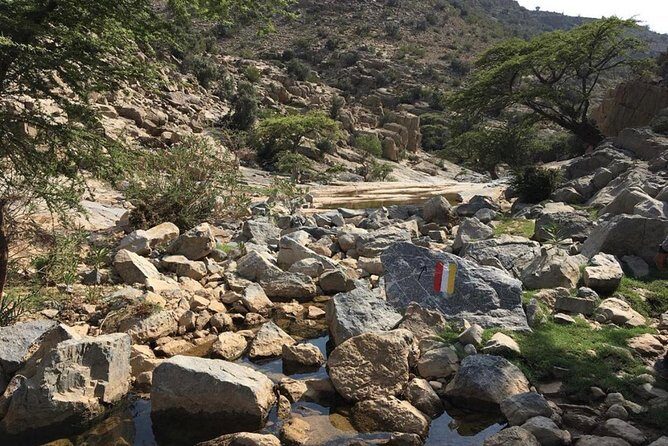
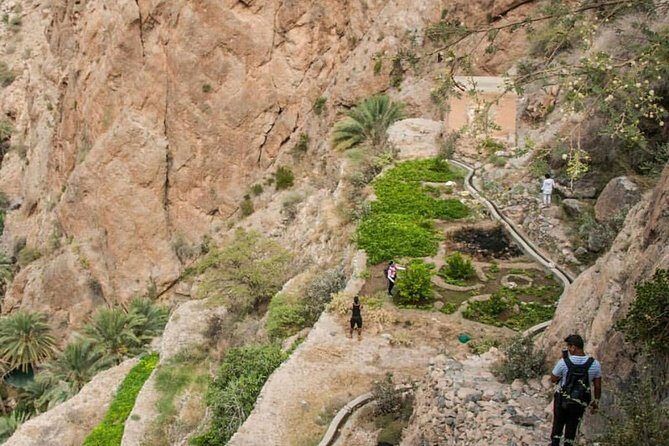
Then comes the climb—up to the abandoned village of Sarab, described as the local people’s original home, and the one closest to the hotel. That’s the heart of the experience.
This isn’t a village you just pass by. You’re guided toward the abandoned houses and given time to explore. You can step into the spaces and imagine daily life—how rooms were arranged, how movement through doorways shaped chores, and why settlement here made sense in mountain terrain.
A few things make Sarab especially powerful:
- You get scale: it’s easy to get lost in how big a mountain is, but abandoned houses bring you back to human proportions
- The setting feels honest: you’re surrounded by the environment that supported those lives, not just a curated viewpoint
- Your guide brings the story forward: with an Omani perspective (and English/Arabic support), the village stops being a random ruin
One small detail that can enhance your visit: wear yourself out enough on the climb that you actually notice silence. On a good morning hike, Sarab feels still. That stillness makes the place land.
And in one case, you may hear local route names mentioned alongside Sarab-related village areas. The point is the same: you’re being taken to abandoned village spaces tied closely to the mountains around Nizwa.
Level 3 Terrain: What You Need to Know Before You Go
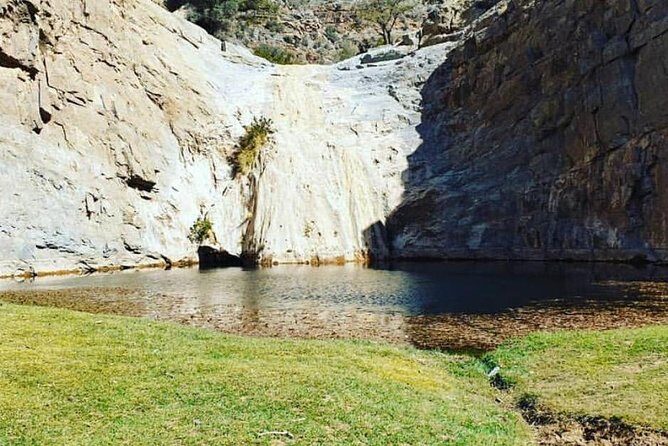
This hike is rated Level 3: challenging, with some steep or exposed sections, and a need for mid-to-good fitness. That rating isn’t there to scare you off—it’s there to keep you comfortable.
Practical expectations:
- You’ll climb, then you’ll descend, and both can feel steeper than you expect on uneven stones
- Exposed bits mean you should keep your attention on footing, not just the views
- Your pace matters more than speed; rushing is how you slip
My advice: if you’re the type who likes “stop and stare” photos, plan for fewer stops on the steep sections. Save your longer pauses for the wadi walk and for Sarab.
Also consider shoes. The tour doesn’t list specific gear, so I’d treat it like a standard mountain hike: closed-toe shoes with real grip.


Time, Meeting Point, and How the 3 Hours Actually Feel
The total time is about 3 hours. Because you start at 8:00 am and you’re back at the meeting point at the end, the hike stays focused. You’re not spending half the day “in transit.”
Meeting point is Birkat Al Mouz, and the experience ends back at the meeting point. That loop format is helpful. You can leave your brain at the trailhead knowing the route is designed to bring you home the same way you came in, just with new scenery and elevation changes along the path.
The tour is also set up as a private tour/activity, meaning only your group participates. That often makes a difference on hikes like this. You get steadier pacing, fewer stops for strangers, and more flexibility if the guide adjusts based on how you’re moving.
Price and Value: Is $220 Per Person Fair?
At $220 per person, this hike is not a bargain-basement outing. But it also isn’t a “just walk and hope” type of experience.
Here’s what you’re paying for, based on what’s included:
- A hiking guide (experienced and English/Arabic speaking)
- The route structure: wadi walk + rock formation area + Sarab village exploration
- A private format (only your group)
What’s not included: pickup/drop, entrance fees to tourist places (if any come up), and anything beyond guide services. The good news is that the start is “near public transportation,” so you might have more options than you’d assume, but the tour does not promise a paid transfer as part of the base rate.
So is it good value? For me, it comes down to how much you want context. If you enjoy having someone help you interpret wadis and abandoned village areas, $220 starts to feel reasonable. If you only want a casual walk with no story, you can find easier self-guided options—but you lose the explanation that makes Sarab and the wadi feel connected.
Trust Your Guide: The Difference Communication Makes
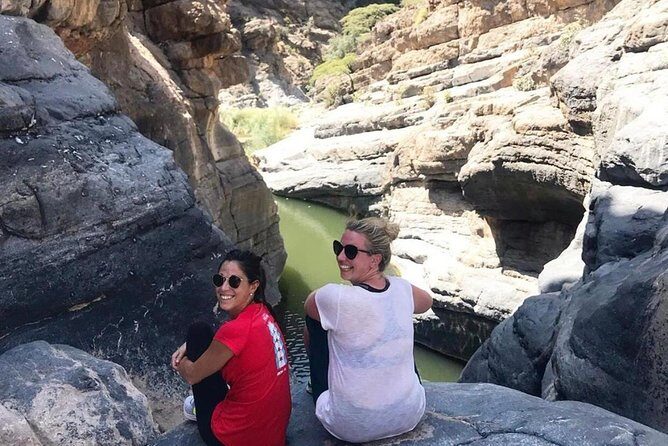
One thing that consistently stands out from real experiences: a guide named Mohammed (and also Mohammed Al Hinai in one case) is credited for making the day smoother and more enjoyable.
That matters because on a hike with steep and exposed spots, route clarity and pacing are everything. A strong guide:
- Keeps the trail straightforward when paths split
- Adjusts your pace so you don’t burn out early
- Helps you connect what you’re seeing with why it matters
There’s also a cultural note that’s worth taking seriously. In one feedback, a visitor was thanked for wearing the local men’s dress, the dishdasha. You don’t need to plan a costume change, but it’s a reminder to dress appropriately and respect local customs—especially when you’re entering abandoned homes and village spaces.
Route Clarity: When Paths Fork and You Need Simple Directions
A small but useful tip: at a junction with two direction choices, there’s a key turn that keeps the route on the wadi line on the way out and helps you return along the heights. In other words, if a fork appears and you’re not sure, ask immediately.
On these trails, “almost right” can still cost energy. Waiting one extra minute to confirm direction saves you from a long detour and helps the guide keep the planned timing.
Should You Book This Hike to Sarab and the Wadi?
If you want a mountain walk that includes wadi science, a dramatic rock feature that ties to rainy-season water, and a real chance to step through abandoned village houses rather than just view them from afar, then yes—this is a strong booking.
Book it if:
- You like guided interpretation (not just photos)
- You’re okay with Level 3 effort
- You want a focused 3-hour experience with a private-group feel
Skip it if:
- You want an easy stroll with minimal elevation
- You’re not comfortable with steep or exposed steps
- You’re visiting during questionable weather (the experience requires good weather, or it gets rescheduled/refunded)
If you’re on the fence, ask yourself one question: do you want the story and the terrain reading? If yes, the guide-led format makes the $220 price feel more justified.
FAQ
Where does the hike start and end?
The activity starts at Birkat Al Mouz, Oman and ends back at the same meeting point.
What time does the hike begin?
The start time is 8:00 am.
How long is the experience?
It lasts about 3 hours.
How hard is the hike?
It’s rated Level 3 (challenging), with some steep or exposed sections and a need for mid-to-good fitness.
Is the tour private?
Yes. It’s a private tour/activity, meaning only your group participates.
What’s included in the price?
You get the services of a hiking guide, including an experienced Omani hiking guide who can speak English and Arabic.
Is pickup and drop-off included?
No. Pick-up/drop can be arranged on request for an extra charge, but it is not included.
Are entrance fees included?
No. Entrance fees to tourist places are not included.
What should I do about weather?
The experience requires good weather. If it’s canceled due to poor weather, you’ll be offered a different date or a full refund.
FAQ
Can I cancel for a full refund?
Yes. You can cancel up to 24 hours in advance for a full refund.