REVIEW · MUSCAT
5 Days 4 Nights Oman Package Tour Mohammed
Book on Viator →Operated by Star Tours · Bookable on Viator
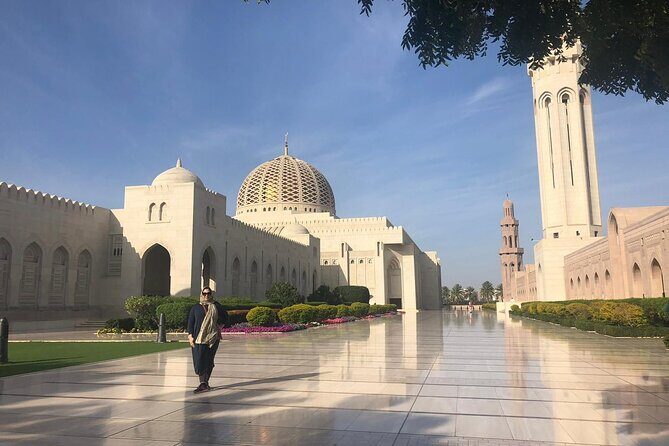
That 21-ton mosque carpet grabs attention fast. This 5-day package turns Muscat into forts, souqs, and beaches, then pushes out to Wadi Shab pools and a desert camp night—so you get culture and nature in the same week. I also like how the day-one highlights are built around the Sultan Qaboos Grand Mosque before you drift into the older harbor area.
I’m especially into the guide-led flow. Past guests specifically praised Saif, Ahmed, Musab, Majid, Qambar, and others for keeping things organized and on time, while also sharing context about what you’re seeing. Add English-speaking guidance, bottled water, and entrance fees being covered, and this feels like a low-stress way to hit Oman’s most “first-timers” targets without playing ticket roulette.
One caution: the pace can be active. You’ll do a real hike in Wadi Shab (about 35 minutes up through the canyon) and you’ll be on the move most days, so build in comfortable walking shoes and don’t plan heavy extras on top of this tour—especially if you’re traveling with anyone who hates long drives.
In This Review
- Key highlights worth centering your expectations on
- Value check: what your $1,762.25 per person really covers
- What’s not fully included (so you don’t get surprised)
- Day 1 in Muscat: the Grand Mosque, tea at Qurum, and Mutrah Souq
- Forts overlooking Old Muscat: Al Jalali and Mirani photo stops you can actually picture
- Practical tip
- Day 2: Bimmah Sinkhole, Wadi Shab swimming, and Ras al Hadd turtles night
- Day 3: Sur forts, a dhow workshop, Wadi Bani Khalid, then Wahiba Sands camp
- Day 4: Zukait Tombs, Jebel Akhdar Green Mountain, and the aflaj irrigation UNESCO story
- Day 5: Nizwa fort and silver souq, then Al Hamra, Misfat al Abreyeen, and Jebel Shams
- How to make your last day feel smoother
- Pace, comfort, and fitness: how to pack for wadis and dunes
- Who should book this Oman package (and who should think twice)
- Should you book it?
- FAQ
- How long is the Oman package tour?
- Where does the tour start and end?
- What time does the tour begin?
- Is pickup and drop-off included?
- Is the tour private?
- What language is the guide?
- Are entrance fees included?
- What meals are included, and what is not?
- Is the itinerary physically demanding?
- What if weather is poor?
Key highlights worth centering your expectations on
- Sultan Qaboos Grand Mosque carpet scale: a one-piece handmade Iranian carpet said to weigh around 21 tons.
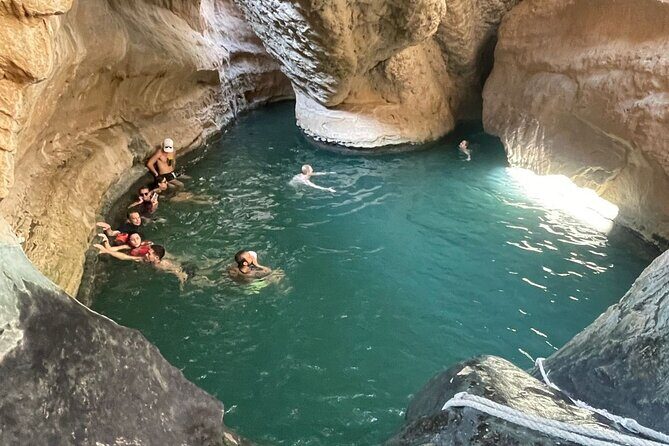
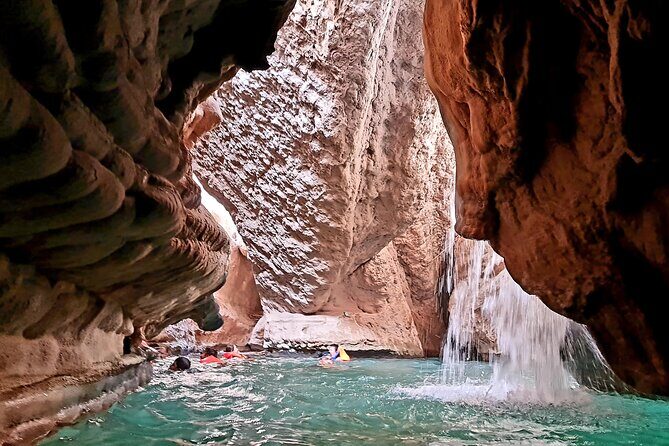
- Wadi Shab swimming plus cave light: pools you can swim between, ending at a crevice cave where light turns the water turquoise.
- Wahiba Sands desert camp night: sunset on the dunes, with time to relax and a dinner around camp vibes.
- Mutrah Souq and Old Muscat forts: souvenirs by the sea, then Portuguese-era fort photo stops overlooking the harbor.
- UNESCO-listed stops near Nizwa: Zukait Tombs and Oman’s aflaj irrigation systems appear on the route.
- Jebel Shams Grand Canyon views: a high overlook on your last day before returning to Muscat.
Value check: what your $1,762.25 per person really covers
At $1,762.25 per person for a 5 days / 4 nights package, the key value isn’t one single sight—it’s the way the route is packaged so you’re not managing logistics all week. You’re picking up from the Muscat area, getting pickup and drop-off, traveling in a comfortable 4WD vehicle, and traveling with an English-speaking Omani guide.
Money-saving detail: all entrance fees are included. That matters in Oman, where some sites have tickets and some days can include multiple stops. You also get bottled water, which is a small thing that still helps when you’re bouncing between beach sun, canyon walks, and desert heat.
Meal coverage is helpful but not total. You’re included for 4 breakfasts and 3 dinners (dinner is listed as included three times, and lunch is not included). That means you’ll still want a plan for lunches—either keep it simple with what’s offered near your stops or budget extra for lunches during the driving days.
Accommodations are included too, with the hotel/camp arrangements priced by group size (for example, 1 pax gets SR, 2 pax gets DR, and larger groups get DW/DB-style room options as stated). Your overnight plan breaks naturally into three “sleep zones”: Ras al Hadd for the turtle-area night, a Wahiba Sands desert camp night, and then Nizwa or Jebel Akhdar for your mountain-side base.
A few more Muscat tours and experiences worth a look



What’s not fully included (so you don’t get surprised)
Even with entrance fees covered, the itinerary notes some stops where admission is listed as not included (for example, the Royal Opera House area drive is included as a viewing, but its admission is not included; some fort photo stops show ticket status as not included). It’s not a dealbreaker, but it’s worth confirming what you’ll actually pay for on the day, especially if a specific building ticket matters to you.
Day 1 in Muscat: the Grand Mosque, tea at Qurum, and Mutrah Souq
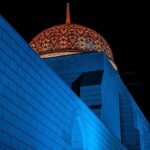
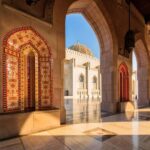
You start at 8:30am from Star Tours Oman, 18th November St, Muscat, and the first major stop is the Sultan Qaboos Grand Mosque. This is a smart opening move. It’s not just impressive architecture—it’s also designed for scale and detail, including that famous one-piece handmade Iranian carpet described as weighing around 21 tons and able to accommodate up to 20,000 worshippers. You’ll get a 1-hour visit with the admission covered.
After that, the route shifts into “city context” mode. The Royal Opera House is part of your drive and viewing time (ticket not included), so you’re learning the shape of Muscat’s cultural core without being stuck in a museum format too early in the day.
Then come two fun, easy-to-enjoy breaks that feel very Oman: Qurum Beach and food-and-drink sampling. At Qurum, you’ll have a photo stop and time to take in the coastline, plus you’ll try Omani bread with honey and karak tea. It’s a small inclusion, but it’s exactly the kind of moment that makes a tour feel human instead of checklist-heavy.
Next is Mutrah Souq, one of Oman’s older marketplaces, described here as dating back about 200 years. You get around 45 minutes to browse souvenirs. This is also where you can slow down your eyes and pick up small gifts—silver, textiles, and everyday items—without turning the whole afternoon into a shopping mission.
The final Muscat stretch blends “royal Oman” with Old Muscat’s defensive history. Al Alam Palace is a photo stop near the gates. The palace’s façade is described as gold and blue, and you’ll hear that it’s one of the sultanic residences used for official functions. The inner grounds are off-limits, so treat it as an exterior stop: take photos near the perimeter and then look outward—because the forts around it are part of the story.
Forts overlooking Old Muscat: Al Jalali and Mirani photo stops you can actually picture
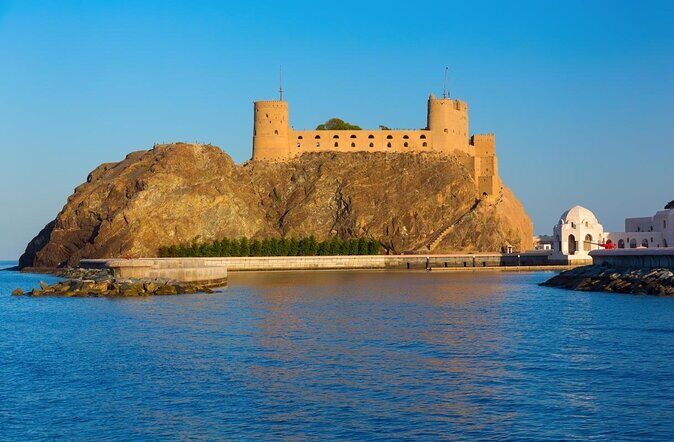
If you like history you can see with your own eyes, this part is for you. You’ll do photo stop time around the harbor forts: Al Jalali Fort and Mirani Fort.
Al Jalali Fort started as a Portuguese-built fort in the 1580s, meant to protect the harbor after Muscat was sacked twice by Ottoman forces. It later fell to Omani forces in 1650, and the fort’s timeline includes periods of capture and rebuilding. It also served as a refuge or jail for members of the royal family and, later in the 20th century, as Oman’s main prison until the 1970s. Restored in 1983, it’s one of those stops where the stone texture feels like a living timeline. You’ll get about 45 minutes.
Mirani Fort is similarly Portuguese in origin, and the story here includes the 1552 Capture of Muscat with an Ottoman force and artillery pressure. Your time is another photo stop session (about 45 minutes), and admission is listed as not included for this one.
Practical tip
Because these are photo stops, your best results come from being ready to move quickly. Wear shoes you can stand in, and don’t rely on perfect photo angles if you’re traveling with others who want to linger. The payoff is that you’ll leave Muscat understanding the harbor as a fortified system—not just a pretty waterfront.

Day 2: Bimmah Sinkhole, Wadi Shab swimming, and Ras al Hadd turtles night
Day two is the Oman nature shift—sinkhole geology, beaches, canyon pools, and then a turtle-area overnight.
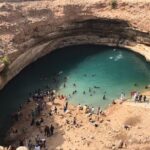
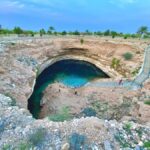
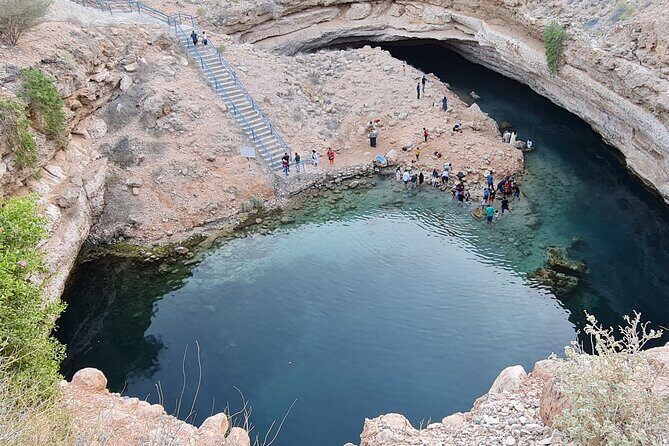
First up: Bimmah Sinkhole, described as a crater near the sea with a small lake at the bottom, believed to have been created by a meteor. It’s a short stop (about 30 minutes) and doesn’t ask for deep planning, which keeps the energy for what comes next.
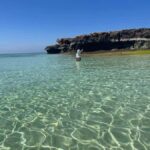
Then you’ll hit the beach break: Fins Beach. It’s listed as free admission, and you’ll have time to view it for about 30 minutes. This is your “reset” before you walk and swim in the wadis.
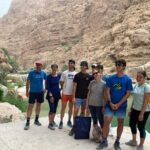
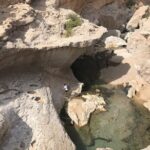
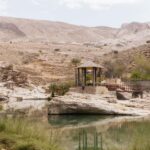
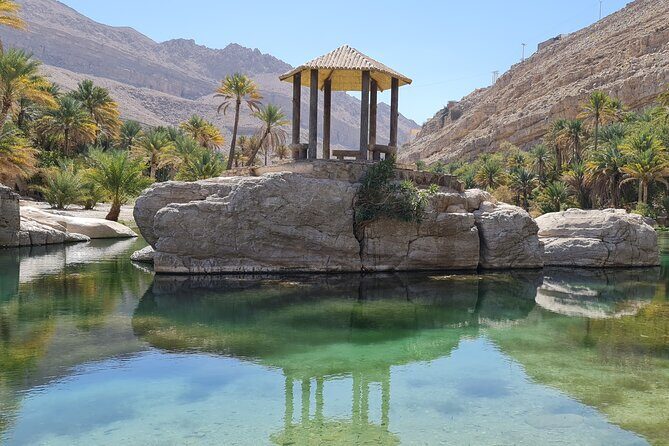
The highlight here is Wadi Shab. The itinerary calls for a 35-minute hike up through a canyon to reach the crystal-clear pools, and you’re allowed to swim between warm pools. The route ends at a last pool where there’s an opening among rocks that lets you swim into a crevice cave. Light filtering in turns the water turquoise blue, and you’ll see water cascading from above the cave opening.
Important: admission isn’t listed here, but your time commitment is real. The day section totals about 4 hours for Wadi Shab, with your hike and swim time inside that window.
You’ll also pass Wadi Tiwi, a coastal wadi with lush plantations noted as greener than some other wadis. It’s a shorter stop (about 30 minutes), so think of it as scenery and photos, not a long walk.
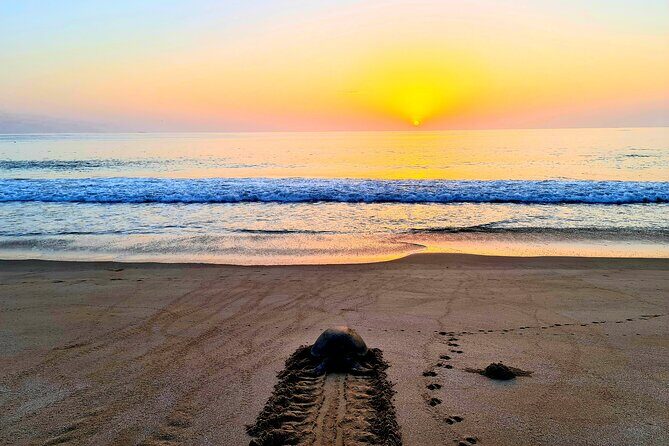
Finally, you reach Ras al Hadd Castle, with a focus on the beach and nearby Ra’s al-Jinz turtle breeding ground (green sea turtles). The itinerary specifies an overnight stay here. It’s not a guarantee you’ll see turtles on the schedule you travel, but the location is the reason this area is famous. You’re spending the night right where that natural story matters.
Day 3: Sur forts, a dhow workshop, Wadi Bani Khalid, then Wahiba Sands camp
This is a travel day that still feels varied, not repetitive. You start with Sur, then move into craft, animals, swimming, and dunes.
In Sur, you’ll have time to see the city and some old fortresses for about 30 minutes. This gives you a coastal Oman feel before you head into more inland nature.
Next is the Dhow Factory, where you can watch traditional wooden dhows being built. Admission isn’t included for this stop, but you get a quick look (about 30 minutes) at the kind of craft work that keeps Oman’s seafaring identity alive.
Then comes Omani Ghazal Farm in Al Kamel (Asilel Farm). It’s listed as a free admission stop with 30 minutes. The mention of the ghazal gives the day an animal-meets-countryside angle, and it breaks up the travel time so you’re not just sitting in the vehicle for hours.
For a proper reset, you’re back to water at Wadi Bani Khalid. This one is a longer window—about 3 hours—and it’s described as big and beautiful, where you can swim, sunbathe, relax, and picnic in scenic wadi canyons.
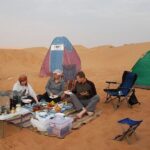
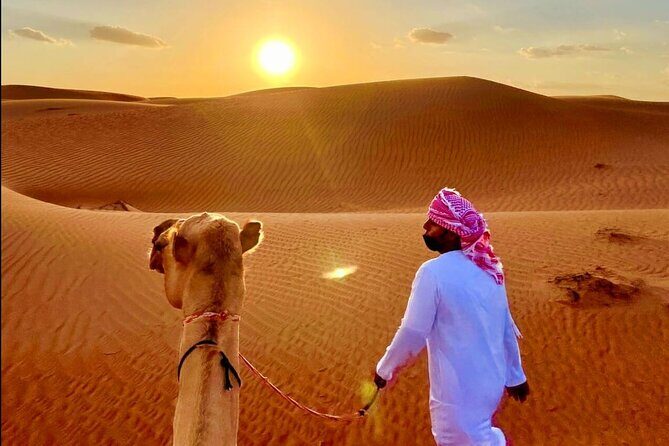
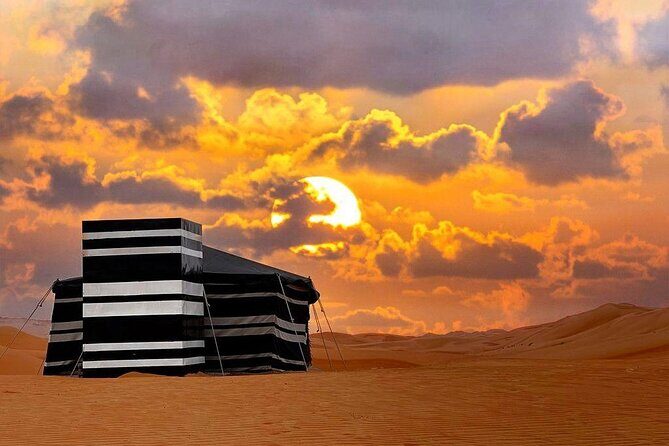
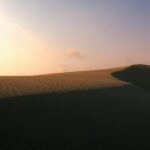
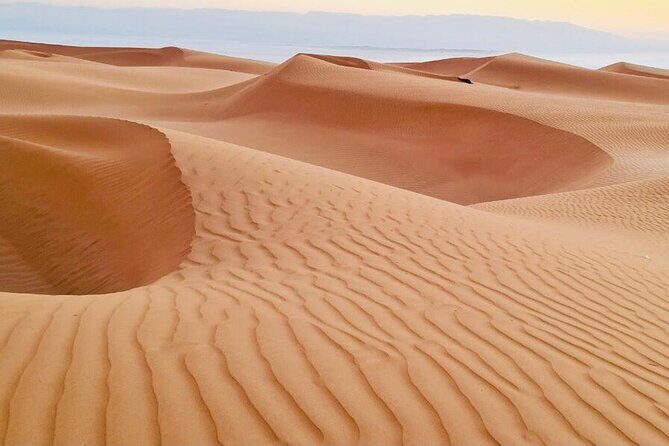
Then the day pivots hard into desert mode: Wahiba Sands. You’ll go to a desert camp, relax, and/or take part in an adventurous 4×4 drive in sand dunes. After that, you’ll watch the sunset from a big sand dune. Dinner at the camp and time around a campfire are included.
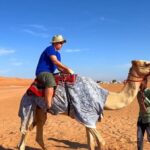
A lot of the best memories in Oman desert camps come from “extra” dune-time activities. Some past guests have described sandboarding and camel rides as part of their desert experience. Since those details aren’t stated as guaranteed inclusions in the itinerary, ask your guide whether they’re offered by your camp package before you pay for them separately.
Day 4: Zukait Tombs, Jebel Akhdar Green Mountain, and the aflaj irrigation UNESCO story
Day four is mountain-and-heritage day, with UNESCO sites and historic villages.
You begin at Zukait Tombs in Izki. The description here is serious archaeology energy: the site is called a UNESCO “array fossilized bronze age landscape,” with well-preserved beehive tombs that act like a time capsule for the BCE era. The visit is about 2 hours.
Next is Jebel Akhdar, also called the Green Mountain. You’ll be in the Al Hajar Mountains range, and it’s listed at 2,980 meters. The itinerary calls it part of the Saiq Plateau at around 2,000 meters, so you’re in big altitude and big views territory even if your exact viewpoint points aren’t listed.
Then you visit Birkat Al Mouz Ruins, a well-known ruined village built into a mountain face. The point isn’t just the photos—it’s the way a human settlement fits into terrain. You’ll get about 2 hours.
After that, you tackle another UNESCO theme: water systems. The Aflaj Irrigation Systems of Oman appear on this route. The itinerary mentions that one aflaj system (Al Kattmyn) was added to the UNESCO list in 2006, and then you continue on toward Nizwa. This stop is about 1 hour.
Your day ends with an overnight stay at Nizwa or Jebel Akhdar. This matters because it reduces backtracking. Instead of returning to Muscat every night, you’re sleeping closer to the next day’s mountain heritage.
Day 5: Nizwa fort and silver souq, then Al Hamra, Misfat al Abreyeen, and Jebel Shams
Your final day is built around classic Oman towns and the dramatic canyon view that people remember.
You start in Nizwa, with Nizwa Fort. It’s described as a museum and also gives you splendid views over the town and surrounding mountains. Admission isn’t listed as included for this stop, so again: expect some tickets might fall outside the covered ones depending on what’s labeled for that specific building.
Then you head to Nizwa Souq, with 1 hour to browse. This is where you can look for Omani silver craft and other handmade items. If you want souvenirs that feel like real craft rather than mass-produced trinkets, this is one of the best windows.
After Nizwa, you shift to older village texture:
- Al Hamra Old Village (listed as free admission)
- Misfat al Abreyeen (about 1 hour), where older preserved houses are mentioned
Both stops are short, so they work best if you like walking and looking closely rather than rushing.
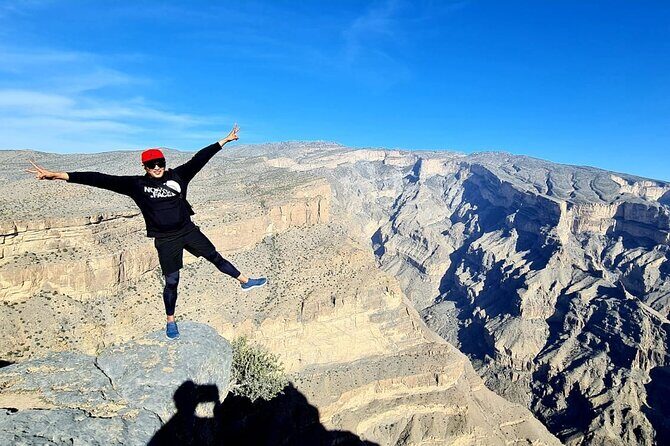
Finally comes Jebel Shams, described as the Grand Canyon of Oman, with a listed height of 3,009 meters. You’ll have about 3 hours here, then you return to Muscat.
How to make your last day feel smoother
Jebel Shams is your payoff. Plan to use it. If you’re the type who takes photos but then zones out, don’t. Put your phone away for a few minutes and look across the canyon. This is Oman at its biggest.
Pace, comfort, and fitness: how to pack for wadis and dunes
The itinerary is a mix of short photo stops and a couple of bigger active blocks. You’ll want moderate physical fitness, especially for Wadi Shab with its 35-minute canyon hike and swimming time between pools. The day timing suggests you’ll be moving throughout the day, so comfortable shoes are non-negotiable.
For supplies, the tour includes bottled water, but you should still bring essentials of your own:
- sun protection (hat/sunscreen)
- swimwear and a quick-dry layer for the wadi days
- a small bag that can handle sand and wet moments (desert + wadi days happen back-to-back)
Also note that some stops are explicitly labeled as photo stops, and some have ticket status listed as not included. That’s normal in a multi-site package, but it can feel rushed if you expect long museum time everywhere. If you want lots of free time, you may find this tour too scheduled.
Who should book this Oman package (and who should think twice)
This tour makes sense if you want a one-week hit of Oman that goes beyond Muscat. You’ll see Mosque + Souq + forts, then wadis and swimming, then a desert night in Wahiba Sands, and you finish with Nizwa and Jebel Shams.
It’s also a great fit for people who like planning that’s already done. With pickup/drop-off, a 4WD vehicle, and entrance fees covered, you’ll spend your mental energy on choosing what to photograph and what to ask your guide, not on hunting tickets.
Think twice if:
- you dislike hiking, even short canyon hikes
- you want a slower schedule with lots of unplanned time
- you’re counting on lunches being covered (they are not listed as included)
Should you book it?
If you like variety—city heritage in Muscat, swims in Oman’s wadis, and desert night skies—this package is a strong choice. The value is in the bundle: 4WD comfort, English guide, entrance fees, bottled water, and a set of included meals that prevent you from spending every day hunting food.
Before you book, do two quick checks with the operator:
- confirm which specific admissions are not included for stops like the Royal Opera House area and any fort or museum tickets marked as not included
- plan for lunch costs across the days where it’s not covered
If those fit your budget and you’re good with an active day or two, this is a smart way to see a lot of Oman without feeling like you’re running your own travel company in the car.
FAQ
How long is the Oman package tour?
It runs for about 5 days, with 4 nights included.
Where does the tour start and end?
It starts at the Star Tours Oman office on 18th November St in Muscat, and ends back at the same meeting point.
What time does the tour begin?
The start time is listed as 8:30am.
Is pickup and drop-off included?
Yes, pickup and drop-off are included for the Muscat area.
Is the tour private?
Yes. It is listed as private, meaning only your group participates.
What language is the guide?
The tour includes an English-speaking tour guide.
Are entrance fees included?
Yes. All entrance fees are included as part of the package.
What meals are included, and what is not?
Breakfast is included for 4 days, and dinner is included for 3 dinners. Lunch is not included, and any dinner not included from the hotel is also not covered.
Is the itinerary physically demanding?
The tour notes a moderate physical fitness level. You will have a hiking component on days such as Wadi Shab with about a 35-minute hike.
What if weather is poor?
The experience requires good weather. If it’s canceled due to poor weather, you’ll be offered a different date or a full refund. For refunds, you can cancel up to 3 days in advance for a full refund.