REVIEW · MUSCAT
Muscat: Full-Day Private City Tour by Car with Guide
Book on GetYourGuide →Operated by Global Safari for Travel and Tourism · Bookable on GetYourGuide
Mosque carpets weigh more than cars. That detail sets the tone for a smooth, private day around Muscat’s biggest landmarks, with a guide who helps you see the story behind the sights. I also like that the tour is private, so you can move at your own pace instead of getting herded. One thing to keep in mind: mosque rules and weather can affect what you’re able to do on the day.
What really made the difference for me is the way guides adjust to your group—slow walkers, lots of photos, longer explanations when you want them. Names you’ll likely hear again and again are Said and Mohamed, both praised for being attentive and flexible. The operator also highlights sustainability, and while they don’t turn it into a lecture, the basics feel practical: a single car for the route, water included, and less wasted time bouncing between areas.
In This Review
- Key points before you go
- A private Muscat day that keeps the driving efficient
- Sultan Qaboos Grand Mosque: the 21-ton carpet and practical dress rules
- Ministries and the Royal Opera House area: culture without extra ticket hassle
- Muttrah Souq: old trading streets for souvenirs and easy wandering
- Bait Al Zubair Museum: weapons, khanjar, and an Omani village outside
- Al Alam Palace and Fort Al-Mirani: photo stops with serious context
- Al Alam Palace (Palace of the Flag)
- Fort Al-Mirani
- Al Bustan Palace: ending with the coast’s glamorous edge
- Price and value: what $181 covers (and what doesn’t)
- Transportation between stops: why the order matters
- Your guide can make or break the day
- Who this tour is best for
- Should you book this Muscat private city tour?
- FAQ
- What is included in the Muscat private city tour?
- Is this tour private or shared?
- Do I need to pay extra for the Grand Mosque?
- Is entry to the Royal Opera House included?
- Do I have to pay extra to visit Bait Al Zubair Museum?
- Is lunch included?
- What is the overtime charge if the tour runs long?
- What should I wear to enter the Grand Mosque?
- What languages are available for the guide?
- Can I reserve and pay later?
Key points before you go
- A true private car route that helps you link Old Muscat, the waterfront, and the mosque without wasting hours
- The Grand Mosque’s 21-ton carpet and the cultural context behind it
- Muttrah Souq in daylight for easy souvenir browsing and photo moments
- Bait Al Zubair Museum with weapons and an Omani village-style setting outside
- Photo stops for Al Alam Palace, Fort Al-Mirani, and Al Bustan Palace (great for quick scenic context)
- Guides like Said, Mohamed, Muhammet, and Abdullah who adapt to your pace and needs
A private Muscat day that keeps the driving efficient
This is the kind of Muscat tour that works because it treats the city like a map, not a checklist. You’re picked up in Muscat, and you spend the day in a private car with a guide—so getting from the mosque area to Old Muscat and the harbor is mostly about a drive, not constant walking.
The flow also makes sense. You start with the Grand Mosque first, then you move toward the central government/arts zone, and after that you head into Muttrah and Old Muscat. The later stops cluster around the harbor and the historic core, so you’re not zigzagging across town over and over.
It’s a good match if you want:
- A full-day overview without rushing.
- Photo stops without losing the guide’s explanations.
- More time asking questions than chasing other people’s schedules.
You can also read our reviews of more guided tours in Muscat
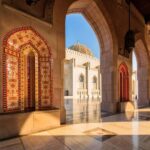


Sultan Qaboos Grand Mosque: the 21-ton carpet and practical dress rules
If you only visit one major site, make it the Grand Mosque. It’s one of the biggest mosques in the country and a standout for design details, including a single-piece handmade Iranian carpet said to weigh 21 tons and accommodate up to 20,000 worshippers.
This is also where you’ll need to be most ready with the rules. The tour notes clear dress code requirements:
- No shorts or short skirts.
- No short pants.
- Women must cover their hair with a headscarf.
And there’s an important practical detail: the long-pants requirement is not provided for you. If your clothes don’t fit the rule, you could end up watching from outside, or you may spend time figuring out what to change before you can enter.
One more real-world consideration: bad weather can interfere. If rain hits, you might not get the chance to go inside, even if the stop still exists on the plan.
What’s extra here: an audio guide inside the mosque costs $5 per person. If you like audio context—architecture, symbolism, or callouts—budget for it. If you prefer your guide to explain everything, you may not need it.
Ministries and the Royal Opera House area: culture without extra ticket hassle
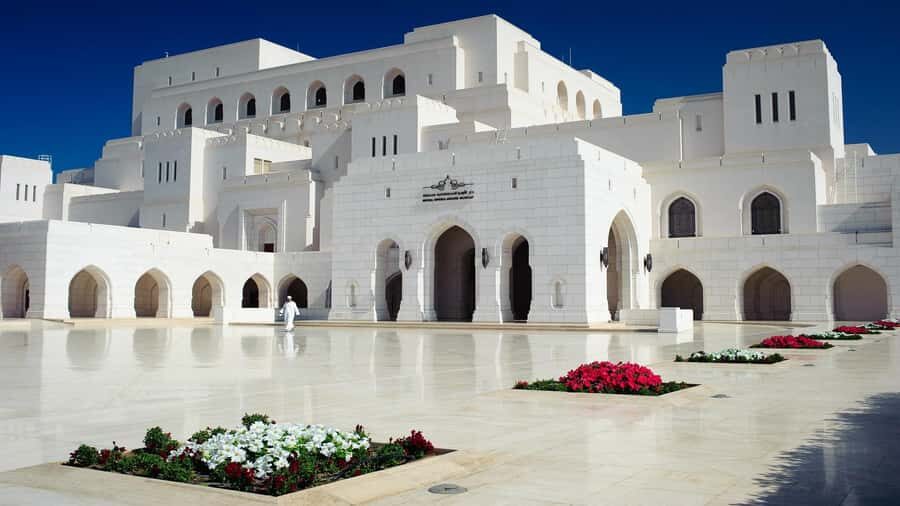
After the mosque, the route moves toward areas linked with ministries and the Royal Opera House district. The Opera House is described as a leading arts and culture organization in Oman, focused on global cultural engagement.
Here’s how it typically feels on the ground: you get the setting and context from your guide, plus enough time for photos and orientation around the area. Entry to the Royal Opera House itself is not included, and the ticket listed is $7.9 per person.
If you don’t plan to pay for the inside visit, that’s fine. You’ll still get a sense of why this part of Muscat matters—modern culture beside the older core.
Muttrah Souq: old trading streets for souvenirs and easy wandering
Then you head to Muttrah Souq, one of Oman’s older marketplaces, dating back roughly 200 years. This is where Muscat shifts from monumental architecture to everyday life—bargains, textures, and the kind of browsing that turns a short stop into a satisfying one.
What I like about putting the souq into a guided private route is that the guide can help you navigate without turning it into a sales pitch. You can ask questions, compare items, and understand what’s worth your attention.
The other advantage is timing flexibility. In a private format, you can slow down for photos or linger longer with your favorite stalls, instead of having to match the pace of the group.
Bonus idea: around Muttrah and the waterfront area, you might get a look at the broader market vibe, including the fish-market feel that’s common in this part of town. It’s not guaranteed as a separate “module,” but the area naturally leads into that kind of street atmosphere.
Bait Al Zubair Museum: weapons, khanjar, and an Omani village outside
One of the most rewarding stops on this day is Bait Al Zubair Museum on Al Saidiya Street in Old Muscat. This isn’t a generic museum stop—it’s organized around objects people actually wore, used, and carried, including ancient weapons.
Expect to see:
- Khanjar (the traditional curved dagger)
- Household equipment
- Costumes
- A broader collection tied to everyday and ceremonial life
A neat twist: outside the museum, there’s a full-scale Omani village and souk-style setting. That matters because it helps you translate what you saw inside. It’s not just artifacts behind glass—you get a sense of how objects fit into real life and local culture.
Entry to Bait Al Zubair Museum is not included, at $6 per person. If you want the full effect, don’t treat this as optional. This stop is often the difference between a “photo and drive” day and a day that actually teaches you how Oman thinks about style, craft, and tradition.
You can also read our reviews of more city tours in Muscat

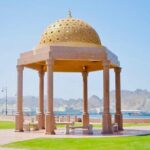




Al Alam Palace and Fort Al-Mirani: photo stops with serious context
Next you’ll hit Old Muscat harbor territory, and two stops are marked as photo stops.
Al Alam Palace (Palace of the Flag)
Al Alam Palace is a ceremonial palace used by Sultan Qaboos bin Said Al Said. It’s described as one of six sultanic residences, with a history over 200 years. Your time here is mainly for viewing and photos, so don’t expect a long visit with interior access.
Still, the guide’s context is what helps. Even a short stop becomes meaningful when you understand why it’s placed where it is and what role it played in ceremonial life.
Fort Al-Mirani
Fort Al-Mirani sits in the harbor of Old Muscat, and it existed before the Portuguese invasion. It was later rebuilt by the Portuguese in 1587, and it’s noted as the first fort in Oman to use cannons.
Again, it’s not an all-day history seminar. It’s a quick “look and understand” moment, and for many people it’s the best kind of photo stop: you get a great exterior view and a clear explanation.
Al Bustan Palace: ending with the coast’s glamorous edge
The day often finishes with a look at Al Bustan Palace, known locally as The Bustan. It’s described as one of the Middle East’s most iconic hotels.
The stop is also a photo stop, but it links to the region’s modern story: the hotel was originally built as an Omani royal palace in 1985 to host the GCC Summit and to mark the 15th anniversary of Sultan Qaboos’ accession to power.
If you’re doing this tour in one full day, this works as a visual reset. You’ve spent the earlier hours moving through religious architecture, markets, and museum objects. Ending here gives you a smooth sense of how Oman’s identity blends old and new.
Price and value: what $181 covers (and what doesn’t)
At $181 per person, this is not a cheap tour. The upside is that you’re paying for a private setup: guide + private car + pickup and drop-off in Muscat + water.
Still, to judge value, you need to separate what’s included from what’s not:
- Included: private tour, guide, water, pickup/drop-off in Muscat.
- Not included: lunch, and several key entries.
- Grand Mosque audio guide: $5 per person
- Royal Opera House entry: $7.9 per person
- Bait Al Zubair Museum entry: $6 per person
- If your day runs past 7 hours: an overtime supplement of $40 cash per car.
A few practical notes:
- For two people, the private pricing can feel ambitious, especially if you compare it to group tours. But you’re also buying control: fewer waiting moments and more time in the places you care about most.
- Lunch being excluded matters. Plan for at least one proper meal break that fits your schedule, especially since you’ll be out most of the day.
Transportation between stops: why the order matters
This tour is built around minimizing wasted time between areas. The route makes geographic sense:
- Start at the Grand Mosque early when you want maximum focus.
- Move from the mosque toward ministries and the Royal Opera House district.
- Then head toward Muttrah Souq for the market experience.
- After that, concentrate on Old Muscat: museum objects, the harbor palaces, and forts.
- End with the Al Bustan Palace photo stop.
That sequencing helps you avoid the common problem in cities like Muscat: getting stuck in traffic when you’re trying to bounce between distant neighborhoods too often. With a private car, you get the comfort of direct transfers and less time coordinating.
Your guide can make or break the day
This is where the reviews line up strongly with what you should expect in real life: the guide is the star.
Some guides are highlighted by name—Mohamed, Said, Muhammet, and Abdullah—and they’re consistently praised for being attentive and flexible. You’ll get the most out of this day if you communicate what you want upfront, like:
- More time at the souq vs. more time on photos.
- Short explanations or full details.
- Slower walking for older family members.
There’s also one clear caution from the day-to-day reality: language requests aren’t always matched. If you care about the guide speaking a specific language (English, French, German, Italian, Spanish are available), confirm it before you start.
Timing is another point to watch. One experience reported finishing earlier than what was advertised (around a 6.5-hour expectation). So if your day is packed—dinner plans, reservations, or a flight—ask your guide to confirm the target end time early.
Who this tour is best for
You’ll probably love this private Muscat day if you:
- Want a guided overview without shopping pressure or group rush.
- Care about architecture, culture, and museum objects—not just selfies.
- Prefer comfort, especially for longer sitting/standing breaks between stops.
- Like the idea of photo stops that still come with historical context.
You may want to think twice if:
- You strongly dislike paying extra for entries (Opera House, museum, and audio are add-ons).
- You’re very strict about exact timing and need a precise end hour.
- You might be affected by dress-code rules at the mosque—plan clothing ahead.
Should you book this Muscat private city tour?
Book it if you want a smart, efficient full-day introduction to Muscat with a guide who can slow down, explain, and adapt. The Grand Mosque carpet detail, Muttrah Souq, and the mix of museum plus Old Muscat harbor stops create a day that feels like more than just sightseeing.
Skip it only if the extras you might pay (museum/Opera House/audio) would feel like a deal-breaker, or if your schedule is so tight that any weather or timing shift would cause stress.
FAQ
What is included in the Muscat private city tour?
The tour includes a private tour, a guide, water, and pickup and drop-off in Muscat.
Is this tour private or shared?
This is a private tour with a private car.
Do I need to pay extra for the Grand Mosque?
Yes. The audio guide inside the Grand Mosque costs $5 per person, and it is not included.
Is entry to the Royal Opera House included?
No. Entry to the Royal Opera House costs $7.9 per person and is not included.
Do I have to pay extra to visit Bait Al Zubair Museum?
Yes. Entry to Bait Al Zubair Museum costs $6 per person and is not included.
Is lunch included?
No. Lunch is not included.
What is the overtime charge if the tour runs long?
If the tour goes past the 7th hour, there is an hourly overtime supplement of $40 cash per car.
What should I wear to enter the Grand Mosque?
You must follow the mosque dress code: no shorts or short skirts, no short pants, and women must cover their hair with a headscarf. Long pants are required and are not provided.
What languages are available for the guide?
The guide languages listed are English, French, German, Italian, and Spanish.
Can I reserve and pay later?
Yes. The option to reserve now and pay later is listed.
If you want, tell me your travel dates and whether you’re aiming to visit the Opera House and museum interiors—I can help you budget the added costs and plan the order so the day feels smooth.