REVIEW · MUSCAT
Guided Walking Tour of Sultan Qaboos Grand Mosque in Muscat
Book on GetYourGuide →Operated by GidOman · Bookable on GetYourGuide
A mosque that big deserves a guide.
This 1-hour walking tour around the Sultan Qaboos Grand Mosque turns headline sights into story—five minarets, a soaring dome, and the kind of craftsmanship you only catch when someone points it out. I especially liked the clear explanations about Islamic art and Omani design, and the chance to see the world-record scale details up close.
You get a practical, respectful look at the complex without feeling lost. I also liked that the route naturally moves from the main entrance to the courtyard, then into the main prayer hall and other spaces, so you understand the building as a whole. One thing to consider: you must dress modestly and bring your own headscarf (women), and you’ll be walking for an hour on site.
If you like culture, architecture, and quiet awe, this is a strong deal at about $10 per person—especially because the guide helps you notice what matters, not just what looks pretty.
In This Review
- Key things that make this tour work
- Sultan Qaboos Grand Mosque in 1 hour: the value of a guided walk
- Where to meet: quick arrival so you don’t miss the start
- First impressions: minarets, dome, and the courtyard’s quiet shift
- Main prayer hall: the carpet and chandelier you have to see in person
- Women’s prayer hall: same artistry, different feel
- Open-air corridors and sandstone columns: where your eyes slow down
- Gardens, courtyards, and marble color: your photo stops with purpose
- The story behind the building: Sultan Qaboos’s legacy in stone and light
- What you need to know before you go: dress, shoes, and respect
- How much walking is this, really?
- What this experience is best for
- A quick reality check: the one drawback that matters
- Should you book this Sultan Qaboos Grand Mosque walking tour?
- FAQ
- FAQ
- How long is the Sultan Qaboos Grand Mosque guided walking tour?
- How much does the tour cost?
- What’s included in the price?
- Is transportation to and from the mosque included?
- Do I need to bring a headscarf?
- What should I wear?
- What language is the tour guide?
- Where do I meet the guide?
- Is photography allowed?
- Is there a cancellation option?
Key things that make this tour work
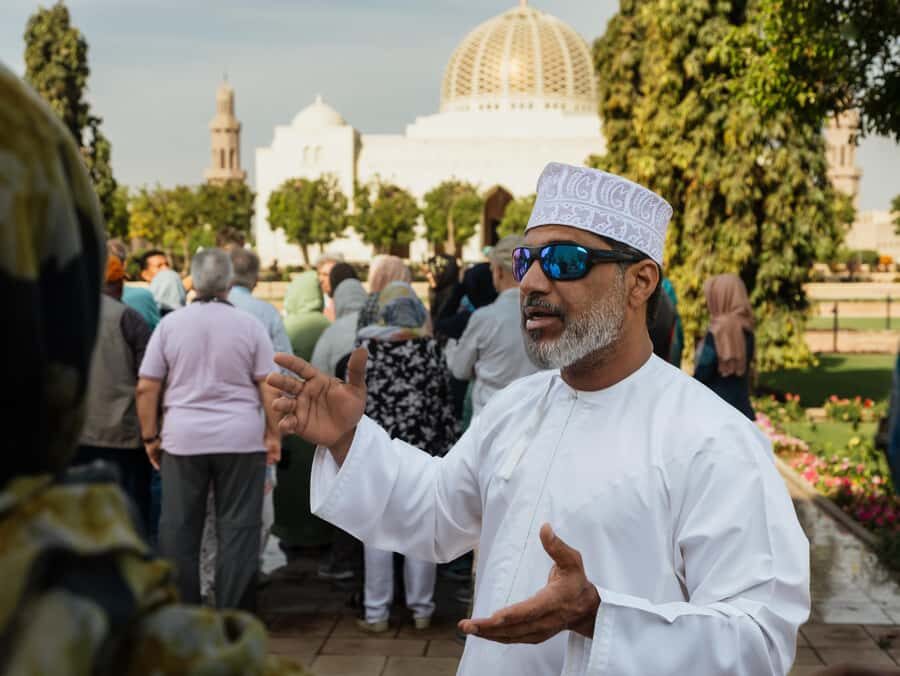
- Short and focused: a 1-hour route that covers the mosque’s main highlights without dragging.
- The “wow” details are explained: why the five minarets and domes matter, and what the artwork is saying.
- Hand-woven carpet scale: a floor covered by one of the world’s largest carpets—over 4,000 square meters.
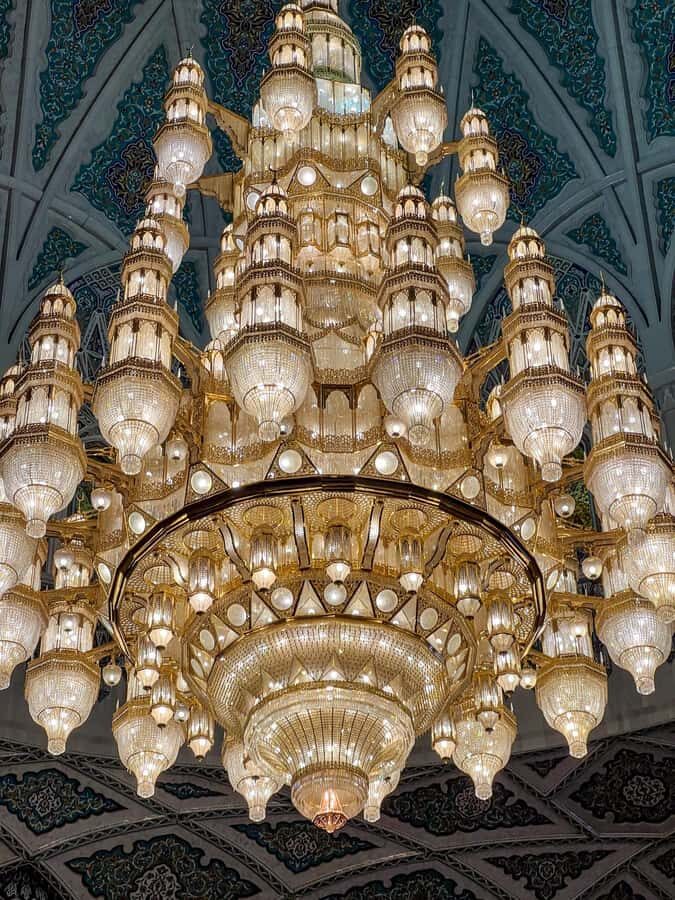
- The chandelier moment: a 14-meter crystal chandelier with hundreds of thousands of Swarovski crystals.
- Women’s prayer hall included: you’re guided into a quieter, equally ornate space.
Sultan Qaboos Grand Mosque in 1 hour: the value of a guided walk
At around $10 per person, this tour is priced like a casual add-on—and it plays like something bigger than that. The mosque is visually dramatic on first sight, but the real payoff is understanding the symbolism and design choices as you move through the spaces.
For me, the best tours here are the ones that help you read the building. Without guidance, you can still enjoy the architecture, sure. With guidance, you connect details to meaning: the motifs on the walls, the calligraphy placement, the way light falls inside, and even the reason the minarets are such a central feature of the skyline.
The other value point is time. You only have an hour, which keeps the pace manageable, especially if this is your first day in Muscat or your first major stop with a lot of rules and respect. You won’t feel rushed out of the complex—you’ll feel guided through the right order.
You can also read our reviews of more walking tours in Muscat



Where to meet: quick arrival so you don’t miss the start
This tour meets at the main visitor entrance of the Sultan Qaboos Grand Mosque, near the central gate facing the main parking area. The guide should be holding a GidOman sign, so you can spot your group without guesswork.
Show up about 10 minutes early. That buffer matters because you’ll likely need a moment to confirm you’re in the right place and get your clothing sorted before you begin moving with the group. It also helps you start calm instead of sprinting in just as the tour begins.
First impressions: minarets, dome, and the courtyard’s quiet shift
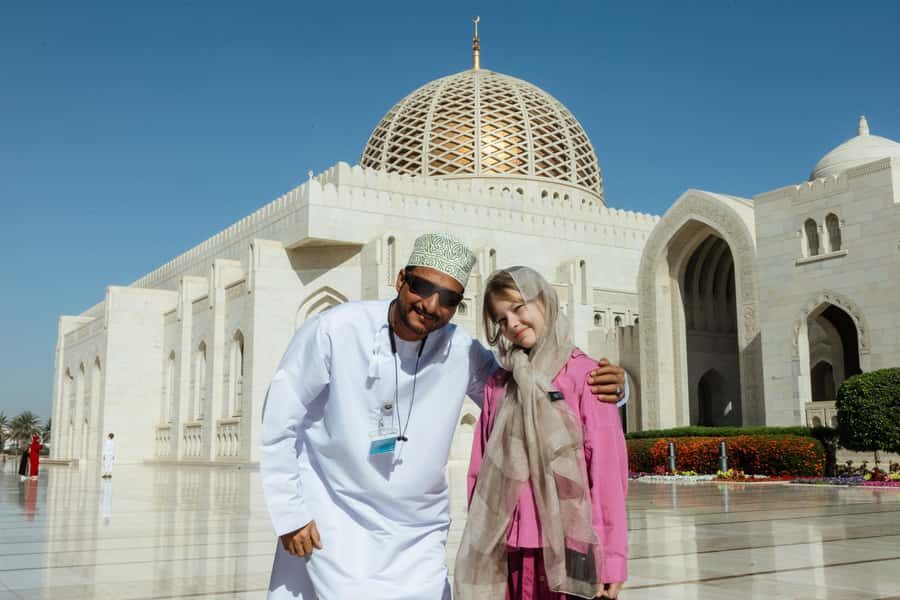
Once you enter, the mosque hits you with scale and symmetry. You’ll see five soaring minarets, each tied to the Five Pillars of Islam, and a central dome that rises about 50 meters.
Then you move into the marble courtyard framed by floral gardens and elegant archways. This is the part where a guided walk earns its keep. The courtyard looks beautiful on its own, but with a guide you also start noticing how the layout supports calm movement—wide surfaces, controlled sightlines, and spaces that help you slow down. That shift is a big part of the experience. Muscat street life fades fast once you’re inside.
Even if you’re traveling solo, the route helps you avoid the common problem of wandering without context. Instead of collecting photos, you collect understanding.
Main prayer hall: the carpet and chandelier you have to see in person
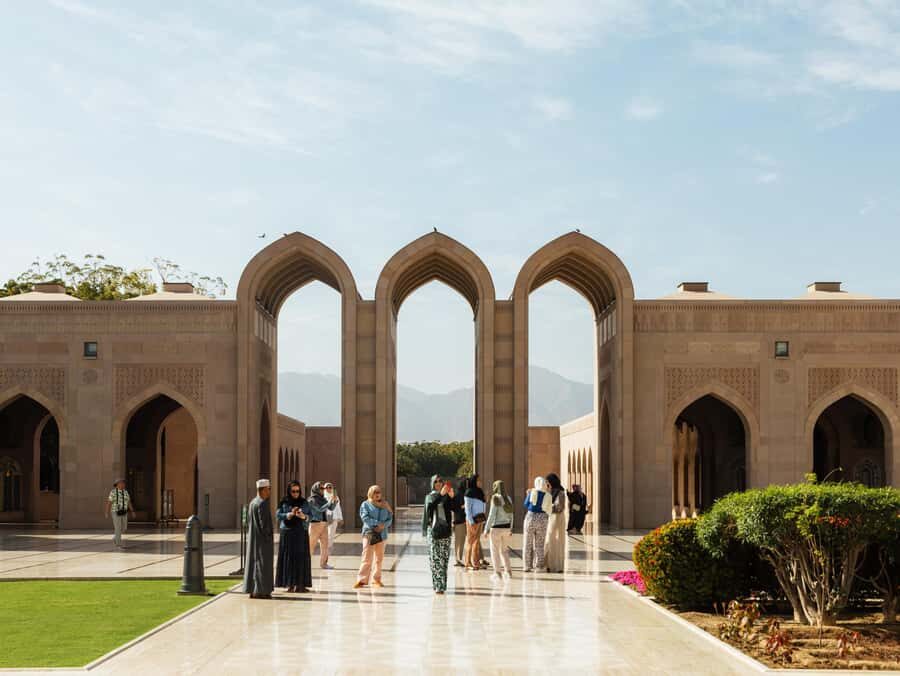
The main prayer hall is where the tour becomes almost impossible to summarize. The floor is covered by one of the world’s largest hand-woven carpets—more than 4,000 square meters, woven by about 600 artisans over four years. Those numbers only sound impressive until you stand there and realize you’re looking at a wall-to-wall surface meant to be walked across with care.
And above you, there’s the chandelier: a 14-meter crystal piece with hundreds of thousands of Swarovski crystals. It catches the light in a way that makes photos look flat unless you’re paying attention to how it sparkles through the hall’s lighting.
This is also where the guide matters most. You’ll point your eyes at the right spots: Arabic calligraphy, colorful mosaic tilework, and the geometric patterns along walls and the domed ceiling. Rather than treating the art like decoration, your guide explains what the inscriptions refer to and how the designs create harmony—an idea that becomes clearer once you can see the patterns repeat and balance each other.
One practical note: the hall is a place of worship. Keep your voice low and your movement respectful, especially when people are inside. The guide’s pacing helps here.
Women’s prayer hall: same artistry, different feel
After the main hall, you’ll visit the women’s prayer hall. It’s more intimate, but it’s not simpler. You still see thoughtful ornamentation and careful design details that reinforce the idea that the space is meant to feel welcoming and dignified.
This stop is worth it because it changes how you experience the mosque. Instead of only looking at maximum scale, you start noticing finishing touches: carved wooden doors and the way lighting is handled. The guide helps connect those design choices back to the overall architecture, so you don’t just tick off another room—you understand why it’s arranged the way it is.
If you’re the kind of person who likes to compare spaces and notice how architecture shifts mood, this is a standout moment.
You can also read our reviews of more guided tours in Muscat





Open-air corridors and sandstone columns: where your eyes slow down
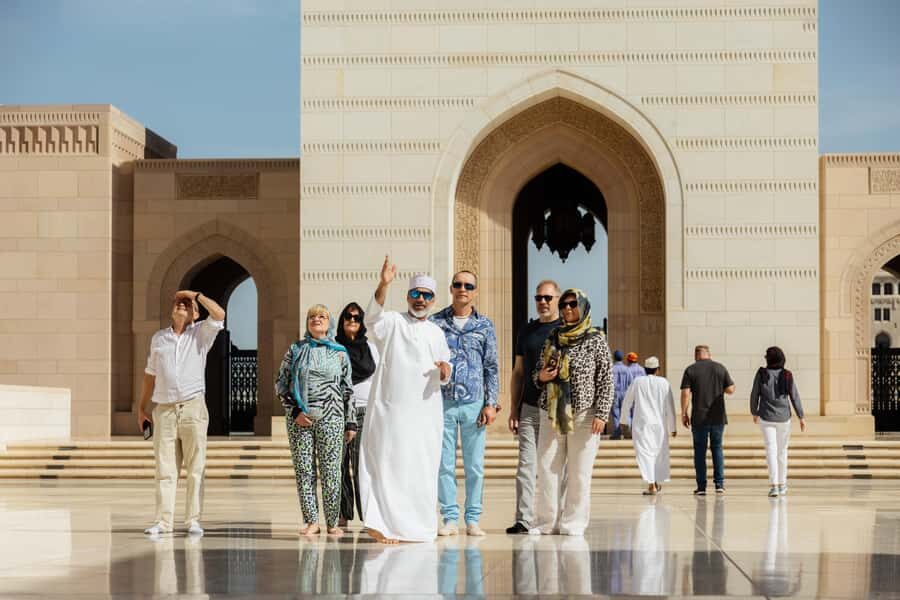
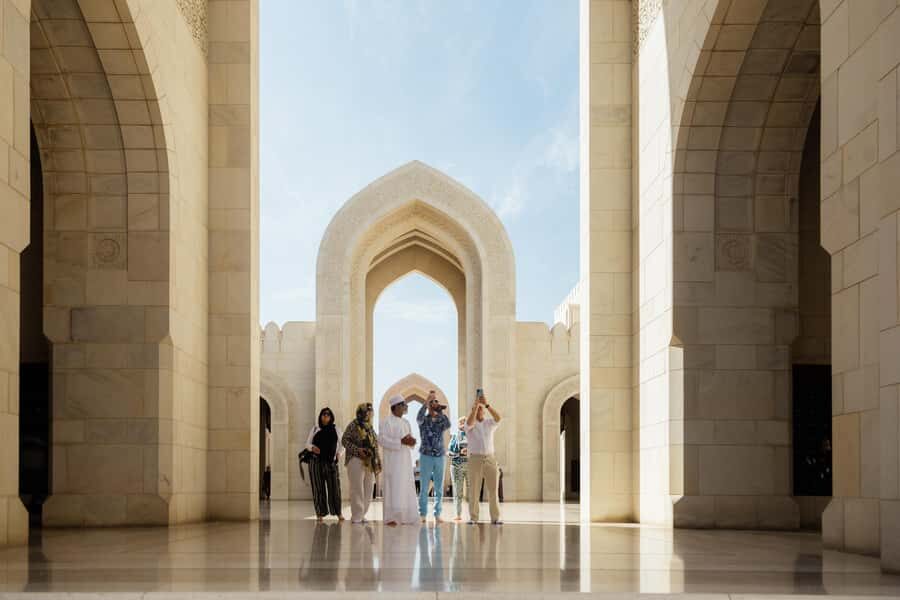
As you continue, you’ll spend time in open-air corridors lined with polished sandstone columns and informative displays. This part of the tour is less about a single “big wow” moment and more about building a full mental map of the complex.
The corridors also create breathing space between the main interiors and the gardens. You get fresh air, different angles on the architecture, and chances to pause without feeling like you’re stopping the flow of the tour.
If you’re into photography, this is also a useful zone. You’ll have access to view points that show how the mosque sits within its surrounding grounds rather than only showing the structure head-on.
Gardens, courtyards, and marble color: your photo stops with purpose
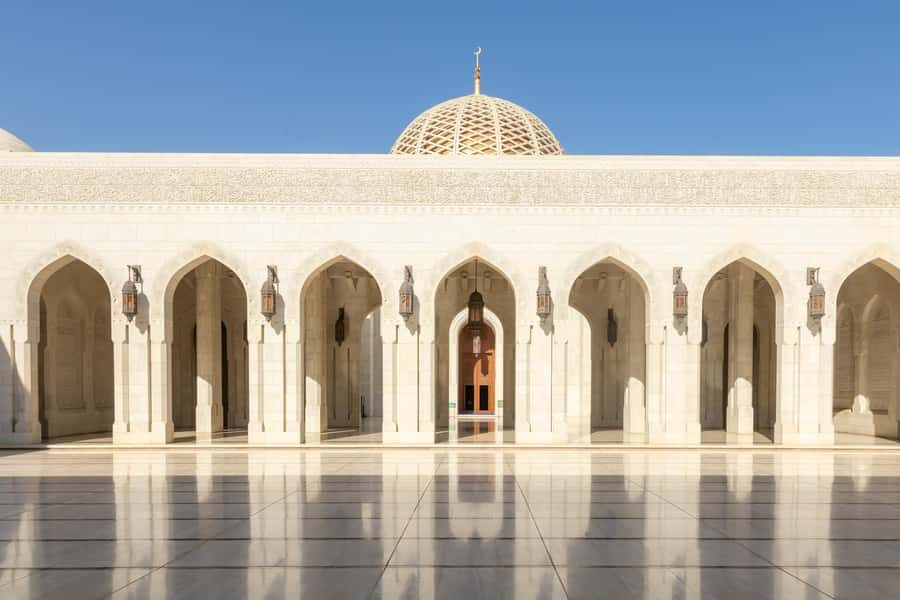
The mosque’s gardens and courtyards are immaculately kept, with cool greenery and tranquil reflecting pools. If you’ve ever tried to photograph a huge building while standing in a crowd, you’ll appreciate that the garden areas offer more controlled composition.
You’ll also get photo-friendly angles of the exterior, including the ivory marble and the red-brown tones. The key is that your guide times and frames the stops with context, so your pictures aren’t random—they help you remember how each viewpoint connects to what you learned inside.
Even when you aren’t photographing, the gardens are a reset. They let your brain catch up to what you just saw in the prayer hall.
The story behind the building: Sultan Qaboos’s legacy in stone and light
One of the strongest reasons to take this tour is the explanation of the mosque’s construction and legacy. You’ll hear how the complex was inaugurated in 2001 to celebrate the 30th year of Sultan Qaboos’s reign, framed as a gift to the nation.
Your guide also connects the architecture to broader themes: Oman’s cultural renaissance and the late Sultan’s dedication to harmony, education, and faith. That context matters because it helps you see the mosque as more than a structure. It becomes a national message built in stone, patterns, and public space.
You’ll also learn about the blend of influences that shaped the design. You might hear about traditional Omani design motifs and carved teakwood details, plus hints of Persian, Ottoman, and Mughal artistry. The point isn’t that every influence is obvious at a glance—it’s that the design feels cohesive even when it draws from different traditions.
When you have that framework, the patterns and materials start making more sense.
What you need to know before you go: dress, shoes, and respect
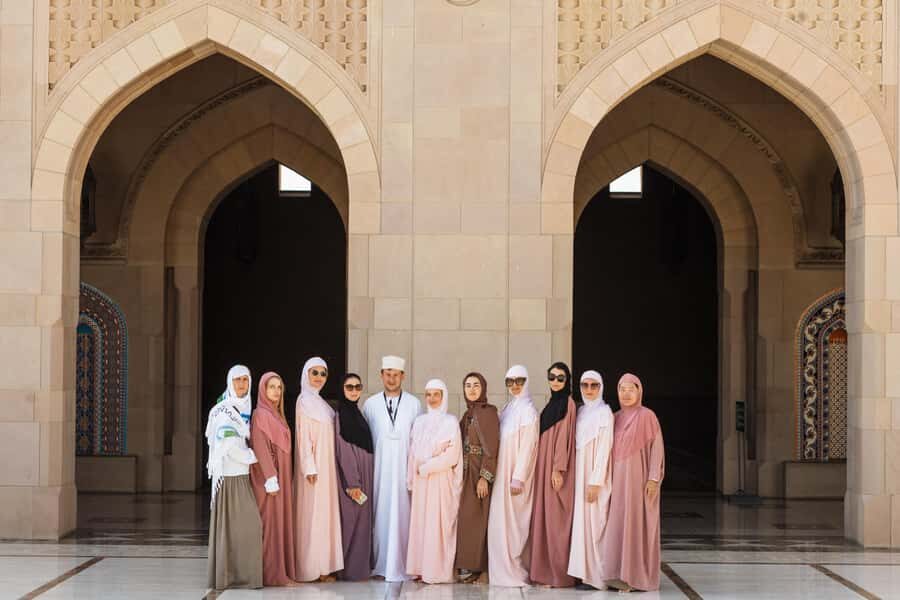
This mosque has modest dress requirements, and they’re not optional. Plan ahead:
- Women: long sleeves and long pants or a long skirt, plus bring a headscarf
- Men: long pants and shoulders covered
The tour does not include a headscarf or appropriate clothing, so bring what you need. If you’re touring straight from a beach day, factor in extra time to change.
For footwear, the tour is a walking route, and comfortable shoes make a difference. The surfaces are marble and stone, and you’ll want stable footing for a smooth visit.
Photography is allowed in most areas, but the guide’s instructions and mosque etiquette come first. Keep your camera use considerate, especially inside worship spaces.
How much walking is this, really?
It’s a 1-hour walking tour, so it’s not a marathon. The route is designed to move efficiently between key areas: main entrance to courtyard, main prayer hall, women’s prayer hall, corridors, and garden viewpoints.
Still, you are walking on site and spending time standing to look closely at details. If you have mobility limitations or you tire easily, comfortable shoes and a calm pace are essential. The good news is the duration is short enough that you can plan your rest after.
What this experience is best for
This tour fits well if you’re:
- visiting Muscat for the first time and want your first major architecture stop to make sense quickly
- someone who loves religious art, calligraphy, and pattern work (not just the exterior)
- traveling with a mix of interests, because the guide’s explanations connect design to meaning
It’s also ideal if you prefer smaller, structured time blocks. You’ll cover the “must-see” spaces, but you’ll do it with a narrative, not just a checklist.
A quick reality check: the one drawback that matters
The main consideration is preparation. You need modest clothing, shoulders covered for men, and for women you must bring a headscarf. The tour doesn’t provide these. If you show up unprepared, you’ll either need to scramble for a scarf or you’ll lose time before the tour can begin properly.
The second mild consideration is that the most stunning interior spaces can mean you’ll want to keep your phone put away while you look. If your style is nonstop photo-taking, you’ll still take pictures—but the best moments come when you pause and watch the details slowly.
Should you book this Sultan Qaboos Grand Mosque walking tour?
I think you should book if you want the mosque to feel understandable, not just impressive. The value comes from the guide’s ability to turn big sights—like the chandelier and carpet—into details you can actually appreciate. For $10, including bottled water, it’s a practical way to get the meaning behind the design without spending half a day.
Skip it only if you already plan to spend a long, self-guided day inside the mosque with time to read every inscription and figure out the symbolism on your own. Otherwise, a guided one-hour walk is one of the smartest ways to get oriented fast.
If this is on your first trip to Oman, it’s the kind of stop that makes later landmarks easier to understand.
FAQ
FAQ
How long is the Sultan Qaboos Grand Mosque guided walking tour?
The tour lasts 1 hour.
How much does the tour cost?
It costs $10 per person.
What’s included in the price?
You get a guided tour and bottled water.
Is transportation to and from the mosque included?
No. Transportation is not included.
Do I need to bring a headscarf?
Yes. The tour does not include headscarves or clothing. Women must bring a headscarf.
What should I wear?
Women must wear long sleeves and long pants or a skirt, and bring a headscarf. Men must wear long pants and cover their shoulders.
What language is the tour guide?
The live tour guide speaks English.
Where do I meet the guide?
Meet at the main visitor entrance of the Sultan Qaboos Grand Mosque, near the central gate facing the main parking area. Look for a guide holding a GidOman sign.
Is photography allowed?
Photography is allowed in most areas, but you should be respectful.
Is there a cancellation option?
Yes. Free cancellation is available up to 24 hours in advance for a full refund.