REVIEW · MUSCAT
Private Overnight at Jebel Shams – 2 Days and 1 Night Tours
Book on Viator →Operated by Landscape Tours · Bookable on Viator
Jebel Shams hits hard, even from the road. This Jebel Shams overnight tour layers classic Oman stops with the famous Balcony Walk above the gorge, where sunrise can make the whole valley glow. I especially like the private setup with pickup and an English-speaking guide, so you’re not stuck decoding your day on your own. One real drawback: the hike depends on good weather, and the Balcony Walk can feel challenging.
I also like how the route gives you context, not just photos. You roll through places like Birkat Al Mouz, the Nizwa Souq, and the quiet time-capsule feeling of Al Hamra before heading up to the mountain. Guides you might be assigned—people like Hamood, Waleed, Kalfan, Ahmed Khamis, Ali, or Said—are frequently praised for making the sites understandable, not just visited.
If you want a relaxed pace with lots of driving days, this is still a lot to fit into two days. You’ll be moving, walking, and looking—mostly from roads that are very much part of the adventure.
In This Review
- Key things that make this Jebel Shams overnight work
- Why Jebel Shams feels like the Arabian Grand Canyon
- Day 1: Birkat Al Mouz, Nizwa Souq, and the Al Hamra time machine
- Birkat Al Mouz Ruins: irrigation, bananas, and palm shade
- Nizwa Souq: the old capital’s shopping energy
- Nizwa Fort: a big fortress with a practical entrance fee
- Al Hamra and the abandoned-village mystery
- Misfah Al Abriyeen: small village, high altitude vibe
- Jebel Shams (first look): sunrise-ready mountainside
- Day 2: Bahla Fort UNESCO stop and Jabreen Castle’s “learning center” feel
- Bahla Fort: restored UNESCO fortress at the edge of the highlands
- Jabreen Castle: astrology, medicine, and Islamic law
- The Balcony Walk: what you’re really signing up for
- Practical tips that make the walk easier
- Transportation and comfort: 4WD pickup matters on mountain roads
- Price and value: $642.57 per person is buying convenience and time
- Rooms, meals, and the overnight that lets you avoid a rush
- Who should book this Jebel Shams overnight tour
- Should you book? My quick decision guide
- FAQ
- How long is the private Jebel Shams overnight tour?
- What is included in the price for this tour?
- Is lunch included?
- Do you pick up from hotels in Muscat?
- Is this tour private?
- What room options are included for different group sizes?
- How long is the Balcony Walk around Jebel Shams?
- What if weather is bad for the hike?
Key things that make this Jebel Shams overnight work
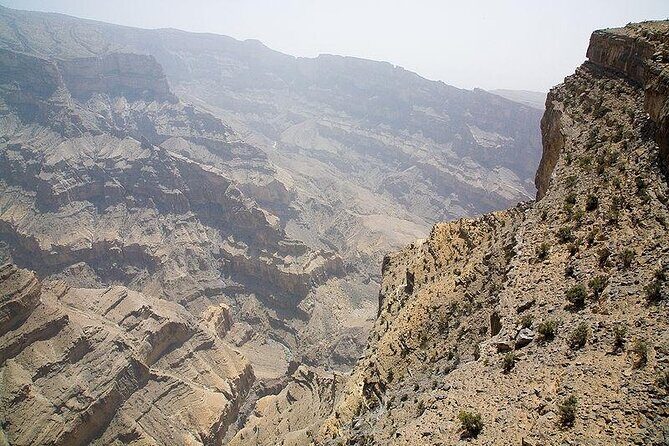
- Balcony Walk at sunrise: plan on a hike that runs around 3–4 hours and delivers big views when conditions are good
- One-night stay in the Jebel Shams area: you’re not rushing back down right after the mountain
- Nizwa + Al Hamra before the climb: you get forts, souq time, and abandoned-village history before the canyon views
- Fort stops with real substance: Bahla Fort (UNESCO) and Jabreen Castle (learning center) add depth to the trip
- Pickup from the Muscat area + 4WD: the transport matters here, especially on rougher mountain roads
Why Jebel Shams feels like the Arabian Grand Canyon
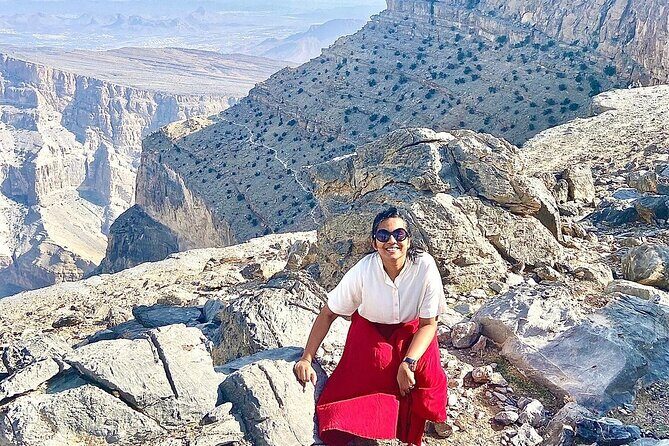
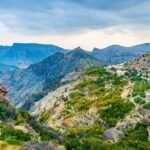
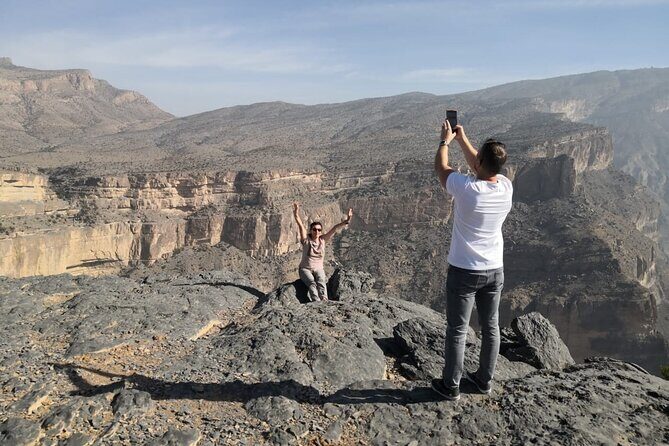
Jebel Shams is Oman’s highest mountain, and the wider area often carries that name too. The big draw is the gorge: it’s narrow, steep, and deep enough to feel otherworldly. From down in the valley you can stare for a while and still feel like you’re missing part of the picture—that’s how dramatic it is in person.
This tour makes that drama easier to experience because you’re not just doing a quick day trip and calling it done. You have time to get up, walk the Balcony route, and still have a full day with cultural stops along the way.
I also like that the itinerary pushes you toward the right kind of payoff. The mountain isn’t treated like a random stop; it’s the centerpiece, with the earlier sights acting like a warm-up to Oman’s mountains-and-people story.
You can also read our reviews of more private tours in Muscat

Day 1: Birkat Al Mouz, Nizwa Souq, and the Al Hamra time machine
Your first day is built around Oman’s interior—villages, markets, and forts—before you turn toward the high country.
Birkat Al Mouz Ruins: irrigation, bananas, and palm shade
Birkat Al Mouz is an old village perched up the side of a mountain, and it’s tied to an oasis with banana plantations and palm trees. The standout detail here is the irrigation system locals use, tied to the Aini and Dawoodi and Ghaily methods. Even if you’re not an irrigation nerd, seeing how the water control shaped life in an oasis village makes the landscape make more sense.
This stop is short (around an hour) but it works as a reset. You start seeing Oman as something built and maintained, not just scenery.
Nizwa Souq: the old capital’s shopping energy
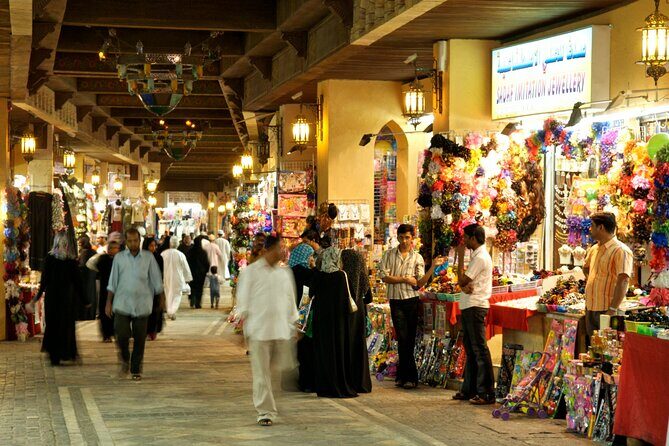
Next you’re in Nizwa, Oman’s former capital. The Nizwa Souq is where you can browse for souvenirs—especially handmade and traditional items, including Omani silver crafts.
You’ll get about an hour here. That’s enough time to wander, compare prices, and pick up one or two things without it turning into a full-day shopping mission.
Nizwa Fort: a big fortress with a practical entrance fee
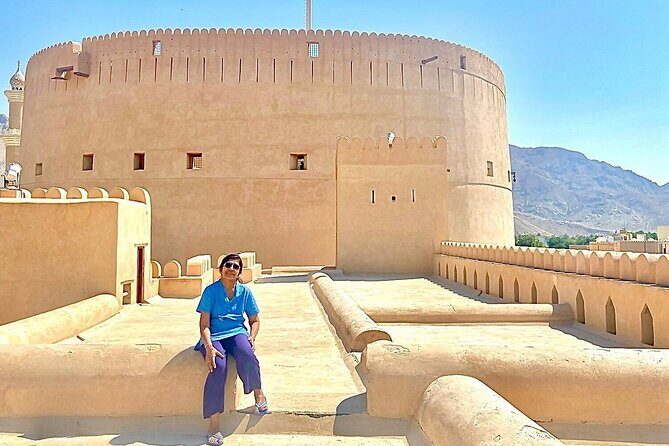
From there you visit Nizwa Fort. It’s associated with Sultan Bin Saif Al Ya’rubi and is described as the biggest fort in Oman. Entrance is included on this tour (5 Omani rial noted in the itinerary).
If you like architecture or want a sense of how power worked in the old capital, you’ll likely enjoy this. If you don’t, the fort is still a useful stop because it gives you a clear “Oman’s inland story” frame before you head into smaller historic towns.
You can also read our reviews of more evening experiences in Muscat


Al Hamra and the abandoned-village mystery
Then comes Al Hamra, a town said to be around 400 years old. The key detail is that the town sits on (or grew out of) an abandoned village older than that—estimated at about 700–1000 years—and the ruins are left untouched.
The effect is surprisingly emotional for a place you might otherwise skim past. It has a lived-in feel, yet there’s this ghostly layer underneath. You’ll have about an hour, which is just right: enough to feel it, not long enough to get numb.
Misfah Al Abriyeen: small village, high altitude vibe
Before the drive up to Jebel Shams proper, you stop at Misfah Al Abriyyin, a mountainous village around 1,000 meters above sea level. It’s tied to the Al Abri tribe, which helps give the place a people-and-place identity instead of being just another viewpoint.
This stop is brief (about 30 minutes). Think of it as a transition: palms and village life giving way to higher air and harsher terrain.
Jebel Shams (first look): sunrise-ready mountainside
Finally on Day 1 you reach Jebel Shams and have about an hour there. Jebel Shams is known as the first place to get sunrise in Oman, thanks to its high peak and position. Even if you’re not doing the Balcony Walk yet, seeing the area at daylight helps you understand where you’ll be walking in the morning.
Day 2: Bahla Fort UNESCO stop and Jabreen Castle’s “learning center” feel
On Day 2, you still get important Oman history before the mountain hike wraps up the trip.
Bahla Fort: restored UNESCO fortress at the edge of the highlands
Bahla Fort is one of four major historic fortresses at the foot of the Jebel Akhdar highlands. It’s also the country’s only UNESCO-listed fort, added in 1987. Restoration work was major, and it reopened in 2012.
One heads-up: the fort complex has been described as short on visitor information. That’s exactly where a guide earns their keep. When you have an English-speaking interpreter, you’re not just walking through stone—you’re learning what you’re looking at.
You get about an hour here, which feels right. You’ll see the big picture without getting trapped in walls and stairs for too long.
Jabreen Castle: astrology, medicine, and Islamic law
Next is Jabreen Castle (often spelled Jabreen/Jabreen). It was built in 1675 by Imam Bil-Arab Bin Sultan and served as a center of learning, covering subjects like astrology, medicine, and Islamic law.
This castle also seems to be full of details people remember—like storage features connected to how fruit would be processed, with channels and vats implied by the design.
This stop adds variety after forts and souqs. It makes Oman feel less like a travel checklist and more like a place where scholarship mattered.
The Balcony Walk: what you’re really signing up for
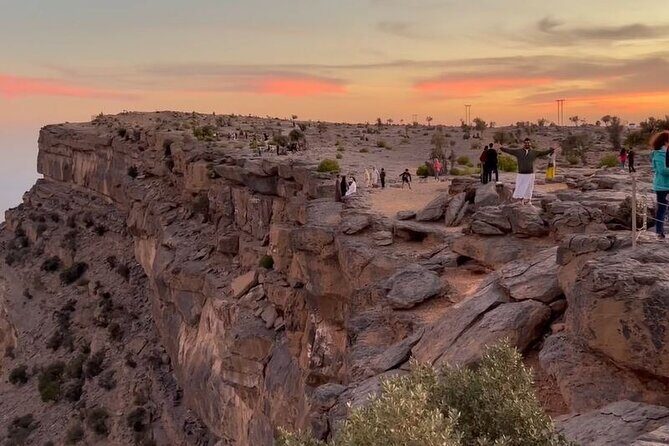
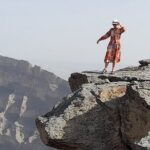
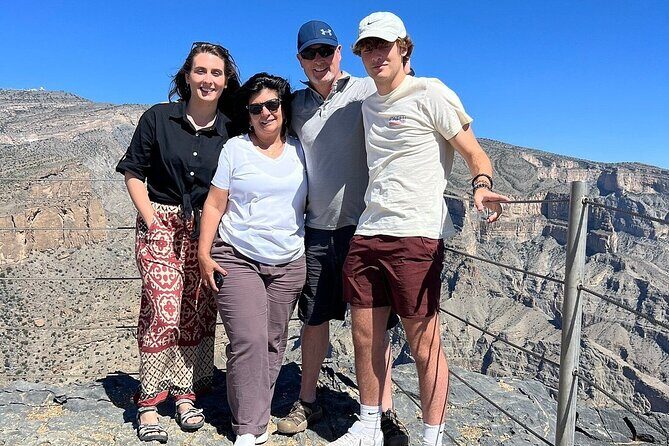
The Balcony Walk is the highlight, and it’s not just a quick stroll. In the experiences I’ve seen described, people tend to plan for about 3–4 hours, and at least some portion can feel challenging depending on your fitness and comfort on uneven ground.
That’s why this tour’s structure is smart. You’re already in the area overnight, so you can pace the morning climb and keep your energy for the walk itself. The prize is the view—especially with sunrise mentioned as a standout moment. When conditions are good, the gorge and valleys look huge in every direction.
Practical tips that make the walk easier
You’ll feel better if you prepare like it’s a real hike, not a photo stop. Bring sturdy footwear, expect some exposure to sun and wind, and keep water in mind even though bottled water is provided during the tour.
Also, go in with a mindset of “steady steps.” The most impressive moments often come when you stop rushing and let the canyon reveal itself layer by layer.
Transportation and comfort: 4WD pickup matters on mountain roads
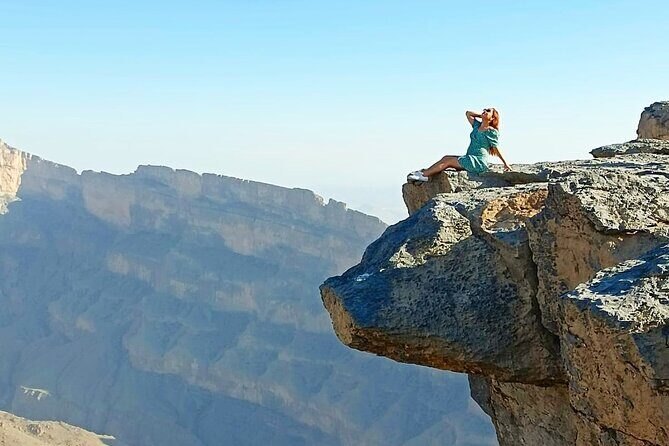
This is a private tour, and transport is included via a 4WD vehicle that’s meant to keep things comfortable on the route. Pickup and drop-off cover the Muscat area, so you don’t lose time arranging taxis or renting a car for a road you may not feel confident driving.
In real life, mountain drives can be tiring. A private guide/driver setup helps because you’re not negotiating stops or timing with strangers in another car. You follow the planned rhythm: souq and forts in the morning, villages in the afternoon, then up toward the high mountain.
If you’re sensitive to long drives, just be honest with yourself: two days here means you’ll spend time in the vehicle. The tradeoff is that you get an efficient, well-stitched route and arrive at the right places without stress.
Price and value: $642.57 per person is buying convenience and time
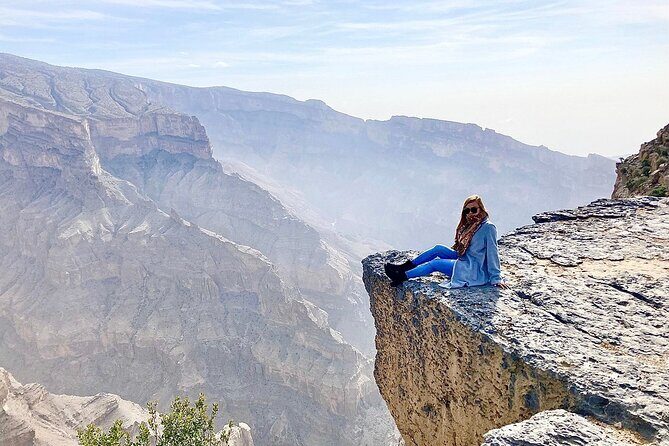
At $642.57 per person, you’re paying for more than sightseeing. You’re covering:
- Private logistics: pickup/drop-off in Muscat area and a dedicated vehicle
- An overnight stay in a standard room setup (single room for 1 person; standard double for 2; and options for extra beds for larger groups)
- Meals: dinner and breakfast
- Water and entrance fees
- An English-speaking Omani guide
The best way to think about value here is time. If you try to self-drive and self-organize, you’ll spend extra time on reservations, route planning, and figuring out what matters at each stop—especially on a mountain schedule that can be weather-dependent.
This tour also has group discount options. If you’re traveling with friends or family and you can fill a few rooms, the math gets easier.
The only “cost” you can’t avoid is effort: you’ll walk, and the Balcony Walk is the kind of effort you’ll want to feel prepared for.
Rooms, meals, and the overnight that lets you avoid a rush
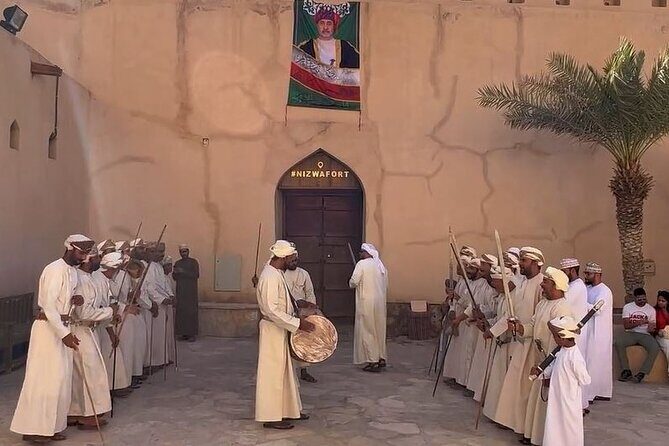
You’re not just hopping off and back onto a bus. This is a true 2 days and 1 night experience with an included room.
Room types included are listed clearly:
- Single standard room for 1 person
- Standard double for 2 people
- Standard double plus extra bed for 3 people
- Two standard doubles for 4 people
Dinner and breakfast are included. Lunch is not, so plan for that on your own during the day. Since your itinerary is already packed with stops, having lunch not included keeps the day flexible, but it does mean you should bring cash or a card you trust for lunch breaks.
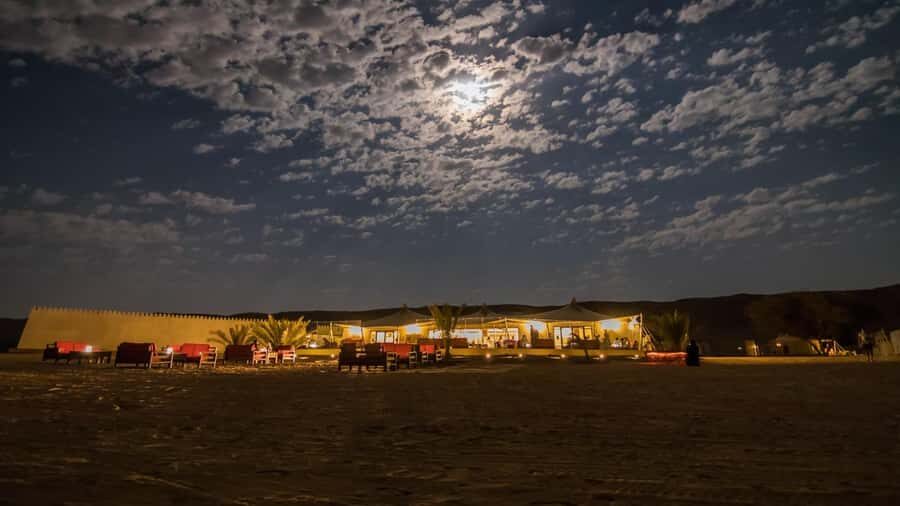
People have described the overnight at Sama Heights Resort, which suggests the stay is set up for mountain proximity and early start mornings.
Who should book this Jebel Shams overnight tour
This tour fits best if you want:
- A mountain centerpiece with a real hike, not a quick look-and-leave day
- Oman history mixed in: forts, souqs, villages, and a UNESCO site
- A stress-free approach to transport and timing, especially from Muscat
- A private guide experience where you can ask questions and get context
It may be less ideal if you hate driving days, or if you’re unsure about moderate walking. If the idea of a 3–4 hour Balcony Walk doesn’t sound like your style, you might want to look at a less active option.
Should you book? My quick decision guide
I’d book this if Jebel Shams is on your must-see list and you want the best chance to enjoy it properly—especially the Balcony Walk in the early light. The value comes from the mix of included overnight, meals, entrance fees, and private 4WD pickup.
I’d hesitate if you’re worried about weather disrupting the hike. This experience requires good conditions, and when they’re not right, the mountain portion can change.
If you’re okay planning a hike morning and want Oman’s inland stops stitched together, this is a smart way to do it in two days.
FAQ
How long is the private Jebel Shams overnight tour?
The tour runs for about 2 days and includes 1 night.
What is included in the price for this tour?
Dinner, breakfast, bottled water during the tour, pickup and drop-off in the Muscat area, an English-speaking Omani tour guide, a 4WD vehicle, entrance fees, and the overnight room are included.
Is lunch included?
No, lunch is not included.
Do you pick up from hotels in Muscat?
Yes. Pickup and drop-off are included for the Muscat area.
Is this tour private?
Yes. It’s private, meaning only your group will participate.
What room options are included for different group sizes?
A single standard room is included for 1 person. A standard double room is included for 2 people. For 3 people, a standard double room plus an extra bed is included. For 4 people, two standard double rooms are included.
How long is the Balcony Walk around Jebel Shams?
The Balcony Walk is described as taking about 3–4 hours.
What if weather is bad for the hike?
This experience requires good weather. If it’s canceled due to poor weather, you’ll be offered a different date or a full refund.