REVIEW · MUSCAT
Private-Muscat City tour (Half Day)
Book on Viator →Operated by OMAN SAFARI · Bookable on Viator
Muscat in four hours, with the guide driving. This private half-day tour is a clean way to get your bearings fast, with WiFi on board and a guide who helps you connect the big sights to daily life in Oman. I especially love the private attention, and how stops like the Grand Mosque and Muttrah suk come with clear explanations (I’ve even seen guides like Sulaiman and Malik handle kids with calm, repeated explanations). The one thing to plan carefully for: the formal dress code. If you show up in shorts or sleeveless tops—or with uncovered shoulders/knees—you could be turned away at places of worship and selected museums.
Key highlights at a glance
- WiFi-equipped, air-conditioned private vehicle for a smoother half day
- Private group up to 4 gives you real flexibility at each stop
- Free admissions at the listed sights, so you’re not hunting extra fees
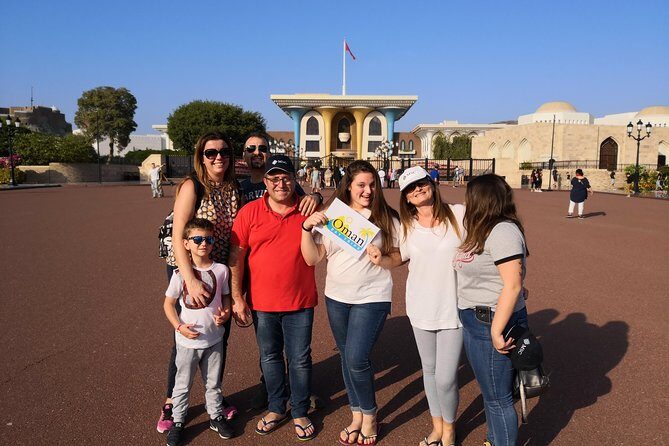
- Well-timed photo stops near Al Alam Palace and Al Jalali Fort
- Muttrah suk time window to shop and snack without feeling rushed
- Multilingual guide options, including guides named Charan, Sulaiman, and Malik
In This Review
- Private half-day Muscat: the “see a lot” plan that still feels personal
- Pickup in Muscat port: plan your first 15 minutes
- Sultan Qaboos Grand Mosque: where timing and dress rules really matter
- Royal Opera House: a short exterior stop that still tells you something
- Muttrah suk: browsing in a place that feels local
- Al Alam Palace and Al Jalali Fort: photo stops with strong impact
- How the Muscat overview stop fits in (and why it’s not filler)
- WiFi, comfort, and why private transport is more valuable than it sounds
- Value check: $221 per group for up to 4 people
- What to expect from the guide (and the languages you might hear)
- Dress code and headscarves: the rule that can make or break your day
- Weather and pacing: a half day that still works when conditions change
- Who should book this private Muscat city tour?
- Should you book this tour or not?
- FAQ
- How long is the private Muscat City tour?
- Where do you get picked up and dropped off?
- What sights are included on the half-day itinerary?
- Is WiFi included?
- Do you pay admission fees for the stops?
- What’s the dress code for the tour?
Private half-day Muscat: the “see a lot” plan that still feels personal
Muscat can be spread out. This tour solves that problem with a private car (air-conditioned) and a schedule that’s short enough to keep you energized, not exhausted. You’ll be picked up in Muscat port inside, where staff wait with a placard, and then you’re rolling with a driver and your mobile ticket sorted out for the day.
What makes this work well is the mix of places: a major landmark of worship, an opera-house photo moment, classic fort/palace views, and time in the souks area. It’s not just sightseeing for sightseeing’s sake. It’s designed to help you understand the city’s “why” in a few focused hours.
There’s also a practical rhythm. The tour starts at 9:00 am and drops you back at the same pickup point at about 12:30. That means you can pair this with other plans later in the day—especially if you’re on a cruise and want something structured but not all-day.
Pickup in Muscat port: plan your first 15 minutes
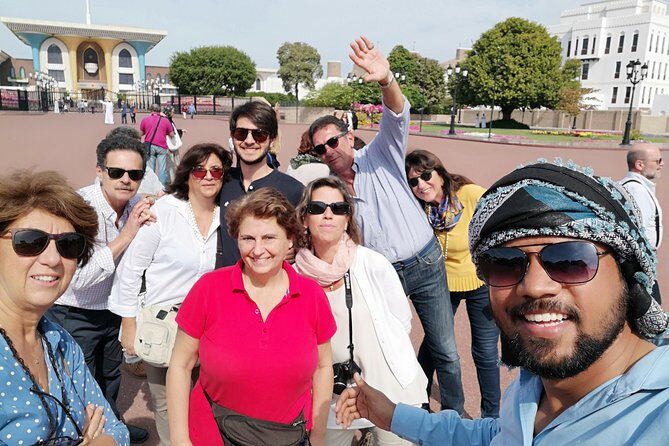
Your staff guide and driver meet you in Muscat port inside with the company placard. That small detail matters. Port areas can feel confusing when you’re new, especially if you’ve just disembarked and your phone signal is patchy.
So here’s the move: when you approach the port interior, slow down and watch for the placard. This tour is timed tightly around landmarks, so you don’t want to waste time figuring out where the meeting point actually is.
If you’re a cruise passenger, you’ll need to provide your ship name plus docking, disembarkation, and re-boarding times at booking. That’s a good sign for you: it means the tour can be adjusted to the real-world timing of your ship.
You can also read our reviews of more city tours in Muscat



Sultan Qaboos Grand Mosque: where timing and dress rules really matter
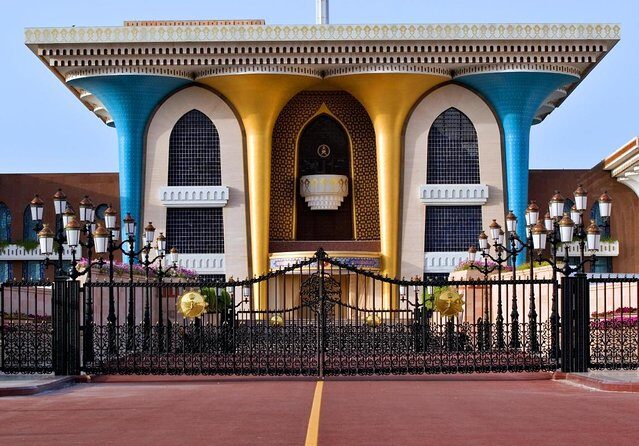
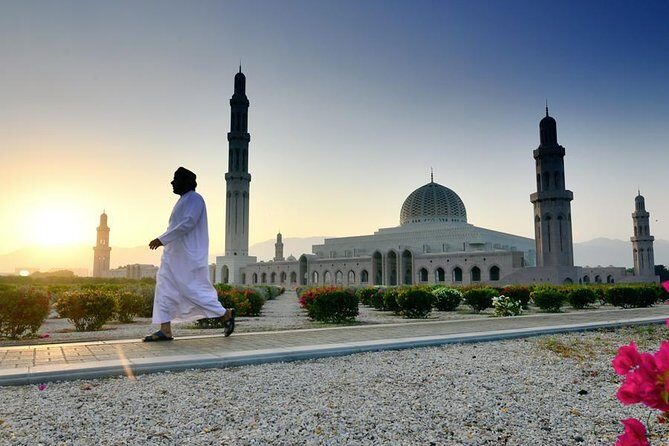
The Sultan Qaboos Grand Mosque is the first big “wow” stop, but it has a visiting window. The stated visiting time is between 8:00 am and 11:00 am, and your tour begins at 9:00 am—so you should be able to enter during that morning window.
This is also where the tour’s dress code becomes non-negotiable. You’ll need shoulders and knees covered and you should expect formal dress requirements for places of worship and selected museums. For women, the tour notes that you have to carry scarfs to cover your head. If you ignore this, you risk being refused entry.
Why I like including this early in the day: the mosque sets context for everything else. After you see the scale and design of the mosque, the rest of Muscat starts to make more sense—architecture, culture, and how tradition shows up in public life.
Royal Opera House: a short exterior stop that still tells you something
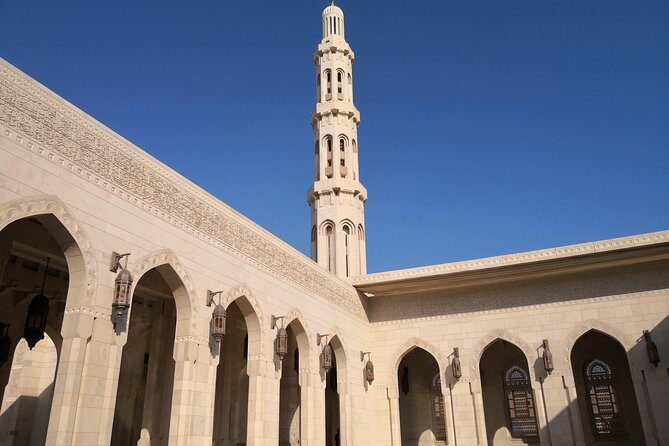
At 10:30 am, you’ll have a photo stop at the Royal Opera House, focused on the exterior. Admission here isn’t listed, which usually means the value is in taking photos and getting a quick orientation.
Even as a photo stop, this works because it contrasts with the older-feeling sites nearby. You’re seeing Muscat isn’t only about historic walls and souks; it also invests in modern cultural spaces.
If you’re the type who hates rushed photo ops, this still should feel manageable. The stop is clearly defined as an exterior photo moment, so you’re not stuck waiting around while the group does paperwork or long entry lines.
Muttrah suk: browsing in a place that feels local
Then comes Muttrah, with suk time scheduled between 9:30 am and 1:00 pm (the tour places you in the afternoon window). The souk is where Muscat gets real for most people—spices, crafts, everyday goods, and the kind of street energy that doesn’t translate well from a brochure.
One of the best things about doing souks with a private guide is that you’re not just wandering. You can ask what’s worth your time, what to bargain for (if that’s your style), and how to think about what you’re seeing. Guides like Malik are specifically praised for making the tour fun, which usually means you’re moving at a human pace rather than following a rigid checklist.
Also, your admission fees here are listed as free. That’s a small detail, but it matters: you can spend your money where you want—on snacks and actual purchases—rather than squeezing into budget surprises.
Al Alam Palace and Al Jalali Fort: photo stops with strong impact
The tour includes two classic landmarks on the water-adjacent stretch: Al Alam Palace and Al Jalali Fort.
- Al Alam Palace: you’ll get a photo stop of the Sultan palace.
- Al Jalali Fort: you’ll see the exterior with another photo stop near Al Alam Palace.
These are outdoor stops, and the benefit is simple: you don’t burn time in lines, yet you still get the kind of “postcard Muscat” view most people came for. If you’re traveling with a camera, bring it ready. These exterior stops are where timing matters, because light shifts and you’ll want those clean angles.
Also, note how the fort stop is described as near Al Alam Palace. That suggests the route is planned to keep travel time between these views short—good for a half day.
You can also read our reviews of more private tours in Muscat





How the Muscat overview stop fits in (and why it’s not filler)
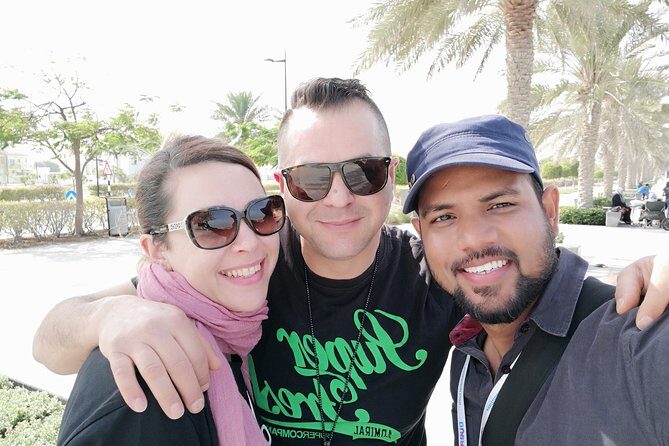
Before the mosque and other landmarks, the tour includes an excursion to characteristic, traditional corners of Muscat—souks to museums—so you can discover the heart of the city. Admission for this portion is listed as free.
This matters because it prevents the tour from feeling like a set of unrelated stops. You’re building a picture: where people shop, where cultural institutions sit, and what “traditional corners” look like when you’re moving through the city rather than standing in one spot.
I also like that the tour includes the Royal Opera House and mosque rather than only leaning historic. Muscat is layered, and seeing a mix helps you avoid the “one-note” feeling that can happen with shorter city tours.
WiFi, comfort, and why private transport is more valuable than it sounds
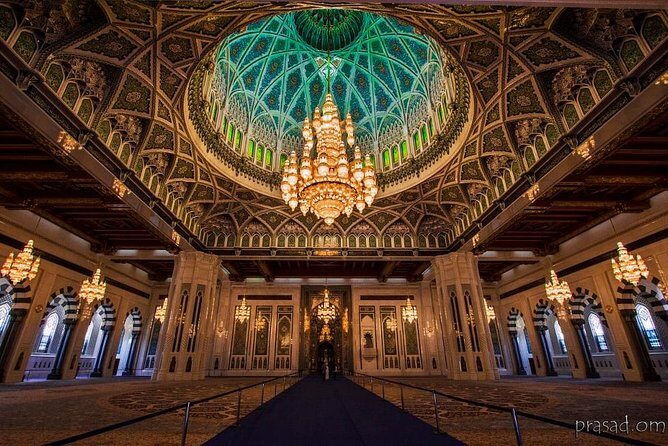
This is not a giant bus experience. You get a private transportation vehicle that’s air-conditioned and includes WiFi on board.
The WiFi part sounds small until you’re in the middle of the day and you need to handle a quick message, check your map, or confirm something for later. It also helps on cruise days, when you’re syncing schedules and re-entry times.
Comfort counts too. Muscat’s heat can be real, and your tour is only about 4 hours. If you’re comfortable in the car, you spend more energy enjoying the stops instead of counting minutes you can’t wait to escape.
Value check: $221 per group for up to 4 people
The price is $221.00 per group (up to 4), and the duration is about 4 hours. That’s where the private format becomes important.
If you’re traveling solo or as a couple, the per-person cost can feel higher than a public bus tour. But you’re buying time and attention: the guide can slow down, answer questions, and adjust pacing to your group—especially helpful if you have kids.
If you have a small group (family or friends), this price can feel genuinely fair for a half-day plan that covers multiple major sights with private transport and free admissions at the listed stops. It’s also useful if you want an efficient overview without committing to a full day.
What to expect from the guide (and the languages you might hear)
This tour notes that it may be operated by a multi-lingual guide. In practice, I’ve seen guides praised for handling different languages smoothly—examples include Sulaiman (friendly and patient; explanations repeated for children) and Malik (a fun, engaged guide). Another name that came up is Charan, including Jaimini Charan in Italian-language praise.
So if language matters to you, you’ve got a good chance of finding someone who can match your comfort level. Still, don’t assume one specific language unless your booking confirms it. The safest approach is to request your preferred language when you book, if that option exists.
Dress code and headscarves: the rule that can make or break your day
Let’s be direct: this tour requires a dress code. You should plan for it before you leave your hotel.
- No shorts or sleeveless tops
- Knees and shoulders MUST be covered for both men and women
- Women have to carry scarfs to cover heads
Also, expect the dress rules to apply at places of worship and selected museums. That means you could be fine for some outdoor photo stops, but still get refused if you show up uncovered for interior sites.
Bring a light shawl or scarf even if you think you’ll be fine. It’s an easy fix that prevents stress at the gate.
Weather and pacing: a half day that still works when conditions change
This tour is noted as operating in all weather conditions, so you’ll still go out even if conditions are less than ideal. You should dress appropriately for the day. That sounds basic, but in Muscat, “appropriate” can mean sun protection, light layers, and footwear you can stand in.
Because the route is already timed around specific windows (like the mosque), the schedule is tight. That’s part of the reason I recommend keeping your day flexible for this half-day window and not stacking other commitments right on top of it.
Who should book this private Muscat city tour?
This tour is a strong fit if you want:
- A half-day overview without long commutes
- Private pacing, especially with kids or mixed interests
- A mix of landmark views plus souks time
- A plan that’s structured around key timing windows
- A small group format (up to 4) where private transport makes sense
It’s also a good option for cruise passengers who want a route that accounts for ship schedules, with pickup at the port and return to the same point by around 12:30.
If you’re the type who likes to go fully independent with maps and public transport only, then a guided route might feel limiting. But if you want your time to count—and you’d rather ask questions than guess—this is a practical way to do Muscat.
Should you book this tour or not?
Book it if you want efficient Muscat with minimal friction: private vehicle, guided stops, free admissions listed for the sights, and a schedule that returns you by late morning. It’s especially worth it for small groups who can split the cost and for families who benefit from a guide who can slow down and explain again.
Don’t book it if you can’t or don’t want to follow the strict dress code (shoulders, knees, and head covering for women). Also, if your priority is deep museum time or hours in one souk area, this half-day plan may feel too structured. But for most people aiming to see the best-known sights plus real local browsing, this is a solid value.
FAQ
How long is the private Muscat City tour?
It runs for about 4 hours, with pickup at 9:00 am and drop-off back at the same point at around 12:30.
Where do you get picked up and dropped off?
Your guide and driver meet you in Muscat port inside, with the company placard. Drop-off is at the same point.
What sights are included on the half-day itinerary?
You’ll visit the Sultan Qaboos Grand Mosque, have a Royal Opera House exterior photo stop, spend time in Muttrah suk, and make photo stops at Al Alam Palace and Al Jalali Fort. There’s also an initial overview of traditional corners of Muscat including souks and museums.
Is WiFi included?
Yes. The vehicle includes WiFi on board, along with air-conditioning and private transportation.
Do you pay admission fees for the stops?
Admission tickets are listed as free for the mentioned sights and stops.
What’s the dress code for the tour?
The tour requires formal dress. You need shoulders and knees covered (no shorts or sleeveless tops), and women must carry scarfs to cover their heads for the places of worship and selected museums.