REVIEW · MUSCAT
Premium Muscat half day excursion-Italian guide
Book on Viator →Operated by OMAN SAFARI · Bookable on Viator
A few hours in Muscat can feel like a whole story. This 3–4 hour half-day tour is built for first-timers, hitting the big sights in a tight loop with a real local-cultural frame in Italian. Two things I especially like: the port pick-up and drop-off that keeps your day stress-free, and the way the tour balances big monuments with street-level Muscat at Mutrah Souq.
What makes it work is the pacing. You get focused time at each stop, plus photo breaks, without turning the day into a sprint. One consideration: the route includes a dress code for worship and selected sites, so you’ll want to plan clothes ahead rather than gamble on your arrival outfit.
In This Review
- Key highlights you’ll feel right away
- Why this 3–4 hour Muscat route is ideal for shore days
- Italian-guided storytelling you can actually use
- Sultan Qaboos Grand Mosque: the architecture you’ll keep looking at
- Mutrah Souq and Corniche: market energy with real bargaining
- Royal Opera House: Oman’s arts push, not just architecture
- Al Alam Palace: ceremonial views in the heart of Old Muscat
- Timing, transfers, and how the schedule protects your day
- Dress code and comfort: the one part you should get right
- Price and value: is $162 fair for this route?
- Who this tour suits best (and who might want more time)
- Should you book this Muscat half-day with an Italian guide?
- FAQ
- What’s the duration of the Premium Muscat half-day excursion?
- Which sights are included in the itinerary?
- Is the port pickup and drop-off included?
- Is there a dress code?
- Are any admission tickets included?
- Is food included?
- How big is the group?
- Do they offer vegetarian options?
- Is this tour suitable for children?
Key highlights you’ll feel right away
- Port-ready transfers: round-trip pick-up and drop-off, with the day designed around shore schedules
- Italian guidance that connects dots: context for what you’re seeing, not just a checklist of stops
- Sultan Qaboos Grand Mosque access with time to absorb it: admission included and time built into the schedule
- Mutrah Souq with practical bargaining reality: lively market feel under modern roofs
- Old Muscat photo moments: Al Alam Palace views even though the palace itself isn’t for public entry
- Small-group feel (max 40): easier conversation and smoother flow through stops
Why this 3–4 hour Muscat route is ideal for shore days
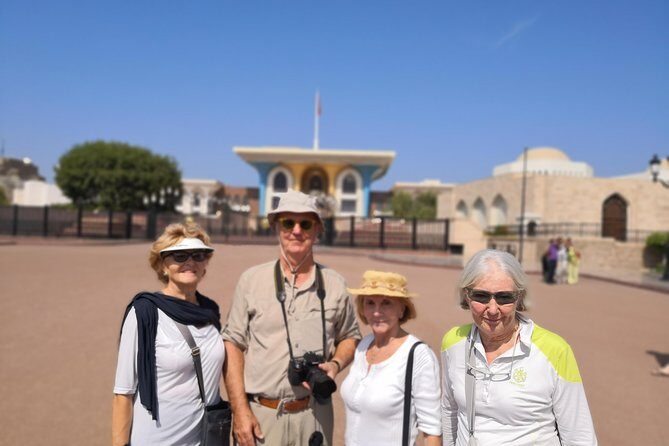
Muscat is spread out, and that’s the trap on a short visit: you spend more time in the car than learning the city. This tour fixes that by stitching together a smart set of stops in one half-day block—roughly three to four hours—so you get orientation fast.
You’ll also like the structure. The itinerary isn’t random; it groups big, iconic landmarks (mosque and ceremonial palace) with the everyday pulse of the city (Mutrah). That mix is what makes this feel like more than a drive-by.
And yes, the tour is set up for cruise days. With round-trip transfers from the port and a mobile ticket, you’re usually not stuck dealing with last-minute paperwork when you’re short on time.
You can also read our reviews of more guided tours in Muscat


Italian-guided storytelling you can actually use
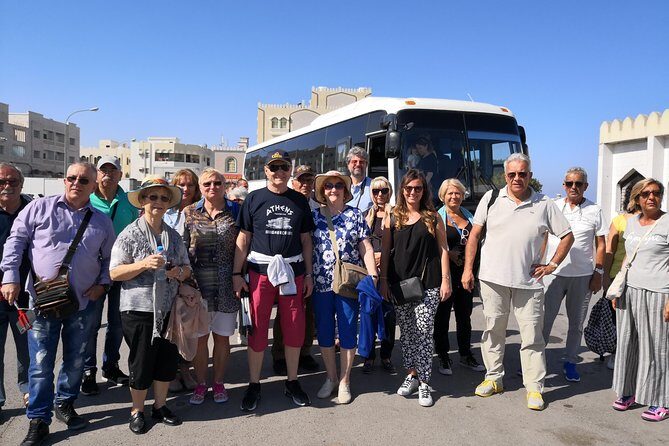
This is marketed as an Italian guide experience, and the Italian part matters because it changes how you “read” a place. When the guide can explain context clearly—history, culture, what you’re looking at—you stop treating the sights like photos in a book and start seeing how they connect.
One guide named Jaimini Charan has been specifically praised for guiding in Italian with engaging stories and a strong attention to keeping the group on track. The same review also highlights how he stayed with the group from ship disembarkation through the end of the tour—exactly what you want when your day depends on reboarding on time.
If you care about getting real local color (not just dates and names), this is the kind of tour that tends to deliver.
Sultan Qaboos Grand Mosque: the architecture you’ll keep looking at
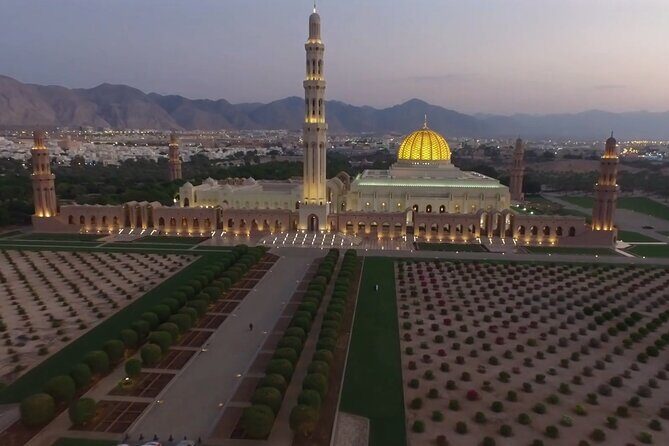
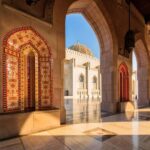
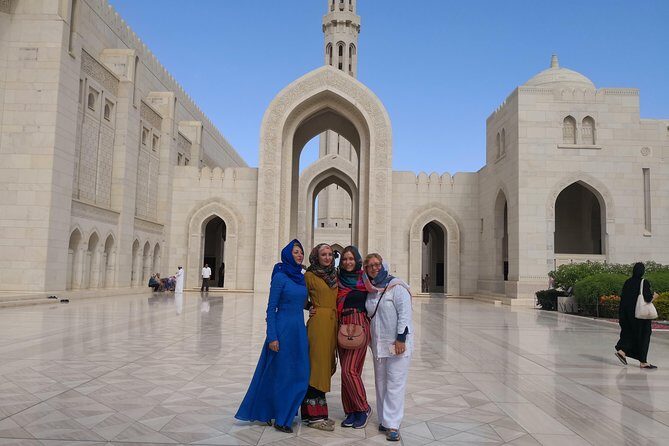
Your first major stop is the Sultan Qaboos Grand Mosque, and this place hits hard because it’s not subtle. Built from 300,000 tonnes of Indian sandstone, it’s designed for visual impact: the dome is tall, the minarets are tall, and everything is laid out to feel ceremonial.
Here’s what to look for when you arrive:
- The main prayer hall is a square space, with a central dome rising about 50 meters above the floor.
- The minaret story is dramatic: the main minaret reaches around 90 meters, with four flanking minarets at about 45.5 meters each.
- Capacity is huge—the main musalla can hold over 6,500 worshippers, and the overall complex can hold up to around 20,000 depending on areas used.
That kind of scale can feel abstract until you’re standing in it. During your time here (about 1 hour, with admission included), you’ll get enough minutes to notice details like the symmetry and the way the complex is planned on a large site.
Practical note: this is also a place of worship, so plan your clothing accordingly (covered below). And keep expectations realistic: you won’t “explore” like a museum with hours to wander. This is a timed sightseeing stop where the goal is comprehension plus photos.
Mutrah Souq and Corniche: market energy with real bargaining
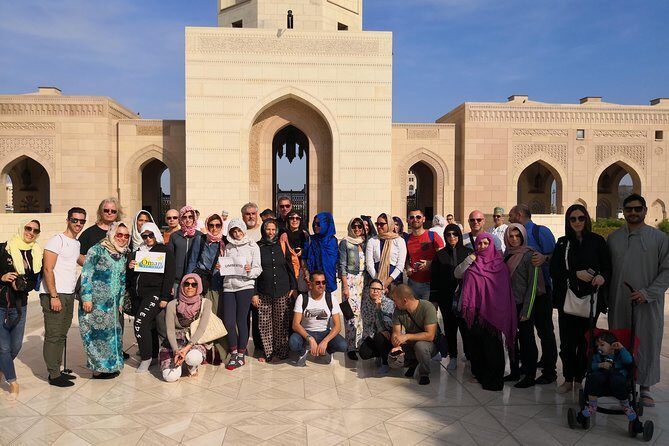
Next up is Mutrah Souq, one of Muscat’s most popular market experiences. The souq sits along the Corniche, and the setup is classic in feel even though it’s housed under modern wooden roofs. That matters because the market has that traditional chaos—sound, movement, displays—without being fully exposed to the elements.
What I like about Mutrah Souq on a guided half-day is that it’s not just shopping time. It’s a culture stop. You’ll see:
- Dense clusters of stores selling things like textiles, hardware, jewelry, and lots of small imported goods (including Indian-leaning products)
- Specialty sellers mixed into the general market flow, which gives you variety even if you’re not an extreme shopper
- Photo-stop opportunities along the way, so you don’t only experience it with your credit card in your hand
Bargaining is part of the rhythm. The guidance here is simple: discounts may be modest, and payment can be flexible—cards are accepted in many shops, but you might get better offers by paying with cash in currencies like euros or dollars (the market can be a little practical in how it prices).
Also, the route frames Mutrah as “Muscat at its most magical,” which is a useful mental cue. This is where you get street-level Muscat—the human side of the city—after seeing the monumental mosque.
Royal Opera House: Oman’s arts push, not just architecture
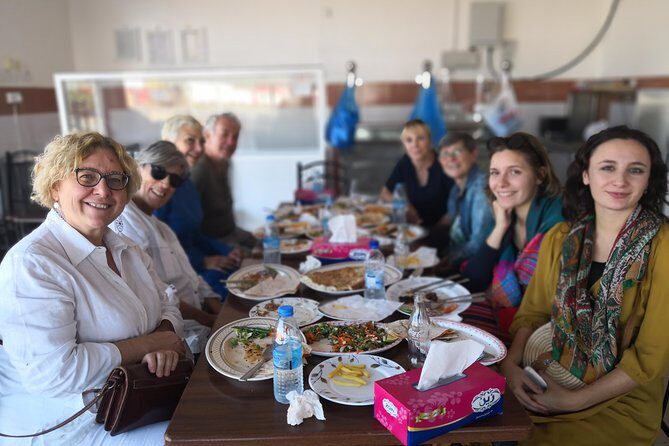
Then you’ll pass by the Royal Opera House Muscat (ROHM), a more modern Muscat moment. This isn’t a quick “random stop.” The opera house is Oman’s arts hub, tied to the ruler’s interest in classical music and cultural life.
What you’ll likely notice even with limited time (about 15 minutes) is the identity of the place:
- It was built on the royal orders of Sultan Qaboos
- The venue complex includes a concert theater and an auditorium, with landscaped gardens and spaces connected to cultural events
- It can accommodate up to 1,100 people
- The complex also includes a cultural market with retail stores, plus luxury restaurants and an art center connected to musical, theatrical, and opera productions
If you’re traveling with someone who likes architecture or modern culture, this stop is a nice balance to the older districts. Admission isn’t included for this portion, so you’re basically there to see and orient—think of it as a “sense it in person” stop rather than a full inside visit.



Al Alam Palace: ceremonial views in the heart of Old Muscat
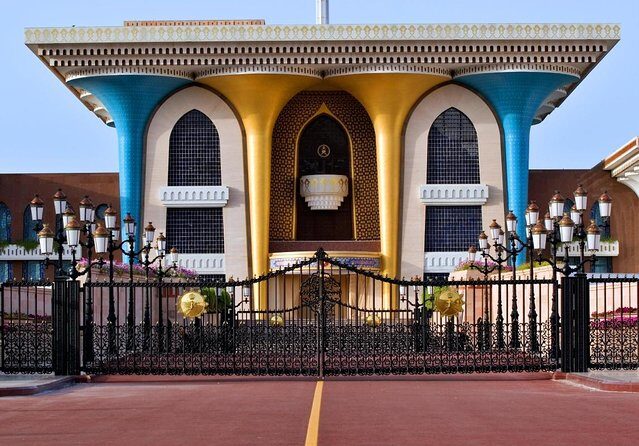
The final sight in the core loop is Al Alam Palace, the ceremonial palace of the Sultan. Even though it’s not open to the public, you can still take in the setting, which is one of the reasons this works for a half-day tour.
Here’s the context that makes the stop click:
- It’s in Old Muscat, near the forts Al Jalali and Al Mirani
- The palace is linked to the official residence role, while the palace building replaced an earlier residence called Bait Al Alam
- The palace often hosts high-ranking official guests, including historic references like the Queen of England and the Queen of the Netherlands
Your time is short (about 10 minutes), but it’s enough for photos and a quick understanding of why this location is considered “the ceremonial center.” You’ll also get the sense of Muscat’s layers: monumental power (mosque), civic life (souq), arts modernity (opera house), then ceremonial authority (palace).
Timing, transfers, and how the schedule protects your day
This tour is designed as a tight loop with a few photo stops. That matters because Muscat can be traffic-dependent, and a half-day means you need the plan to be sturdy.
A few details that help:
- Pickup offered, and it includes round-trip transfers from the port
- Duration is listed at 3 to 4 hours, so you’re not committing your entire day
- The group size cap is 40 travelers, which is large enough to be efficient but small enough that it usually doesn’t feel like a moving crowd
Also, the tour uses a mobile ticket, which is helpful when you’re trying to keep your day simple. Bottled water is included, and food and drinks are not—so if you’re sensitive to hunger on tours, plan a light snack before you go or after you return.
Dress code and comfort: the one part you should get right
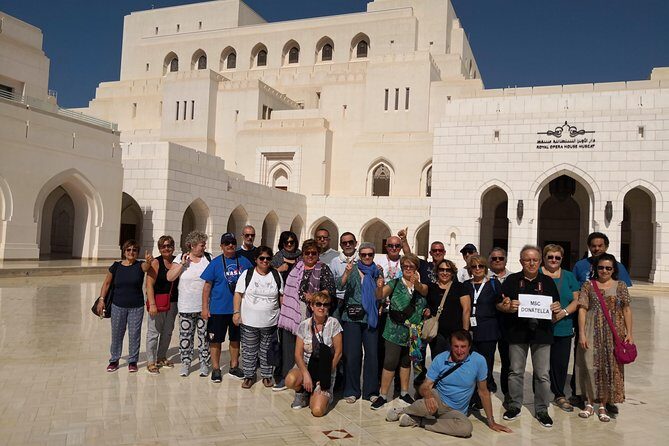
This tour is short, but clothing rules can still cause problems if you ignore them. The guidelines say a dress code is required for places of worship and selected museums, with no shorts or sleeveless tops, and that knees and shoulders MUST be covered for both men and women. If you don’t comply, you could be refused entry.
So I’d treat this as your rule of thumb:
- Wear breathable long pants or loose trousers
- Choose a shirt or top with sleeves
- Bring a light layer that won’t make you regret it in the heat
The tour also notes “formal” / “smart casual” overall, which basically reinforces the same idea: keep it respectful and covered. Since the biggest dress-code pressure is at the mosque, you’ll be set if your outfit fits that standard from the start.
Price and value: is $162 fair for this route?
At $162 per person, you’re paying for four things that add up quickly:
- An Italian professional guide
- Port pickup and drop-off (real logistical value on shore days)
- Admission included for key elements (the mosque and the souq portion are listed with admission tickets included)
- Convenience extras like bottled water and mobile ticketing
What you’re not paying for (at least on the listed items) is entrance connected to the opera house and the palace, since those are marked as not included. Also, food and drinks aren’t included.
So is it good value? For a half-day tour that gives you a strong “Muscat starter kit” (mosque + souq + ceremonial Old Muscat + modern arts stop) without you having to plan transport and timing, yes—$162 can make sense. If you already have a private driver and you’re comfortable self-guiding with minimal language help, it could feel pricey. But if you want smooth transfers and meaningful context in Italian, it’s priced like a convenience plus education package.
Who this tour suits best (and who might want more time)
This works especially well if:
- You want a short introduction to Muscat with minimal stress
- You care about context and culture, not just seeing buildings
- You prefer an Italian guide experience
- You’re on a cruise and need a plan that handles port timing
- You like a mix of “big landmark” and “real local market”
It may not be ideal if:
- You want long museum-style wandering time
- You dislike dress rules at worship sites
- You’re shopping-heavy and want hours inside the souq rather than a guided window
Good to know: there’s a vegetarian option available, and you can mention it at booking.
Should you book this Muscat half-day with an Italian guide?
If you want to get your bearings fast—and you want it explained in Italian—this is a strong choice. The mosque stop alone sets a high bar, and pairing it with Mutrah Souq keeps the experience grounded in real Muscat life. Add in port transfers and a guided flow, and it’s built for travelers who don’t want their limited time eaten by logistics.
I’d book it if your priority list looks like this:
- Mosque + Old Muscat feel
- Mutrah Souq shopping/strolling
- A guided narrative in Italian
- Port-friendly timing
If, on the other hand, you’re planning a longer independent stay in Muscat and you’re comfortable arranging transport yourself, you might stretch your time beyond a half-day. But for shore days or short layovers, this route is one of the more practical ways to see the city’s key faces without missing the big moments.
FAQ
What’s the duration of the Premium Muscat half-day excursion?
It runs for about 3 to 4 hours.
Which sights are included in the itinerary?
The tour includes Sultan Qaboos Grand Mosque, Mutrah Souq, the Royal Opera House Muscat, and Al Alam Palace (with walking/photo time since the palace is not open to the public).
Is the port pickup and drop-off included?
Yes. Port pickup and drop-off are included.
Is there a dress code?
Yes. For places of worship and selected museums, you need shoulders and knees covered. No shorts or sleeveless tops.
Are any admission tickets included?
Admission tickets are included for Sultan Qaboos Grand Mosque and for Mutrah Souq. Royal Opera House and Al Alam Palace are marked as not included for admission.
Is food included?
No. Food and drinks are not included. Bottled water is included.
How big is the group?
The tour has a maximum size of 40 travelers.
Do they offer vegetarian options?
Yes. A vegetarian option is available if you advise at booking.
Is this tour suitable for children?
The minimum age is 18. Children must be accompanied by an adult, and child pricing applies only when sharing with 2 paying adults.