REVIEW · MUSCAT
Half-Day Private Muscat City Tour 4 Hours
Book on Viator →Operated by OMAN SMART TOUR · Bookable on Viator
Muscat feels more personal when you do it with a local plan. This half-day tour threads together big sights, sea time, and the kind of street-level culture you actually remember, with a guide focused on local communities and the environment.
I especially liked the stop at the Sultan Qaboos Grand Mosque, and I also enjoyed the switch to Qurum Beach and Mutrah Souq so the day doesn’t turn into one long photo sprint.
Two other things I like: you get a private group experience (so your pace stays your pace), and the itinerary keeps the “ticket math” simple with free admission at every listed stop. In at least one past group, I heard the guide Mahmood made the day feel easy and friendly.
One drawback to consider: Al Alam Palace isn’t open to the public, so you’re seeing it from outside (plus the mosque has visiting-hour limits, with Friday being an exception).
In This Review
- Key highlights to know before you go
- Why this half-day Muscat city tour works
- Getting there: pickup, timing, and how the day flows
- Sultan Qaboos Grand Mosque: the main act, with real calm
- Qurum Beach: a short reset that keeps the tour human
- Mutrah Souq: spices, textiles, jewelry, and real street energy
- Al Alam Palace: what you can see (and what you can’t)
- Old Muscat Gate and clay watchtowers: a quick climb for big views
- Sustainability and local-first touring: what it means on the ground
- Price and value: is $88 per person fair for this format?
- Who should book this tour, and who might skip it
- Should you book this private Muscat city tour?
- FAQ
- FAQ
- How long is the Half-Day Private Muscat City Tour?
- What does the tour cost?
- Is this tour private?
- Does the tour include pickup?
- Are the attraction tickets included or free?
- When can I visit the Sultan Qaboos Grand Mosque?
- Is Al Alam Palace open to the public during this tour?
- Where do we meet and where does the tour end?
- What is the cancellation policy?
Key highlights to know before you go
- Sultan Qaboos Grand Mosque time window (8 am–11 pm, except Friday)
- Qurum Beach break built into a tight 4-5 hour schedule
- Mutrah Souq alley time for spices, textiles, jewelry, and handicrafts
- Al Alam Palace exterior views with the Portuguese-fort backdrop
- Old Muscat Gate and clay watchtowers photo stop from a mountain viewpoint
- Private tour format means only your group rides along
Why this half-day Muscat city tour works
Muscat can sprawl, and a short day has one job: help you pick the moments that matter. This tour does that by grouping together places that give you three different “faces” of the city—religious architecture, coastal life, and trade-and-souvenir culture—without making you bounce around for hours.
I like that it’s designed for connection rather than checkboxes. The focus on meaningful community contact and supporting local businesses changes how you experience the souq and street scenes. It’s not just about seeing; it’s about noticing what locals do and why.
You’ll also get an expert guide, and the private setup keeps it less stressful. Instead of sharing attention with strangers who want different things, you can ask questions, linger for a photo, or move on when the heat (or crowd level) shifts.
The route is short enough to be doable even if you’re tired, but packed enough that you won’t leave thinking you “missed the highlights.” That balance is the whole point.
You can also read our reviews of more city tours in Muscat

Getting there: pickup, timing, and how the day flows
The tour runs about 4 to 5 hours, and pickup is offered. You’ll meet at H9MV+C57, Muscat, Oman, and the activity ends back at the meeting point. It’s also listed as near public transportation, so the location works even if you’re not relying on the pickup.
Because the stops are spread across different neighborhoods (mosque area, coastline, older city lanes), your guide becomes the time-saver. In a city like Muscat, local driving knowledge matters. It reduces the “where do we park?” headache and keeps you from spending your limited time figuring out routes.
A practical rhythm to expect: one big indoor architectural stop first, then a coastal reset, then a market session, then palace views and an elevated Old Muscat viewpoint. That order tends to feel logical—especially because the mosque has set visiting hours.
If you’re the type who hates rushing, tell your guide early. Private format helps, because you can adjust within the overall timing.
Sultan Qaboos Grand Mosque: the main act, with real calm
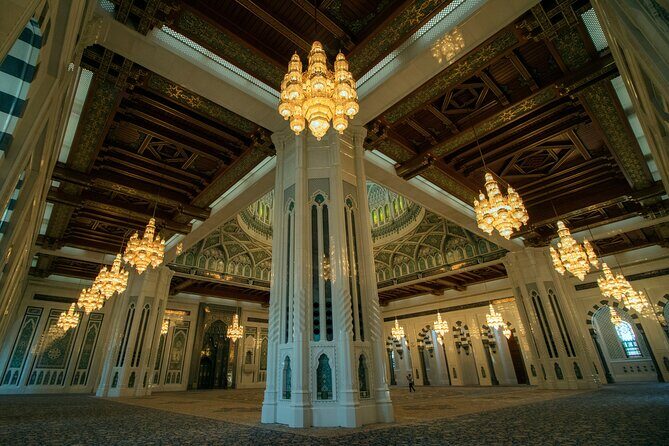
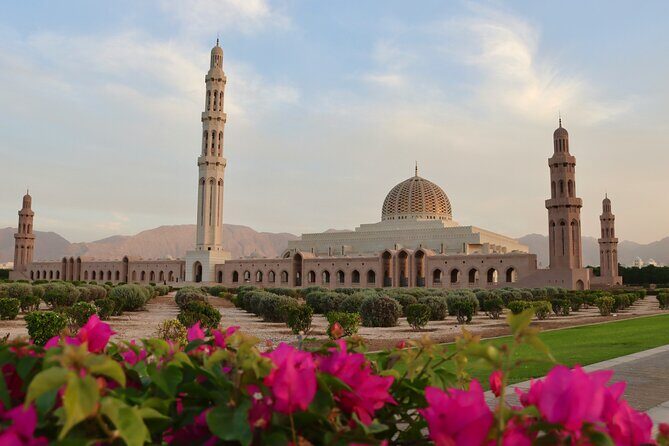
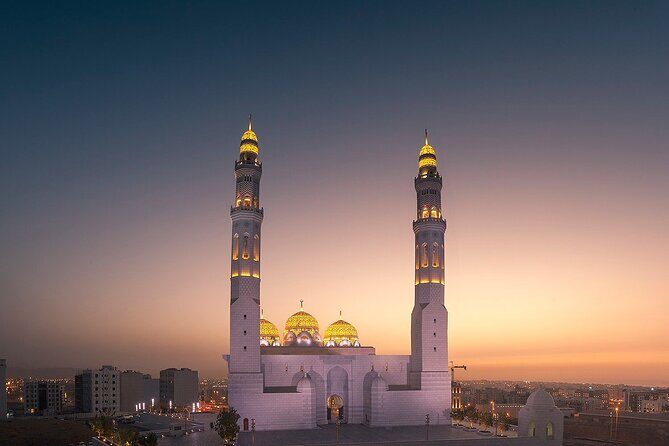
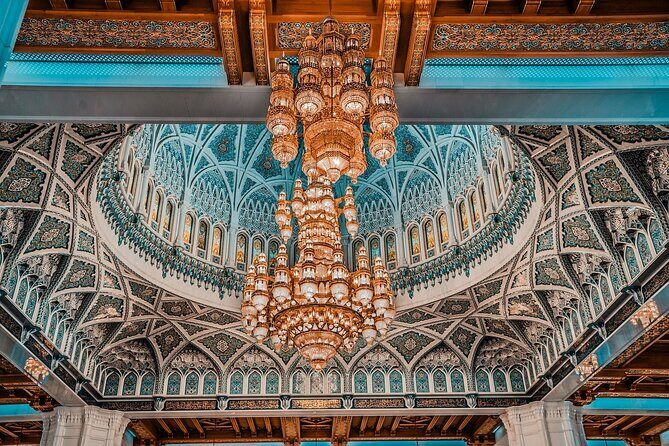
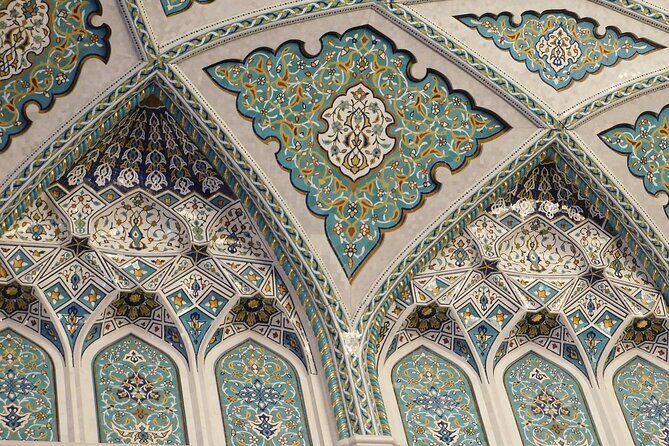
Start your day at the Sultan Qaboos Grand Mosque, completed in 2001. It’s a major landmark in Oman, known for the scale of its prayer hall, a grand dome, and intricate marble artwork. The atmosphere is meant to feel serene, not touristy-chaotic.
Your visit is scheduled for about 55 minutes, and it’s free. The visiting time is listed as 8 am to 11 pm, except Friday. That last part is important—if your trip lands on a Friday, the schedule may change, so plan around that early.
What I like about this stop is how it sets a tone for the whole tour. Even if you don’t follow the faith yourself, the mosque gives you a window into Oman’s spiritual and artistic priorities. It also teaches you how to slow down. You’ll likely find yourself looking longer than you expected, just because the details are there.
One consideration: this is a place of worship. So keep your behavior respectful, your voice low, and your attention on the space instead of treating it like a theme park.
Qurum Beach: a short reset that keeps the tour human
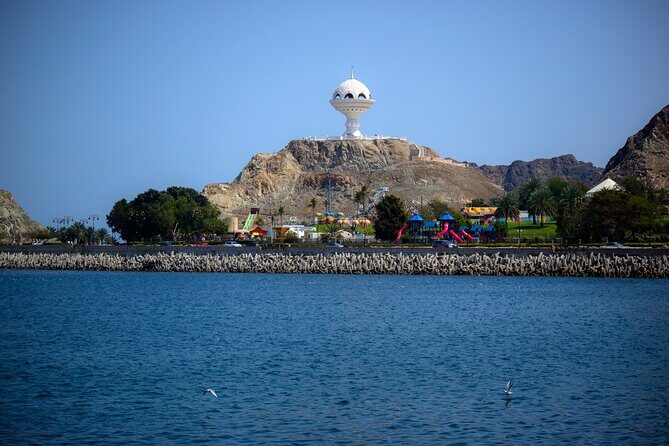
After the mosque, you get a breather at Qurum Beach. This stop is about 40 minutes, also with free admission. The setting is known for golden sands and clear water, and it’s a popular spot for locals and visitors.
Why this matters in a half-day tour: it breaks the mental pattern. A city tour can start feeling like a moving queue of buildings. Here, you get a chance to exhale—walk a bit, take in the coastline, and reset your senses before heading into the sensory overload of a souq.
If you like simple beach time, this works well. If you want more active fun, the area is described as a place where water sports are available. Just don’t build in extra time for it unless your guide tells you the plan can flex.
Even if you just do a few steps on the sand and a couple of photos, the “sea change” is worth it. It makes the day feel varied, not repetitive.
Mutrah Souq: spices, textiles, jewelry, and real street energy
Then you hit Mutrah Souq, where the day shifts from calm architecture to everyday commerce. You’ll spend about 55 minutes here, and entry is free.
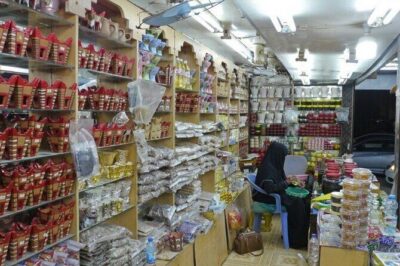
Mutrah Souq is described as a maze of narrow alleyways with shops selling traditional Omani handicrafts, spices, textiles, jewelry, and souvenirs. This is the part of the tour that turns your sightseeing into a more cultural experience, because it’s where you can actually see what people make and sell.
What I like: the souq gives you multiple ways to engage. You can window-shop for crafts, look closely at textiles and jewelry, or focus on spices and take your time comparing smells and packaging. Even if you don’t buy much, you’ll come away with a better sense of local taste and materials.
A consideration: souq time can feel intense if you dislike crowds or haggling. The good news is that private guiding helps here. You can ask your guide what’s worth slowing down for, and you can steer your attention away from the most hectic areas if you need to.
You can also read our reviews of more private tours in Muscat





Al Alam Palace: what you can see (and what you can’t)
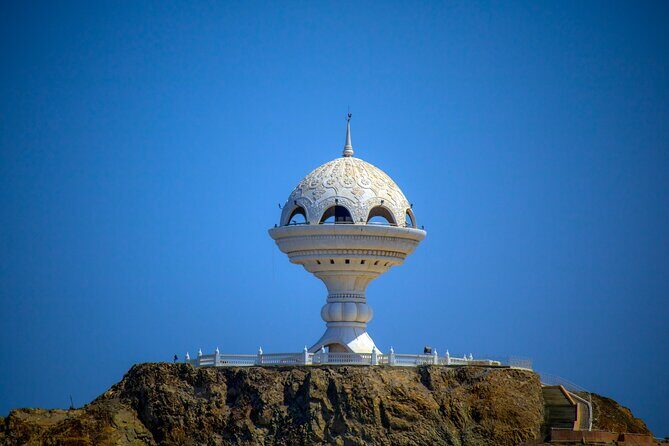
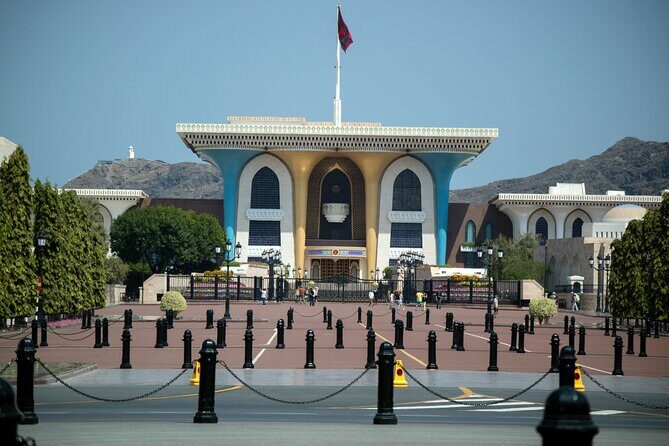
Next is Al Alam Palace, the Sultan’s ceremonial residence. Plan for about 40 minutes. It’s free to view, but it’s not open to the public, so this is an exterior-and-views stop.
The palace is known for its striking blue and gold facade. It overlooks the sea and is flanked by two Portuguese forts. That Portuguese-fort detail gives the building extra context; you’re not just looking at modern royal grandeur, you’re seeing layers of history in the setting around it.
What you’ll get from this stop: photos, architecture observation, and a sense of how the palace relates to its coastline. What you won’t get: interior access.
If you’re hoping for palace rooms and galleries, you’ll need to adjust your expectations. But if you like seeing how a place sits in its landscape and how styles and eras touch each other, this works.
Old Muscat Gate and clay watchtowers: a quick climb for big views
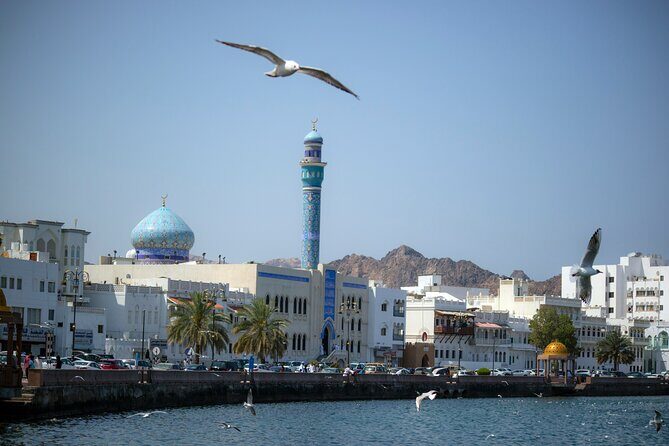
Your final cultural push includes a photo stop in Old Muscat at the top of a mountain area. You’ll get about 15 minutes for pictures and views.
The highlights here are the Old Muscat Gate and clay watchtowers along the mountain ridges. This is the kind of stop where the time is short, but the payoff is quick: you get a wider view that helps you understand where older Muscat sits compared to the rest of the city.
I like this stop because it gives contrast. After mosque marble, beach sand, and souq alleyways, the clay watchtowers remind you that Muscat also has a defensive, historical side.
Practical tip: 15 minutes disappears fast. If you have specific angles you want, ask your guide where to stand before you start clicking photos.
Sustainability and local-first touring: what it means on the ground
The tour is described as having an emphasis on meaningful connections with local communities and the environment. It also mentions sustainable practices and support for local businesses.
In practice, that shows up in two ways. First, your guide isn’t just listing facts; the tone is meant to encourage respect for the places you visit—especially the community-based ones like the souq. Second, the stops you choose include local life nodes, not only monumental landmarks. That tends to feel more honest, because you’re spending time where people actually live their day.
I also appreciate that the itinerary is compact. Short routes with planned stops can reduce wasted transit time and keep the day from turning into a logistics circus. Less time moving equals more time paying attention.
Price and value: is $88 per person fair for this format?
The listed price is $88.00 per person, for about 4 to 5 hours. That’s not a budget “hop-on-hop-off” cost, but it does match the private format.
Here’s why it can feel like good value:
- You’re getting a private tour, so the guide can focus on your group’s pace.
- Pickup is offered, which is usually where city tours quietly add cost.
- The major stops have free admission listed for each one, so you’re not paying extra at the gate.
It also helps that the time is tight. You get mosque, beach, souq, palace views, and an Old Muscat viewpoint in one run. If you were trying to piece this together yourself—transport, timing, and knowing where to go—you’d likely spend time you don’t have.
If you’re traveling solo or as a couple, private pricing can still sting. But if you can share the cost within your group and you want a guide to connect the dots, it’s the kind of day that can make your Muscat time feel complete.
Who should book this tour, and who might skip it
This tour fits you best if you want:
- a short, structured Muscat day that still feels thoughtful
- major highlights without navigating multiple neighborhoods alone
- a private guide who can answer questions and adjust pacing
- a mix of architecture, beach time, and local market culture
You might skip it if you only want a single type of experience—for example, only beach time—or if you plan to spend long hours in one stop. The schedule is built for variety, not for deep stays.
Also, if you’re visiting on a Friday, keep the mosque timing exception in mind. That doesn’t mean the day won’t work; it just means your mosque experience may be affected by local scheduling.
Should you book this private Muscat city tour?
If you want a high-yield half-day that covers the big anchors of Muscat—Sultan Qaboos Grand Mosque, Mutrah Souq, Qurum Beach, and key Old Muscat views—this is a solid bet. The private format, free admission at the listed stops, and pickup make it feel efficient rather than pricey.
Book it if you value a guide who connects places to the people and patterns of daily Oman life. I think you’ll appreciate the day’s balance: serene architecture, a coast reset, and market streets in between.
FAQ
FAQ
How long is the Half-Day Private Muscat City Tour?
It runs about 4 to 5 hours.
What does the tour cost?
The price is $88.00 per person.
Is this tour private?
Yes. It’s a private tour/activity, and only your group participates.
Does the tour include pickup?
Pickup is offered.
Are the attraction tickets included or free?
Admission tickets are listed as free for the mosque, Qurum Beach, Mutrah Souq, and the other stops on the itinerary.
When can I visit the Sultan Qaboos Grand Mosque?
The visiting time is listed as 8 am to 11 pm, except Friday.
Is Al Alam Palace open to the public during this tour?
No. It is not open to the public, but you can admire the architecture and gardens.
Where do we meet and where does the tour end?
The tour starts at H9MV+C57, Muscat, Oman, and it ends back at the meeting point.
What is the cancellation policy?
Free cancellation is available. You can cancel up to 24 hours in advance for a full refund. If you cancel less than 24 hours before the start time, it won’t be refunded.