REVIEW · MUSCAT
Desert Guided Overnight Camp Tour
Book on Viator →Operated by Choolo Tour By Nasser · Bookable on Viator
Two days, three kinds of water and sand. The Wahiba Sands desert camp pairs perfectly with lush wadis, plus a couple of cultural stops that keep things from feeling like one long nature day. You get the green-and-red contrast of Oman: palm-lined canyons, then towering red dunes, then back to ocean air in Sur.
I especially love how efficiently this trip switches gears. In a single day you can be swimming and hiking in Wadi Bani Khalid, then watching the dunes turn color as the sun drops. I also like the personal feel that comes from a small group (max 12) and a guide-led pace that feels controlled rather than rushed, with guides like Mr. Nasser (Choolo Tours) and Abdullah showing up in the experience.
One possible drawback: there’s a lot of driving. And for Wadi Shab, the hike ends with walking through water, so you’ll want footwear you’re comfortable getting wet and a realistic attitude about uneven, sometimes slick ground.
In This Review
- Key things I’d bank on before you go
- Muscat to Wadi Bani Khalid: noon arrival, real swimming, and a canyon break
- Wahiba Sands overnight camp: dune driving at sunset and BBQ under clear skies
- Day 2 sunrise-to-breakfast: leaving the camp early for the best light
- Wadi Shab: the 45-minute hike to aquamarine pools (and the wet-foot ending)
- Sur’s dhow factory stop and Bimmah Sinkhole: small segments with strong payoff
- Group size, pickup, and the reality of a lot of driving
- Price and value at $500: what you’re buying besides the view
- Who should book this desert overnight tour (and who might not love it)
- Should you book this Desert Guided Overnight Camp Tour?
- FAQ
- FAQ
- How long is the Desert Guided Overnight Camp Tour?
- What is the price per person?
- Is pickup offered from Muscat?
- What is the group size?
- Does the tour include admission for Wadi Shab and Bimmah Sinkhole?
- Is BBQ dinner provided?
- What time is breakfast on day two?
- Does the Wadi Shab hike involve walking in water?
- What happens if the weather isn’t good?
Key things I’d bank on before you go
- Small-group size (max 12) keeps the day more flexible and easier to manage on tight paths.
- Wadi Bani Khalid at noon means you’re arriving during prime swim time, not just sightseeing from a viewpoint.
- Wahiba Sands dune sunset is built in: you drive on big dunes, then settle in for dinner under the sky.
- The Wadi Shab hike includes wet footing—plan shoes accordingly and expect the last stretch to be in the water.
- Two paid-entry spots are covered (Wadi Shab and Bimmah Sinkhole), so you aren’t piecing tickets together day by day.
- Breakfast plus BBQ dinner are part of the schedule, so you can travel without constantly hunting meals.
Muscat to Wadi Bani Khalid: noon arrival, real swimming, and a canyon break
Your day starts with pickup offered in the Muscat area, then a drive that trades city life for mountain views. You’ll be on the road for a couple of hours, with the scenery shifting as you head toward the wadis. It’s the kind of start that helps your brain switch from travel mode to outdoors mode fast.
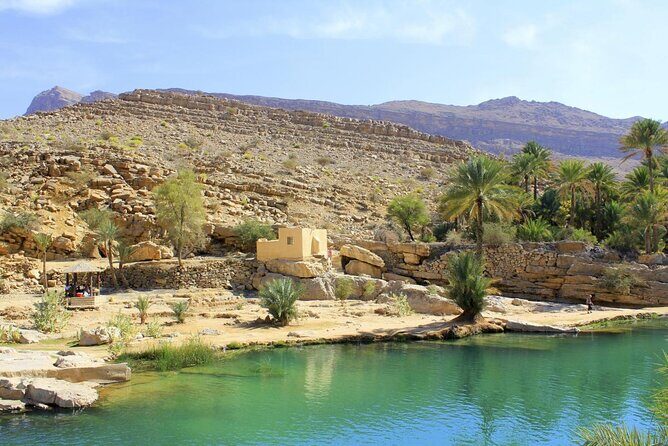
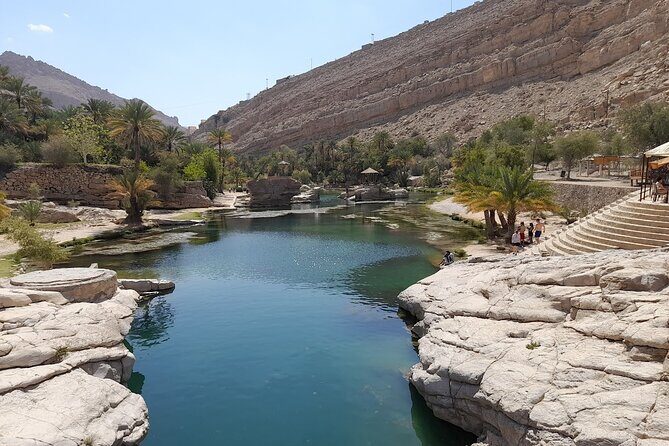
Then comes Wadi Bani Khalid, arriving around noon. That timing matters. If you show up earlier, the wadi can feel like a wait. Arriving at midday gives you a practical window to do the two things Oman’s wadis are best at: cooling off and getting some gentle (but real) movement in.
At the wadi, the plan gives you time to swim and hike. You also get lunch in front of the water pools, which is a nice detail for two reasons. First, it reduces the “eat fast, go back out” pressure. Second, it puts you right where the scenery is active—water moving, people splashing, palms overhead. It can get busy, so a guide who knows the area and keeps you on the right path helps you make the most of your time.
What to watch for: Wadi time is water time. Don’t assume you’ll stay dry. Bring swimwear you don’t mind wearing again, plus something quick-dry for after.
You can also read our reviews of more guided tours in Muscat

Wahiba Sands overnight camp: dune driving at sunset and BBQ under clear skies
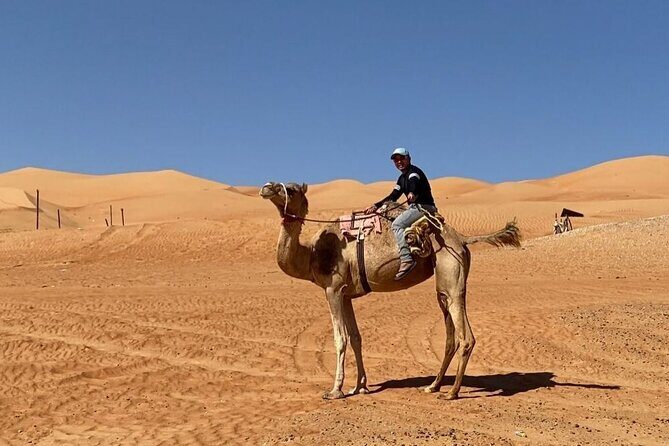
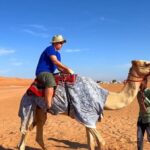
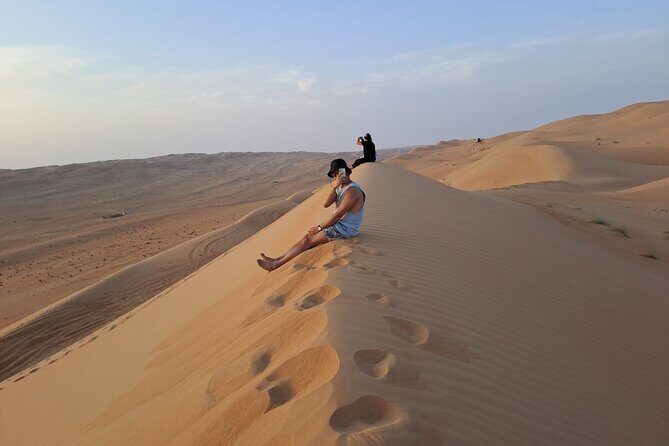
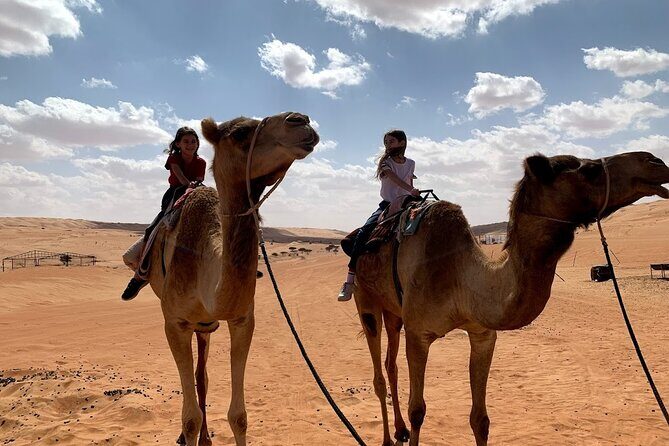
After Wadi Bani Khalid, you head to Wahiba Sands, the big red-dune desert area where the driving becomes part of the attraction. The route includes a 45-minute drive on sand dunes to reach the camp, then check-in.
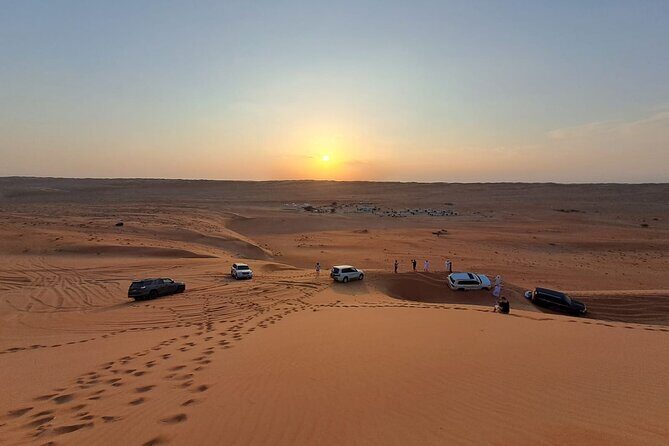
This is where the trip earns its “overnight” label. Instead of rushing through the desert like a photo stop, the schedule builds a whole evening around it. After you arrive and settle, you’ll drive on the larger dunes and catch the sunset. That’s the key moment here: the shift in light across dunes turns the desert from flat to dramatic, fast.
At 7:00 pm, you enjoy a BBQ dinner with a clear-sky setup. Even if you’re not a “food at sunset” person, it’s still a smart move. Dinner at that hour usually means you’re not stuck eating too early, and you’re not waiting forever either.
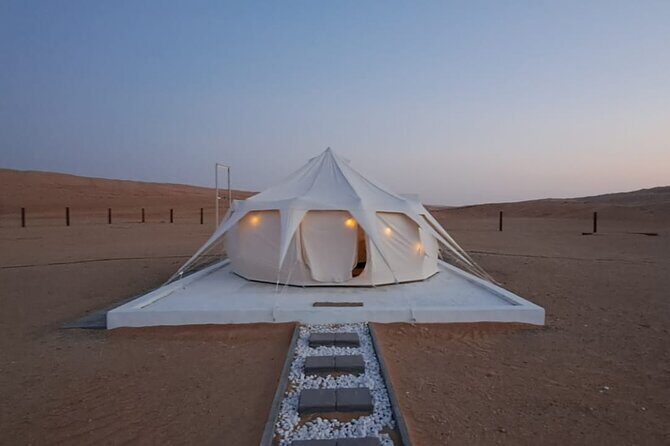
From the reviews and the way the schedule is written, the camp experience leans toward comfort. One guest described the desert camping as feeling like a more luxury-studio style stay in the desert—something you’d notice if you’ve ever done basic overnight camps that feel more like you’re sleeping in a field.
What you should mentally prepare for: desert nights can feel cooler, and mornings can start early. Pack layers you can actually use, not just a single jacket that’s either too hot or too cold.
Day 2 sunrise-to-breakfast: leaving the camp early for the best light
The second day starts with an early wake-up for sunrise views in Wahiba Sands. The tour doesn’t treat sunrise as a vague suggestion. The timing is built in: breakfast is set for 07:30 am, and you leave the camp at 08:30 am.
This part of the schedule is valuable because it keeps your desert time from turning into a slow wake-and-wait routine. Sunrise in the dunes changes everything—especially if you’re seeing it for the first time. Even if you don’t consider yourself a photographer, it’s one of those “okay, I get it” moments when your brain realizes the desert has depth, not just height.
Once breakfast is done, you’re off again—this is a two-day tour, and it uses the early hours well. That means you’re not just collecting highlights. You’re getting a logical flow: desert light in the morning, then culture and water later.
Wadi Shab: the 45-minute hike to aquamarine pools (and the wet-foot ending)
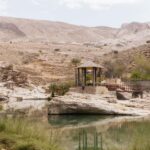
The highlight of day two for many people is Wadi Shab. It’s described as one of Oman’s most special wadis, where water carved through rock over centuries, leaving deep gorges and freshwater pools. The big draw is that you don’t just look at it—you walk into it.
The hike starts at the parking lot with about 45 minutes of hiking along the wadi to reach the deep aquamarine pools at the back. You should plan for uneven ground. One review noted the hike can be a bit treacherous. That doesn’t mean it’s unsafe for everyone, but it does mean you shouldn’t treat it as a flat walkway.
And here’s the practical detail that matters most: toward the end, you’ll walk through the water. The tour specifically flags that appropriate footwear is recommended. So think sandals with grip or water shoes that handle submerged sections. Avoid brand-new shoes you can’t risk getting soaked.
Once you reach the pools, you get time to swim in the water. The schedule suggests you’ll enjoy an afternoon of swimming, which is the point of the whole wadi outing—cool off, relax, and stop rushing.
Crowds can happen. Wadi Shab is popular, and the value of having a guide is that they can help you navigate where to go and how to enjoy the place without wasting your time.
Sur’s dhow factory stop and Bimmah Sinkhole: small segments with strong payoff
After Wadi Shab, the tour doesn’t drop you back into Muscat right away. It breaks the day with two stops that add texture.
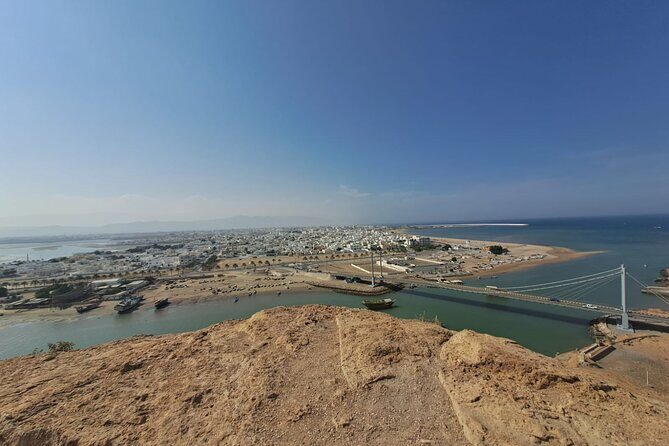
First, there’s a quick stop in Sur—about 30 minutes—to discover the dhow factory. If you’re interested in how Oman’s sea culture has shaped daily life, this is a simple, time-efficient introduction. You aren’t going deep with a long museum-style visit here. It’s more like a “get your bearings fast” moment before you return to water-and-coast vibes.
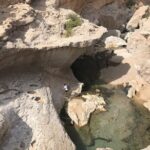
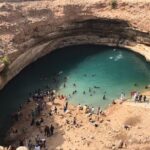
Then you head to Bimmah Sinkhole in Dabab village, which is 113 KM from Muscat. This stop is only about an hour, but it’s an interesting contrast to the wadis. Instead of carved-from-river water scenes, you get a geological story.
The tour shares two versions of the sinkhole’s origin:
- A local legend that it was filled by a meteorite, with the Arabic name Hawiyat Najam meaning The Falling Star.
- A scientific explanation that the crater formed as a natural result of dissolving limestone interacting with water, causing collapse of the upper earth crust layer.
Even if you only care about the practical part—how it looks and how long you’ll have—this kind of story is useful. It turns a one-hour pause into something you can remember, not just another roadside pull-off.


Group size, pickup, and the reality of a lot of driving

This tour is built around a strong driving day. You’re spending time moving between Muscat-area wadis, desert dunes, then returning toward the coast for Sur before ending back in Muscat.
The upside of that driving-heavy format is that you see a lot in two days without feeling like you’re missing major zones. The downside is physical fatigue. If you’re someone who gets travel-sore quickly, you’ll want to plan on stretching and taking it easy at each stop rather than trying to do everything at once.
The group size helps. With a maximum of 12 travelers, the tour avoids the chaos of big buses. And the vehicle is described in a way that signals it’s up for the job, including mountain and desert driving in a 4WD.
From reviews, I’d also give a nod to how personal the guiding can be. One family trip included children aged 9 and 11, and the guide was described as safe and capable in a 4WD. That doesn’t guarantee your day will feel identical, but it does suggest the operator is used to mixed groups.
One last practical note: pack a small day bag for water shoes, a towel or quick-dry cloth, sunscreen, and a dry layer for desert evenings. You’ll appreciate it when you’re switching between pools, hiking paths, and the car.
Price and value at $500: what you’re buying besides the view
At $500 per person for an approximately 2-day trip, this is not a budget add-on. But it can feel like good value because the schedule includes several time-consuming pieces that are hard to assemble on your own.
Here’s what the price is effectively supporting:
- Pickup offered, so you’re not arranging your own transportation between locations.
- A full day of driving that connects Wadi Bani Khalid to Wahiba Sands in one sequence.
- Camp time in the desert, including sunset dune driving and an evening BBQ dinner.
- A second-day package that combines desert sunrise, a wadi hike and swim, plus Sur and Bimmah Sinkhole.
Admission-wise, the itinerary marks most admission ticket items as free, but it specifically includes admission for Wadi Shab and Bimmah Sinkhole. That’s a small detail, yet it matters when you’re trying to estimate total costs and avoid surprise add-ons at stops.
You’re also paying for guidance. Not in the vague sense of someone holding your hand at every step, but in the real sense of knowing what to do with the time you have—where to go, when to go, and how to move through wadis efficiently.
If you’re the type who wants to see the key Oman highlights in a short window, this can be a smart use of money.
Who should book this desert overnight tour (and who might not love it)
This tour fits best if you want a guided “two-zone” Oman experience: wadis plus desert, in one compact timeframe.
You’ll likely enjoy it if:
- You like water activities, including swimming in Wadi Bani Khalid and Wadi Shab.
- You’re okay with a decent hike that includes walking through water at the end.
- You want sunrise and sunset moments that are scheduled, not just hoped for.
- You like small-group touring (max 12) rather than mass transport.
You might think twice if you dislike long drives. The route involves mountain driving and desert travel, and day two keeps moving with multiple stops.
Also, if you’re prone to motion discomfort, plan for the car time. There’s no way around the driving here, because the appeal is exactly the back-and-forth geography.
Should you book this Desert Guided Overnight Camp Tour?
If your goal is a memorable Oman “great hits” weekend—wadis, desert dunes, and one overnight camp—then I’d book it. The itinerary is paced so you actually get time in each place: swim time in the wadis, real dune sunset time, and an early desert morning on day two.
The decision mostly comes down to two factors: whether you’re comfortable with wet footing on the Wadi Shab hike, and whether you’re okay with a lot of driving for the reward you get. If you can handle both, this tour has a strong practical advantage—someone else handles the connections, timing, and logistics, while you focus on the fun parts.
FAQ
FAQ
How long is the Desert Guided Overnight Camp Tour?
It runs for about 2 days.
What is the price per person?
The price is $500.00 per person.
Is pickup offered from Muscat?
Yes, pickup is offered.
What is the group size?
The tour has a maximum of 12 travelers.
Does the tour include admission for Wadi Shab and Bimmah Sinkhole?
Yes. Wadi Shab and Bimmah Sinkhole admissions are listed as included.
Is BBQ dinner provided?
Yes. Dinner is scheduled as a BBQ at 7:00 pm.
What time is breakfast on day two?
Breakfast is scheduled for 07:30 am on day two.
Does the Wadi Shab hike involve walking in water?
Yes. The tour notes that you will walk through the water toward the end of the hike, so appropriate footwear is recommended.
What happens if the weather isn’t good?
This experience requires good weather. If it’s canceled due to poor weather, you’ll be offered a different date or a full refund.