REVIEW · MUSCAT
2-Days 1 Night Private Jebel Shams Tour
Book on Viator →Operated by Star Tours · Bookable on Viator
Jebel Shams is the main event. What makes this tour work so well is that it pairs that big canyon feeling with real Omani culture stops, and it does it with an English-speaking guide who handles the moving parts. I especially like the private format (your pace, your group) and the fact that entrance tickets are taken care of. One thing to plan for: lunch isn’t included, so budget a little for it on your own.
You start with pickup in the Muscat area, ride in a comfortable 4WD, and spend one night right near the views people come for. Along the way you’ll hit places that connect the dots in Oman—from water engineering in Birkat Al Mouz to the old capital energy of Nizwa—then finish with UNESCO-listed fort experiences in Bahla and Jabrin.
In This Review
- Key highlights you’ll feel right away
- The “two-day loop” logic that makes this tour worth it
- Pickup in Muscat and what your 4WD ride is really for
- Day 1 stop by stop: Fanja, irrigation ruins, souk energy
- Fanja: a quick photo stop with the “gateway” vibe
- Birkat Al Mouz and the irrigation system: Oman’s water brains
- Nizwa souk: shopping breaks that feel like culture, not tourist time
- Nizwa Fort: the big fortress that anchors the skyline
- Al Hamra: 400-year-old houses and older rhythms
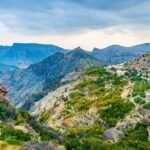
- Jebel Shams overnight: the Grand Canyon of Oman moment
- Day 2: canyon walk first, then Bahla and Jabrin forts
- Morning at Jebel Shams: a 3-hour walk with major payoff
- Bahla Fort: UNESCO-listed heritage and serious scale
- Jabrin Fort: residential design and palace-like details
- Meals and included extras: how the budget actually works
- Price and value: is $494 per person a smart spend?
- What the “great guide” part means for you
- Tips to get the most out of this itinerary
- Should you book the 2-day private Jebel Shams tour?
- FAQ
- What is the tour duration and structure?
- Where does the tour start and end?
- What’s included in the price?
- Is lunch included?
- What sites are visited during the tour?
- Are admission tickets included?
- Is this tour private?
- Do I need good weather for the tour?
- What kind of transportation is used?
- How much does it cost?
Key highlights you’ll feel right away
- Private, just your group: you set the pace between viewpoints and souk browsing.
- Tickets handled in advance: no on-the-spot ticket desk stress.
- Water engineering in Birkat Al Mouz: see Oman’s irrigation ingenuity up close.
- Nizwa souk + Nizwa Fort: shop, then step into the old power center.
- Overnight near Jebel Shams: you experience the canyon without rushing.
- Bahla Fort and Jabrin Fort on Day 2: two very different looks at fort life.
The “two-day loop” logic that makes this tour worth it
This route is smart because it doesn’t treat Jebel Shams like a drive-by. You get a full day of cultural stops first, then the canyon becomes the payoff. That order matters. If you go straight to the mountains, you miss how the rest of Oman feeds into the story—how people lived, traded, defended towns, and learned to grow food in tough terrain.
I also like the rhythm: you’re not stuck at one place all day. You’ll rotate between scenic viewpoints, heritage sites, and markets. That keeps the trip from feeling repetitive, especially on a two-day schedule.
And because it’s a private tour, the guide can slow things down when you want photos or extra time at a fort or village. That’s a big deal on popular sites, where other tours often herd people through.
You can also read our reviews of more private tours in Muscat

Pickup in Muscat and what your 4WD ride is really for
You’ll meet at Star Tours Oman on 18th November St in Muscat at 8:30 am, then you’re picked up and dropped off back at the meeting point. The tour uses a 4WD vehicle designed for comfort, which matters on roads that can feel long, winding, or rough depending on the day.
Here’s what your ride time buys you: less logistical headache. The guide manages the routing between stops, and you can focus on enjoying each location instead of figuring out where to park or how to get from one site to the next. Since this is a private experience, you’re also not working around other groups’ schedules.
You’ll also have water included, which is practical on a day full of outdoor stops.
Day 1 stop by stop: Fanja, irrigation ruins, souk energy
Fanja: a quick photo stop with the “gateway” vibe
The day begins with a stop in Fanja, described as the gateway into the Al Dakhiliyah region since it’s the first city from Muscat on this route. This is a short stop (about 30 minutes), but it’s a helpful one. You get a chance to stretch your legs, grab photos, and get oriented before the day gets more structured.
If you like photography, this is the kind of stop that prevents you from feeling rushed later. You’re also warming up to the landscapes you’ll keep seeing—wide views, dry tones, and the sense that Oman is built around geography.
Birkat Al Mouz and the irrigation system: Oman’s water brains
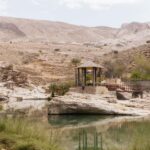
Next is Birkat Al Mouz Ruins and the irrigation system of Al Kattmyn. This is one of the most interesting stops on Day 1 because it’s not just scenery. The village runs up the side of a small mountain with an oasis of plantations—banana trees and data palms are mentioned specifically—and the irrigation system here is known in Oman through systems like Aini, Dawoodi, and Ghaily.
You’ll spend about 2 hours here. That time is important because irrigation systems can be easy to gloss over if you don’t pause and understand what you’re looking at. This is the kind of stop where an English-speaking guide really helps, because you can connect what you see (oasis greenery, water flow, terraced planting) to how people made it work.
Practical note: it’s an outdoor-style visit. Comfortable shoes help.
You can also read our reviews of more evening experiences in Muscat


Nizwa souk: shopping breaks that feel like culture, not tourist time
Then you head to the Nizwa Souq, where Nizwa is known as the old capital of Oman and famous for its markets. You’ll have about 1 hour. This is long enough to browse without turning it into a chore.
If you like crafts, look for Omani silver crafts and other handmade items mentioned as common purchases. Even if you don’t buy much, this stop gives you that loud, human-side feeling—what people choose, what they bargain over, and how daily life looks in a heritage town.
Nizwa Fort: the big fortress that anchors the skyline
After the souk, you’ll visit Nizwa Fort, with about 1 hour on site. The fort was built by Sulta Bin Saif Al Yarubi and is described as the biggest fort in Oman.
Fort visits work best when you take them in layers: views first, then the structure, then the function. You’ll likely get plenty of photo opportunities because it’s such a prominent landmark.
This is also a good point in the day to slow down, because by now you’ve moved through market energy and into “how the city protected itself.” It’s a natural transition.
Al Hamra: 400-year-old houses and older rhythms
Next comes Al Hamra, a 400-year-old town in north eastern Oman, with preserved houses and a mountain village connection (Misfat Al Abryeen is mentioned). It’s tied to the Al Abri tribe, and the area is also known as Hamra Al Abryeen.
You’ll spend about 2 hours here, and admission is free. This stop is valuable because it’s less about big-ticket sights and more about living history—stone, layout, and the feeling that time is slower here.
It’s also a good mental reset before you climb into the dramatic setting of Jebel Shams. If you like quieter, atmospheric places, this is one of the best moments of Day 1.
Jebel Shams overnight: the Grand Canyon of Oman moment
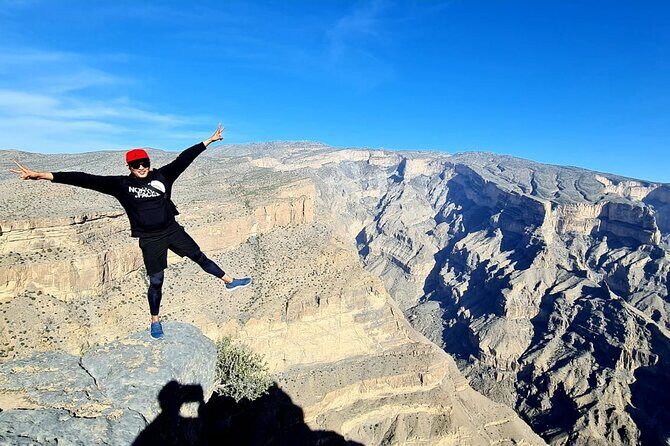
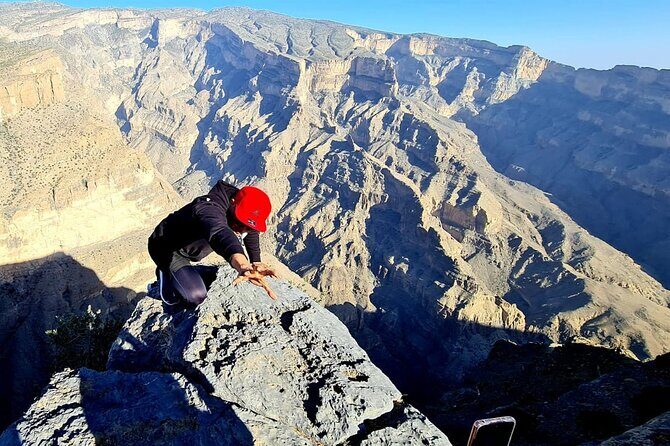
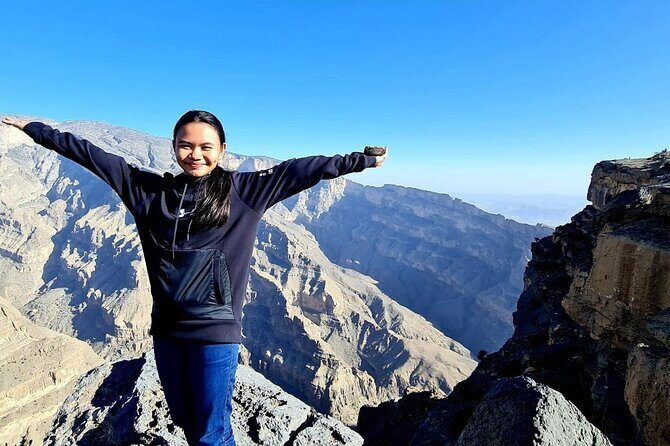
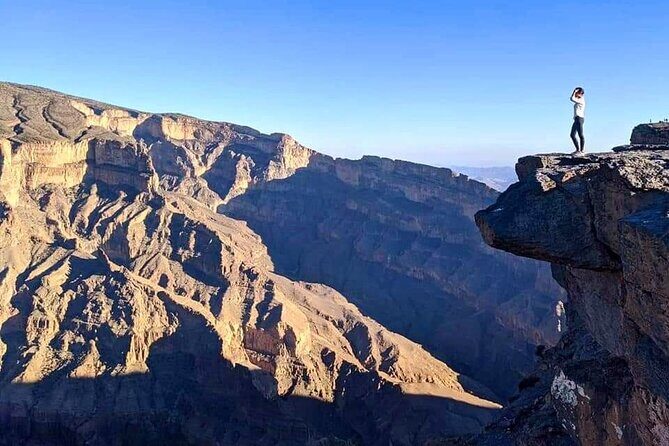
By the end of Day 1 you reach Jebel Shams, often described as the Grand Canyon of Oman. You’ll stay overnight, and admission is included. The listed time is about 12 hours, which reflects the move into the area plus your hotel stay.
This overnight is more important than it sounds. Jebel Shams can feel like a full-day mission if you’re driving back to Muscat right after. Staying at/near the canyon area means you get time for your own pacing and less stress about timing.
Day 2: canyon walk first, then Bahla and Jabrin forts
Morning at Jebel Shams: a 3-hour walk with major payoff
Day 2 starts with breakfast in your hotel, then you head out for Jebel Shams again. The canyon walk is about 3 hours, and admission is included.
Even without going too technical, Jebel Shams is special because it’s instantly readable. You can look out and understand why people call it the Grand Canyon of Oman. You’ll likely find yourself stopping often—there’s just that kind of scale.
If you’re the type who enjoys walking viewpoints rather than rushing to a single viewpoint, this is your segment.
Bahla Fort: UNESCO-listed heritage and serious scale
Next you head down the mountains to Bahla Fort, about 25 km from Jebel Shams. You’ll spend about 2 hours. This fort is listed by UNESCO as one of the oldest pieces of heritage in the world.
Bahla Fort has that “wall city” feel—big, old, and meant to endure. Forts like this are also where you learn how power and protection worked before modern roads and communications. If you enjoy heritage architecture, this is one of the strongest stops on Day 2.
Jabrin Fort: residential design and palace-like details
Then you visit Jabrin (Jabrin Fort), designed as a residential property in 1670 by Sultan Bin Saif Al Yarubi and built under the supervision of Imam Bilarab Bin Sultan (as described). The tour allocates about 2 hours.
This is a nice contrast to Bahla. Bahla feels like defense first; Jabrin reads more like a structured living space with authority behind it. If you like learning how rulers lived—not just how they protected territory—Jabrin adds a different angle.
After that, you head back to Muscat in the late afternoon.
Meals and included extras: how the budget actually works
This tour includes breakfast and dinner, plus water. Entrance fees and accommodation are also included, along with pickup and drop-off anywhere in the Muscat area.
Lunch is explicitly not included. That means you’ll want to either:
- plan to eat on your own near a souk or stop where you can grab something practical, or
- bring a simple snack strategy so you don’t feel food-stressed during the busiest sightseeing stretch.
The reason I see this as good value is that big cost drivers—like lodging for one night near Jebel Shams and entrance fees—are already handled. When those are included, you’re less likely to get surprised at the end of the trip.
Price and value: is $494 per person a smart spend?
At $494 per person for a private 2-day/1-night itinerary, the value comes from the combination: private guide time, 4WD transport, included lodging, entrance fees, plus two meals and water.
This price isn’t just paying for a car. You’re paying for:
- logistics you don’t have to manage,
- admission tickets taken care of,
- and that crucial overnight component so you can experience Jebel Shams without racing back to Muscat.
If you’re traveling with a friend or family member, private tours usually get more attractive fast because you’re splitting the cost of the guide and vehicle. And the group discount option is listed, which can make it even better if your dates line up.
The only budget caveat is lunch. But that’s common on tours like this, and it’s easier to manage because you’re not guessing about other major expenses.
What the “great guide” part means for you
The strongest theme in the feedback is simple: the guide makes the experience feel welcoming and smooth. In a trip like this, that matters more than people think. You’re moving through heritage sites, villages, and forts where local context changes what you notice.
An English-speaking guide also helps you spend your time looking instead of decoding. For example, at Birkat Al Mouz, understanding the irrigation system makes the whole place more than a set of ruins and greenery.
So if you care about learning as you go—without turning it into a classroom—this tour’s guide setup is a real selling point.
Tips to get the most out of this itinerary
These are practical, based on how the days are structured:
- Wear comfortable shoes for fort and canyon walks. Jebel Shams especially is a place where you’ll want sure footing.
- Plan your lunch strategy ahead of time since lunch isn’t included. Even a simple plan reduces decision fatigue.
- Bring a camera battery plan. You’ll have multiple photo windows: Fanja, canyon viewpoints, and the fort stops.
- Expect long, full days. This itinerary moves from Muscat through multiple heritage stops, then to canyon time, then back with more forts.
Also remember: the tour requires good weather. If conditions are poor, the experience may be offered on a different date or you may get a full refund.
Should you book the 2-day private Jebel Shams tour?
I’d book this if you want a trip that feels like more than one famous viewpoint. The best part is the build: Nizwa’s market and fort, Al Hamra’s old houses, the irrigation story at Birkat Al Mouz, then the canyon with an overnight stay, and finish with Bahla and Jabrin forts.
Skip it only if you’re mainly looking for a short day trip to Jebel Shams with minimal stops. This itinerary is designed for culture plus canyon, and you’ll spend a lot of time in heritage places—not just “standing at a view for 20 minutes.”
If you’re set on a private, ticket-included, logistics-managed experience from Muscat, this is a strong option—especially for anyone who likes to feel the country’s rhythm, not just collect stamps.
FAQ
What is the tour duration and structure?
It’s a 2-day, 1-night private tour. You start at 8:30 am and return to the meeting point at the end of Day 2.
Where does the tour start and end?
The tour starts at Star Tours Oman on 18th November St, Muscat, Oman, and it ends back at the same meeting point.
What’s included in the price?
Included are breakfast and dinner, water, pickup and drop-off anywhere in the Muscat area, an English-speaking Omani tour guide, transportation in a comfortable 4WD, entrance fees, and accommodation.
Is lunch included?
No. Lunch is not included.
What sites are visited during the tour?
You’ll visit Fanja, Birkat Al Mouz Ruins and its irrigation system, Nizwa Souq, Nizwa Fort, Al Hamra, and Jebel Shams. On Day 2 you’ll also visit Bahla Fort and Jabrin Fort.
Are admission tickets included?
Yes. Entrance fees are included, so you won’t pay on the spot for admissions listed in the itinerary.
Is this tour private?
Yes. It’s a private tour/activity, so only your group participates.
Do I need good weather for the tour?
Yes. The experience requires good weather. If it’s canceled due to poor weather, you’ll be offered a different date or a full refund.
What kind of transportation is used?
You travel in a comfortable 4WD vehicle.
How much does it cost?
The price is listed as $494.00 per person.