REVIEW · MUSCAT
Muscat City & Wadi Shab Full-Day Adventure
Book on Viator →Operated by GidOman · Bookable on Viator
One day, two very different Muscat worlds. I like the personal guide attention and the fact you can customize the itinerary as you go, so the day fits your pace. You’ll also get practical comfort: air-conditioning, WiFi, and a hotel pickup that saves you from juggling taxis.
The one thing to keep in mind is the good weather requirement. Wadi Shab involves a real hike (about 40 minutes each way), so if conditions aren’t great, your day may shift or get rescheduled.
In This Review
- Key things to know before you go
- A day that mixes marble, markets, and swim time
- Price and value: what $246.16 gets you in real time
- Logistics that make the day easier: private, WiFi, and adjustable pacing
- Stop 1: Sultan Qaboos Grand Mosque—why the details feel worth it
- Potential drawback to consider
- Stop 2: Royal Opera House Muscat—architecture and cultural contrast
- Practical tip
- Stop 3: Wadi Shab—swim pools, cave waterfall, and the hike that matters
- The main drawback: you need comfortable walking
- Stop 4: Bimmah Sinkhole—short stop, big color of water
- What to expect
- Stop 5: Mutrah Souq—Al Dhalam lanes and harbor-side trading
- Potential drawback to consider
- Stop 6: Al Alam Palace—ceremonial Muscat with fort neighbors
- Why it’s worth the stop
- How the full schedule feels across 8 to 12 hours
- Who this tour suits best (and who should skip it)
- Should you book Muscat City & Wadi Shab Full-Day Adventure?
- FAQ
- How long is the Muscat City & Wadi Shab full-day tour?
- What is the price per person?
- Is hotel pickup included?
- Is this tour private?
- Does the vehicle have WiFi and air conditioning?
- Are entrance tickets included for the main stops?
- Will there be time to swim at Wadi Shab?
- What happens if the weather isn’t good?
- What is the cancellation cutoff?
Key things to know before you go

- Hotel pickup + WiFi-equipped, air-conditioned vehicle means you start the day relaxed, not stressed.
- A guide who steers the day lets you spend more time where you care most (views, photos, shopping, or a longer swim).
- Wadi Shab is the main adventure: expect a hike, rugged paths, and multiple swimming pools.
- Bimmah Sinkhole is short and scenic: turquoise water near the sea, with a quick stop designed for photos and a break.
- Old Muscat highlights in a tight schedule: Mutrah Souq and Al Alam Palace add local texture without wasting hours.
- All major stops have free admission (mosque, opera house, wadi, souq area, and palace area stops).
A day that mixes marble, markets, and swim time
This is the kind of full-day tour that helps you cover a lot of Muscat without losing the feel of each place. You start with major landmarks that explain Oman’s identity, then move into nature for the part you’ll remember longest: Wadi Shab. After that, you circle back into Old Muscat for souq atmosphere and ceremonial-palace views.
The format works well if you want both sides of Oman in one shot. City stops give context, and the water stops give you a reason to slow down, cool off, and breathe. And because it’s private, your guide can keep the pacing comfortable rather than dragging everyone through the same routine.
You can also read our reviews of more city tours in Muscat


Price and value: what $246.16 gets you in real time
At $246.16 per person, this isn’t a bargain bus tour. But it’s also not trying to nickel-and-dime you with paid entry fees for every stop. The tour includes free admission at each listed stop (mosque, opera house, wadi, sinkhole, and the Old Muscat sights). That matters because those costs can add up fast when you’re bouncing between big attractions.
You’re also paying for the stuff that’s hard to DIY when you’re short on time:
- Hotel pickup (so you don’t waste time finding transport)
- An AC vehicle with WiFi
- Personal attention from your guide
- Time in the places that actually need it, especially Wadi Shab (about 3 hours)
Duration runs about 8 to 12 hours, and that range is usually the difference between a smooth day and one where you want extra photos, extra walking, or extra swimming time. If you’re the kind of person who loves a plan but also likes room to wander, this is a good match.
Logistics that make the day easier: private, WiFi, and adjustable pacing
This is a private tour, meaning it’s only your group. That’s not just a comfort perk. It affects how the day feels when you’re at Wadi Shab or in the souq: you can move when you want, pause when you need, and ask questions without feeling rushed.
The vehicle is air-conditioned and has WiFi, which is genuinely useful in Muscat heat. Even if you’re not glued to your phone, it helps you recharge, check maps, and keep everyone on the same page for meeting times.
The other big advantage is customization. The itinerary isn’t a one-way conveyor belt. If you want more time at Mutrah Souq, for example, or you want a longer lunch break, you can usually shape it. A guide like Jamal is the kind of detail that turns the day from sightseeing into a smoother experience—he’s described as especially helpful with navigating Wadi Shab and keeping photo stops friendly without stealing your whole schedule.
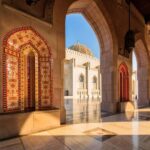
Stop 1: Sultan Qaboos Grand Mosque—why the details feel worth it
Plan for about 40 minutes here. This mosque is the main mosque in Oman, and it’s also a masterpiece of design choices that people notice even if they don’t know the terminology.
Here’s what you’ll see that makes the visit special:
- The building is made with white sandstone, with five minarets and a huge central dome
- The dome surfaces are decorated with classic geometric designs
- There’s a 20,000-piece library connected with the mosque complex
- The second-largest hand-woven carpet in the world is inside, with 1,700,000,000 knots and a weight of 21 tonnes (made over four years)
- Above the praying hall, there’s a tall chandelier about 14 meters high, manufactured by Italian maker Faustig
Even if you only catch the highlights, the scale and craftsmanship do the talking. This is also one of those stops where a guide’s explanations help you look longer. The mosque isn’t just a photo spot—it’s a place where Oman’s artistic and cultural values show up in materials and math.
Potential drawback to consider
This stop can feel more structured than the rest of the day. If you prefer outdoor walking and less time indoors, you might want to keep your pacing tight and save more energy for Wadi Shab.
A few more Muscat tours and experiences worth a look




Stop 2: Royal Opera House Muscat—architecture and cultural contrast
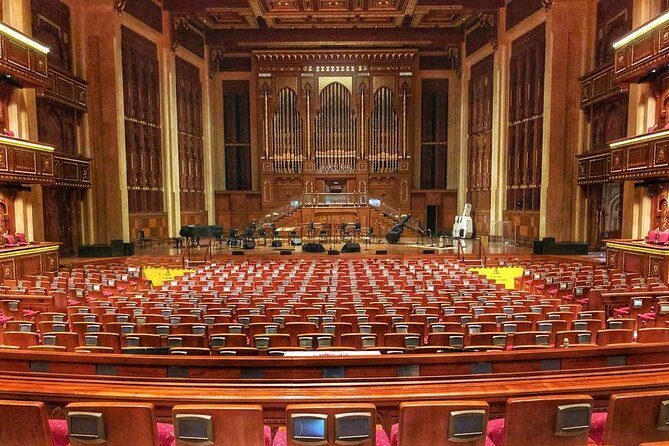
Next up is the Royal Opera House Muscat for around 30 minutes. Admission is free at this stop, which helps you keep the day under control cost-wise.
What makes it interesting isn’t just that it’s an opera house. It’s that the complex blends cultural function with contemporary Omani architecture. The venue is in the Shati Al-Qurm district on Sultan Qaboos Street and was built on royal orders from Sultan Qaboos.
Inside the complex you’ll find:
- A concert theatre
- An auditorium
- Landscaped gardens
- A cultural market with retail
- Luxury restaurants
- An art centre for musical, theatrical, and operatic productions
The capacity is about 1,100, so it’s not an empty building you just pass by—it’s designed for real performances and real public access to culture.
Practical tip
Since the time here is short, treat it like a quick architectural stop. Look for angles that show the building form, then move on so you’re not rushing later in nature.
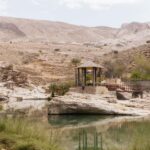
Stop 3: Wadi Shab—swim pools, cave waterfall, and the hike that matters
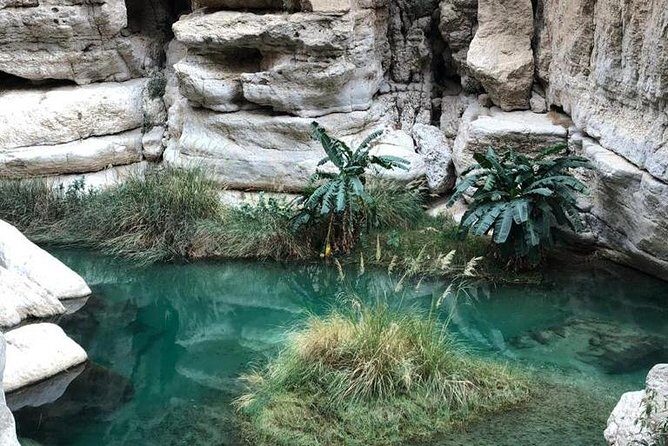
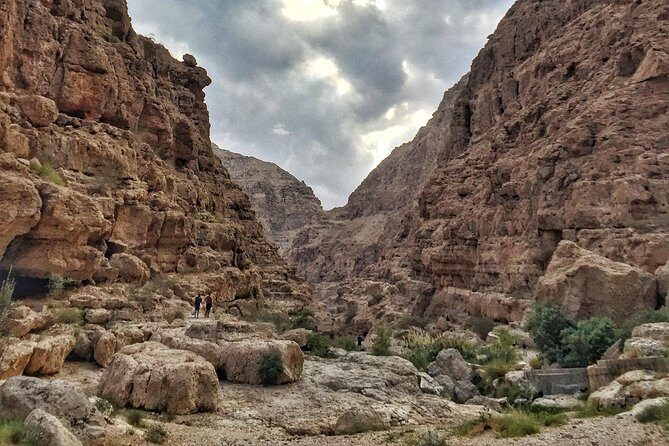
This is the star of the day. You’ll spend about 3 hours here, and it’s built around the hike to the swimming areas.
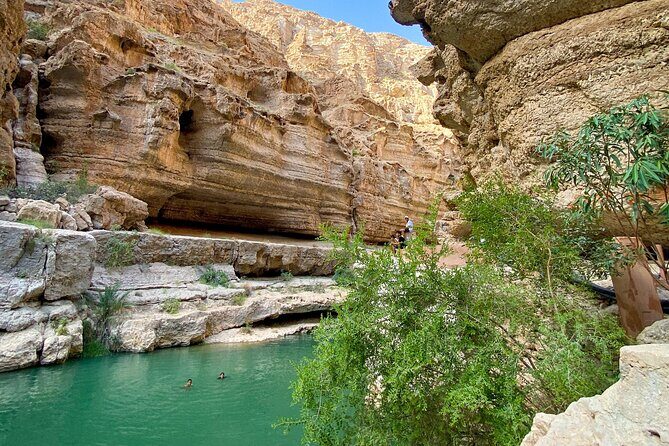
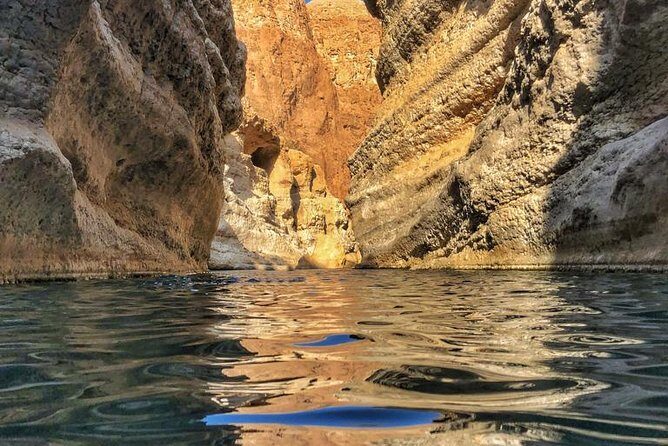
To reach the waterfall area, you’ll walk for about 40 minutes through a rugged path. Along the way you may spot two to three pools where you can swim, and you can even jump into the water from cliffs or inside the cave area (you’ll see the cave waterfall once you get there).
Once you’re in the main wadi zone, you’re not just doing one photo moment. You’re exploring multiple water stops:
- Swim in pools along the route
- Reach the cave area with the waterfall
- If you have extra time, look for old houses that were once used for cattle
That last detail is a great reminder that this landscape was shaped by people long before it became a day-trip draw. It adds meaning to the hike—you’re walking through something that’s been lived in, not just landscaped for visitors.
The main drawback: you need comfortable walking
This isn’t a flat stroll. If you’re not up for steady hiking on rugged paths, you might feel the time. Also, your ability to enjoy the water part depends heavily on conditions and weather. Because the tour requires good weather, the operator may adjust the plan or dates if nature doesn’t cooperate.
Stop 4: Bimmah Sinkhole—short stop, big color of water
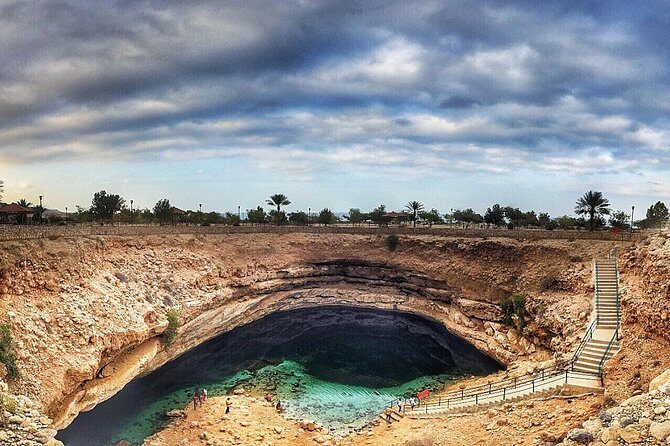
After Wadi Shab, the day shifts gears again with Bimmah Sinkhole for about 40 minutes.
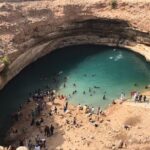
This is a water-filled depression—structurally a sinkhole—near eastern Muscat. The water is described as turquoise, and the sinkhole is about 50 m by 70 m and roughly 20 m deep. It’s also very close to the sea—about 600 m—between the coastal towns of Dibab and Bimmah.
That proximity to the sea is part of what makes the color so striking. The short timing also helps: you get a satisfying break without turning the afternoon into a long wait.
What to expect
Think of this as a recharge stop. Walk around, take photos, and enjoy the water view before heading back toward the city and souq areas.
Stop 5: Mutrah Souq—Al Dhalam lanes and harbor-side trading
You’ll spend about 1 hour at Mutrah Souq (also known as Al Dhalam, which means darkness). The name comes from the crowded lanes where sunlight doesn’t reach well during the day, so shoppers often need lamps to find their way.
This souq is famous for trade history, especially because it sits right by Muscat harbor. It was strategically located on routes connecting to India and China, which helped it become one of the oldest marketplace areas in the Arab world.
Even if you’re not a serious shopper, it’s worth walking because it tells you how Muscat works as a living city. You’ll get the feel of busy stalls and narrow lanes, and you’ll see the kind of goods and rhythms that don’t show up in a checklist.
Potential drawback to consider
A busy, shaded market can be visually intense. If you prefer calm sightseeing, go slow. Use your guide to explain what you’re seeing so you don’t end up feeling like you’re just wading through crowds without context.
Stop 6: Al Alam Palace—ceremonial Muscat with fort neighbors
End your city-side loop with Al Alam Palace, about 30 minutes.
This palace is the ceremonial residence of His Majesty the Sultan, located in the heart of Old Muscat. It’s surrounded by two forts: Al Jalali and Al Mirani. It also sits near the area where the National Museum of Oman is expected to be, which gives the whole space a sense of transition.
There’s also an older story baked into the site. Former sultans lived in a place called Bait Al Alam, but it was demolished in the early 1970s to make room for the current palace as the official residence.
Why it’s worth the stop
Unlike the souq, this is about scale and symbolism. Even if you don’t spend long here, it helps you understand the contrast between everyday trade and ceremonial power in the same city.
How the full schedule feels across 8 to 12 hours
With stops spread across mosque architecture, opera-house grounds, a long wadi experience, a sinkhole pause, then Old Muscat markets and palace views, the day stays interesting. But it does require energy management.
Here’s how I’d mentally plan your time:
- Morning: big landmark focus (mosque, then opera house)
- Midday: nature and water (Wadi Shab), with time set aside for a lunch break
- Afternoon: sinkhole then city walking (Bimmah Sinkhole, Mutrah Souq, Al Alam Palace)
Because there’s a midday break for lunch, you can reset. Just plan on lunch being your own expense unless your guide specifically says otherwise. The tour itself schedules the time, not necessarily a prepared meal.
Also, this day is heavily weather-dependent. The operator notes good weather is required, and if conditions are poor you should expect a reschedule or refund options.
Who this tour suits best (and who should skip it)
This is a strong pick if you want:
- A private guide who can answer questions and help you pace the day
- A mix of culture and outdoors in one outing
- Time for swimming in Wadi Shab, not just looking from afar
- Free admission stops that keep costs predictable
It may not be ideal if:
- You dislike hikes or rough, wet paths
- You want a purely relaxed city walk with no nature time
- Your schedule doesn’t allow flexibility if weather forces a change
If you’re visiting Oman for the first time and want a day that shows both tradition and landscape experiences, this tour makes a lot of sense. It’s also a good way to avoid decision fatigue. Instead of building a route yourself across several distant sights, you get one organized flow with a guide smoothing out the gaps.
Should you book Muscat City & Wadi Shab Full-Day Adventure?
I’d book it if you’re aiming for one unforgettable day: mosque artistry in the morning, real water time at Wadi Shab, then Old Muscat sights to wrap it up. The value comes from the combination of free admissions, hotel pickup, and the fact you’re not just snapping photos—you’re getting time in places like Wadi Shab that need it.
Before you commit, be honest about the only real hurdle: the hike. If you can handle walking about 40 minutes on rugged ground, you’ll likely love this day. If not, you might still enjoy some city stops, but the Wadi portion could end up feeling like work instead of fun.
FAQ
How long is the Muscat City & Wadi Shab full-day tour?
The tour runs approximately 8 to 12 hours.
What is the price per person?
The price is $246.16 per person.
Is hotel pickup included?
Yes. Hotel pickup is offered.
Is this tour private?
Yes. It’s listed as a private tour/activity, meaning only your group participates.
Does the vehicle have WiFi and air conditioning?
Yes. You travel in an air-conditioned vehicle equipped with WiFi.
Are entrance tickets included for the main stops?
Admission tickets are listed as free for each of the stops: Sultan Qaboos Grand Mosque, Royal Opera House, Wadi Shab, Bimmah Sinkhole, Mutrah Souq, and Al Alam Palace.
Will there be time to swim at Wadi Shab?
Yes. Wadi Shab includes a hike to pools where you can swim, and there’s also a cave waterfall area you can reach with the hike.
What happens if the weather isn’t good?
The experience requires good weather. If it’s canceled due to poor weather, you’ll be offered a different date or receive a full refund.
What is the cancellation cutoff?
You can cancel up to 24 hours in advance for a full refund. If you cancel less than 24 hours before the start time, the amount paid is not refunded.