One day, Muscat hits every note. This private full-day tour ties together big sights and old-world street life, with stops like the Grand Mosque and Mutrah’s market area. If you like seeing a lot without feeling shuffled around, this kind of routing works well.
I especially like the contrast of modern splendor and everyday culture, and the Grand Mosque is the clearest example. You’ll also get a full, guided walk through Muscat’s commercial heart at Mutrah, where you can step into the rhythm of a working port neighborhood.
One possible drawback: some admissions cost extra, including Bait Al Zubair and certain fort/museum entrances. That’s normal on private city tours, but it matters for budgeting—especially if you want to keep spending smooth.
In This Review
- Key things to know before you go
- A Private Muscat Day: how this route really feels
- Royal Opera House and the Sultan Qaboos Grand Mosque
- Mutrah Fish Market and Mutrah Souq: the heart of the harbor
- Amouage Manufacture and Visitor’s Centre: perfume as a cultural product
- Corniche and the Sultan’s Palace area with Jalali and Mirani forts
- Bait Al Zubair Museum: weapons, crafts, and an Omani village vibe
- Qantab Beach after lunch: a calmer finish with a dhow replica
- Timing, transport, and what’s included (and what you’ll pay for)
- Price and value: is $425 per group worth it?
- Who should book this Muscat full-day private tour?
- Should you book Muscat City Tours Full Day Private?
- FAQ
- Is this tour private, and how many people can join?
- How long is the full-day tour?
- What’s included in the price?
- Are entrance fees included for all stops?
- Which key stops are included in the route?
- Does the tour depend on weather?
Key things to know before you go
- Private day for up to 4 with a certified guide, plus pickup and drop-off
- A tight route that mixes the Royal Opera House, Sultan Qaboos Grand Mosque, and Mutrah Souq in one day
- Amouage Visitor’s Centre is included, so you’re not just passing by from the outside
- Some fees aren’t included (Bait Al Zubair and fort/museum entrances), so plan a little extra
- Qantab Beach and a dhow replica make the afternoon feel less like a museum day
- Good weather matters, since the tour depends on it
A Private Muscat Day: how this route really feels
This is one of those Muscat itineraries that makes sense because it builds in variety. You start with culture and architecture, move into the market and harbor world, then shift to heritage and coastline. It’s the kind of plan that helps you get a clean overview of the city without bouncing between far-flung areas.
The private format is the real comfort win. With a group size capped at 4, the guide can slow down when you want photos, speed up when you’re ready, and handle small route changes without turning your day into a bus schedule. It also means you can ask questions as you go, instead of waiting for the next stop.
Price-wise, $425 per group for 8 to 9 hours isn’t cheap, but it’s not random pricing either. You’re paying for a certified guide, pickup support, and guided time at multiple major attractions. If you’re traveling as a couple or small family, the cost per person gets a lot easier to swallow.
Just keep your expectations aligned: it’s a full-day circuit, not a slow-paced wander. You’ll spend time walking and switching locations, and the itinerary moves on purpose.
You can also read our reviews of more city tours in Muscat



Royal Opera House and the Sultan Qaboos Grand Mosque
Muscat can surprise you with how modern some parts of the city feel, and the Royal Opera House sets that tone early. You’ll get to see Oman’s premiere musical venue for arts and culture, which is a good introduction if you don’t know much about the country’s contemporary cultural scene yet. Even if opera isn’t your thing, the building itself gives context for where the country puts value now.
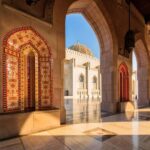
Then comes one of the main reasons to do Muscat city in a guided format: the Sultan Qaboos Grand Mosque. You get free admission time here, and the stop is brief enough to keep the momentum of the day, but long enough to appreciate what makes it famous. The tour frames it as a blend of Islamic, Middle Eastern, and Omani architectural styles, so you’re not just staring at white stone—you’re looking with a guide’s explanation in your ear.
A practical note: mosque visits often come with rules and moments where you need patience. This tour includes a scheduled time window, so if you want extra photo time or extra questions, ask your guide early and plan around the stop length.
Mutrah Fish Market and Mutrah Souq: the heart of the harbor
After the mosque, you switch from monumental architecture to daily commerce. The Mutrah Fish Market is set at the heart of Mutrah on the harbor, and it’s described as continuing both past trade traditions and Oman’s growing tourism presence. The key here is that you’re stepping into a real market environment, not a staged bazaar.
The stop is short—about 20 minutes—and admission is free. That means you don’t get a long shopping session, but you do get the feeling of what locals and workers do at the harbor. If you’re the type who likes to see how cities actually run, this is one of the most “Muscat” stops.
Next is Mutrah Souq, one of Oman’s oldest markets (around two hundred years). This is where the day starts to feel more like wandering with purpose. The tour frames it as a mix of old and new handcrafts, and the admission is included here. You’ll have time to browse and, yes, bargaining is part of the experience. If negotiating makes you nervous, keep it light and treat it like friendly conversation rather than a battle.
One smart strategy: decide what you want before you arrive in the souq—spices, small crafts, perfume-related items, or textiles—then spend your limited time there. The souq can pull you in fast, and with a full itinerary, focus beats browsing fatigue.
Amouage Manufacture and Visitor’s Centre: perfume as a cultural product
Amouage is one of those places where your senses get involved right away. The tour invites you to smell the perfumes at the Amouage factory and visitor’s centre, framed as the home of the world’s most valuable perfume. Even if you take marketing claims with a grain of salt, the bigger point is real: this is Oman turning craft into a signature product.
This stop is included and scheduled at about 20 minutes. That short window is useful because it keeps the tour moving, but it also means you should use it actively. If you like scent, pay attention to how the visitor setup works and ask your guide what to look for in the displays.
If you’re traveling with someone who finds museums too long, Amouage often balances that out. It’s not only displays—it’s also smell and branding and the idea of Oman exporting luxury through craftsmanship.
Corniche and the Sultan’s Palace area with Jalali and Mirani forts
After the market and perfume stop, you get a slower-feeling scenic segment. The itinerary includes a relaxing walk along the Corniche and the Sultan’s Palace area, framed with the 16th century Portuguese forts of Jalali and Mirani.
This part of the day matters because it breaks up the intensity. You’re not shopping and you’re not inside; you’re shifting to views, photos, and open air. The forts are part of the story of Muscat as a crossroads—built by outsiders, later absorbed into Oman’s long timeline. Having a guide in this stretch helps because it turns background scenery into something you can actually place in time.
One small caution: coastal walking can be weather-dependent. If it’s hot or windy, you’ll want to take breaks early rather than waiting until you feel drained.
You can also read our reviews of more private tours in Muscat





Bait Al Zubair Museum: weapons, crafts, and an Omani village vibe
Bait Al Zubair gives you hands-on heritage in a way that’s easy to understand. The museum is described as having an extensive collection of ancient weapons, including the khanjar, plus household equipment and costumes. That mix is key: it’s not only military items. It helps you see how people lived, dressed, and valued certain objects.
There’s also an outdoor element: a full-scale Omani village and souk outside the museum. That adds a different kind of immersion than indoor galleries. You’re walking through a representation of everyday spaces, which is a good change of pace after the earlier market stop.
Admission here is not included, so you’ll need to factor in extra cost. If you’re trying to keep total spending predictable, check the likely entrance fee you’ll pay on the day and decide if you want to visit both indoor and outdoor areas fully or keep it tighter.
Qantab Beach after lunch: a calmer finish with a dhow replica
After lunch break, the tour moves to Qantab Beach, a village area in northeastern Muscat. The stop is designed as a scenic shift: a popular beach destination, paired with a replica of a ninth century merchant sailing vessel (dhow).
This is a strong “final act” stop because it gives your eyes a rest from crowds and indoor spaces. You’ll get sea views, a sense of maritime tradition, and a visible reminder of Oman’s long relationship with trade and shipping. The tour frames the dhow replica as built at a traditional ship-building yard at Qantab, which is the kind of detail that makes the visit feel more grounded than a random photo spot.
Admission is included here, and the stop is about 25 minutes. That’s long enough for a relaxed walk and a few photos, but short enough that the day doesn’t drag to the point of fatigue.
Timing, transport, and what’s included (and what you’ll pay for)
This private tour runs about 8 to 9 hours. That time is a mix of guided stops and travel between them, so plan your day around it. If you’ve got a tight dinner reservation, don’t leave it too close to the end.
The tour includes:
- Certified guide
- Bottled water and soft drinks
- Pickup offered
- Mobile ticket
The practical value here is simple: you won’t need to worry about where to buy water during the day. You can focus on seeing and asking questions. Also, a mobile ticket is helpful if you don’t want to print anything.
Not included:
- Entrance fees for the museum and forts (the details in the itinerary point to Bait Al Zubair as a fee-based stop, and forts can carry fees too)
Budget tip: if you want to avoid a late-day surprise, set aside money for at least one museum admission. If you’re not a museum person, you might still want to do the outdoor areas where possible, but your guide will tell you what’s open and what’s paid.
Price and value: is $425 per group worth it?
Here’s how I think about it. You’re paying for four things that add up fast in a foreign city: private time, an expert guide, guided access to multiple major sites, and a full-day routing that avoids the guesswork.
For up to 4 people, the per-person math can get fair, especially if you split the cost. If you’d otherwise hire a taxi and pay for admissions and spend time figuring out what to see next, this kind of structured day can feel less expensive than it looks.
The biggest value lever is the guide. In the provided experiences connected with this operator, names like Tahar, Sameer, Obaid, Saeed, Khaleed, Khalid, Mohammed Alshmali, Saif, Ali, and Yaqoob come up as guides who helped people feel comfortable, adjusted timing for family needs, and kept the day organized. Even without betting on a specific person, the consistent theme is clear: you get a human who can explain what you’re looking at and help with the flow.
If you hate time limits and prefer unplanned wandering, you may find the full-day structure a bit much. If you like an efficient day with guidance, it’s a strong fit.
Who should book this Muscat full-day private tour?
You’ll probably love this tour if you:
- Want a first-time Muscat overview with major landmarks and market time
- Travel with 1 to 3 others and want private pacing
- Like guided context rather than doing everything alone
- Want a mix of architecture, shopping streets, a craft brand (Amouage), and a coastal ending
You might think twice if you:
- Only want one or two big attractions and hate moving on
- Don’t want any extra admissions fees to pop up
- Have very low tolerance for heat or long outdoor stretches (the tour requires good weather)
Should you book Muscat City Tours Full Day Private?
If you want one day that gives you a real sense of Muscat—from grand architecture to harbor markets to the scent-and-craft world of Amouage—this is an easy yes. The private format helps your day feel like it belongs to you, and the included water and guide time make it practical.
Just go in with two expectations: budget a bit for museum/fort admissions, and plan for a full 8 to 9 hours. If that fits your style, you’ll leave with photos, stories, and a much clearer picture of how Muscat works.
FAQ
Is this tour private, and how many people can join?
Yes. This is a private tour/activity, and only your group participates. The price is listed per group up to 4.
How long is the full-day tour?
The duration is approximately 8 to 9 hours.
What’s included in the price?
The tour includes a certified guide, bottled water, and soft drinks. Pickup is also offered, and you receive a mobile ticket.
Are entrance fees included for all stops?
No. Entrance fees for the museum and forts are not included. Some stops are listed as free or included for admission, but others (like Bait Al Zubair) are not included.
Which key stops are included in the route?
The tour includes the Royal Opera House, the Sultan Qaboos Grand Mosque, Mutrah fish market, Mutrah Souq, Amouage Manufacture and Visitor’s Centre, Bait Al Zubair Museum, and Qantab Beach.
Does the tour depend on weather?
Yes. The experience requires good weather. If it’s canceled due to poor weather, you’ll be offered a different date or a full refund.