REVIEW · MUSCAT
From Muscat: Nizwa & Al Hamra with Jebel Shams Night Stay
Book on GetYourGuide →Operated by GidOman · Bookable on GetYourGuide
Oman’s interior hits different at altitude. This 36-hour tour strings together Nizwa’s heritage with quiet mud-brick villages and then sends you up to Jebel Shams for an overnight that feels cool and remote.
I especially like the way you get hands-on village context, not just photos. Two things I come away loving are the Nizwa Fort plus Traditional Souk combo and the chance to walk around Al Hamra and Misfah al Abriyeen at a human pace.
The only real drawback to consider is the intensity: it’s a long 36 hours with lots of driving and walking, plus the temperature shift between Muscat’s heat and the mountain air.
In This Review
- Key highlights you’ll feel fast
- A 36-hour sprint through Oman’s interior
- Nizwa Fort and the Traditional Souk: old capital energy
- Al Hamra’s mud-brick village walk at the Hajar foothills
- Misfah al Abriyeen and the Falaj water system
- Climbing to Jebel Shams and your night at Hotel Sama Heights Resort
- Price and what $450 buys you in real terms
- The guide factor: Khair and Salman make a difference
- Who should book this tour
- How to prepare so the day feels easy
- Should you book this Jebel Shams night tour?
- FAQ
- How long is the tour?
- Which places are included in the itinerary?
- Where will I stay overnight?
- Are meals included?
- Is there an English guide?
- How big is the group?
Key highlights you’ll feel fast
- Jebel Shams night stay on one of Oman’s highest points, with cooler mountain weather
- Nizwa Fort and the Traditional Souk in the ancient capital
- Al Hamra mud-brick village walk at the Hajar Mountain foothills
- Misfah al Abriyeen Falaj water system views and easy-to-follow village footpaths
- Small group size (up to 4) for a calmer, more personal pace with your English guide
A 36-hour sprint through Oman’s interior
This tour works like a concentrated sampler of Oman’s interior. You leave Muscat in the morning, then spend the day moving from Nizwa to village stops, and finally climb up to spend the night on Jebel Shams before returning.
Because the schedule is tight, you’ll want to treat it like a road-trip adventure with stops that matter, not like a slow wandering day. Expect a mix of history (fort and souk), everyday village life (mud-brick homes and footpaths), and big mountain scenery (the Hajar range and Oman’s highest peak).
The upside is focus. You’re not bouncing between random stops all day—you’re moving through a storyline of how people lived, how water got delivered, and how the mountains shape life.
You can also read our reviews of more evening experiences in Muscat

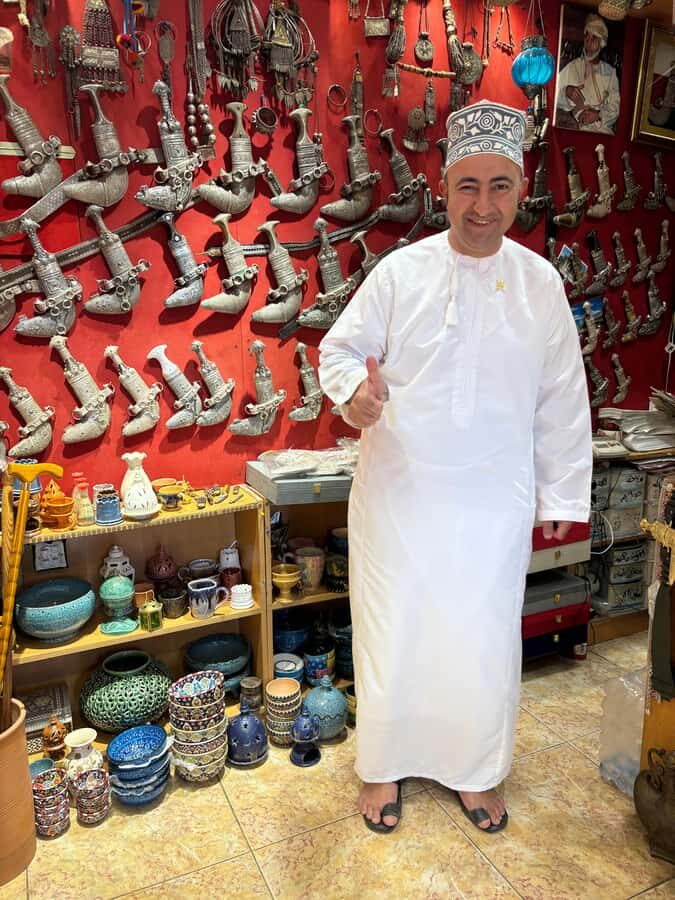
Nizwa Fort and the Traditional Souk: old capital energy
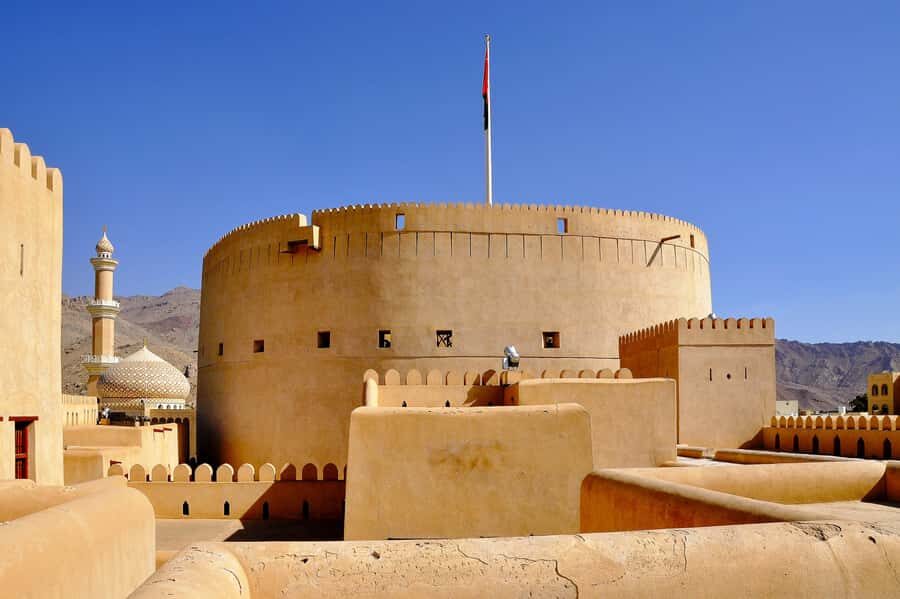
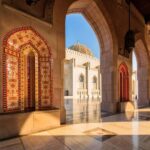
Nizwa is Oman’s ancient capital, and the tour hits it in the right order: Nizwa Fort first, then the Traditional Souk.
At the fort, you get the kind of strong visual grounding that makes later village stops easier to understand. Even if your time inside is limited, the fort gives you a sense of defense, administration, and local power—perfect context before you shift to everyday trade and local life at the souk.
Then the Traditional Souk adds the human layer. Souks are where you see how a place actually breathes: ongoing commerce, local routines, and the social glue of a town. It’s also a smart break from constant driving, because you’re on foot and moving at market pace.
Practical tip: if you like taking photos, go a little slower than you think. Between fort angles and the souk’s busy corners, time disappears quickly.
Al Hamra’s mud-brick village walk at the Hajar foothills
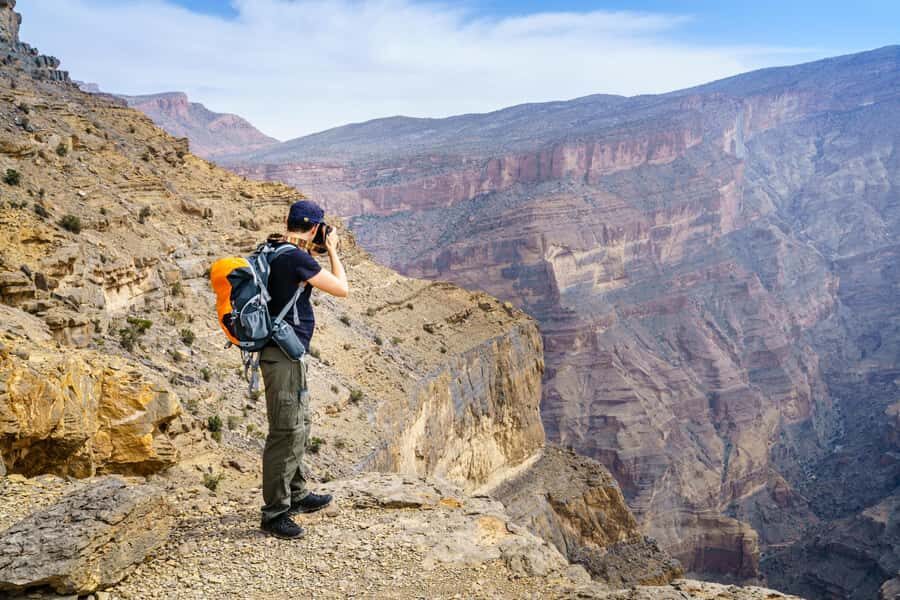
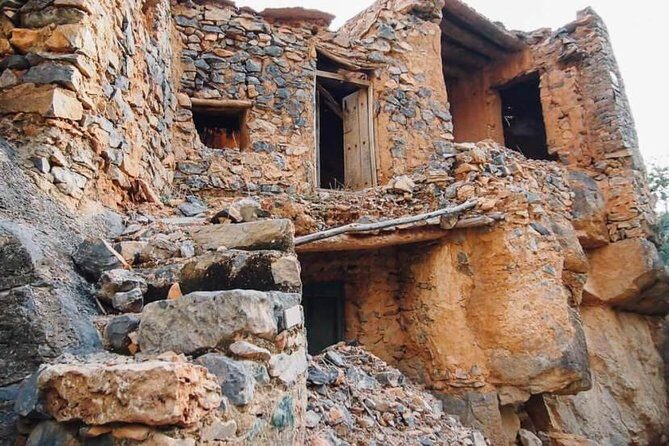
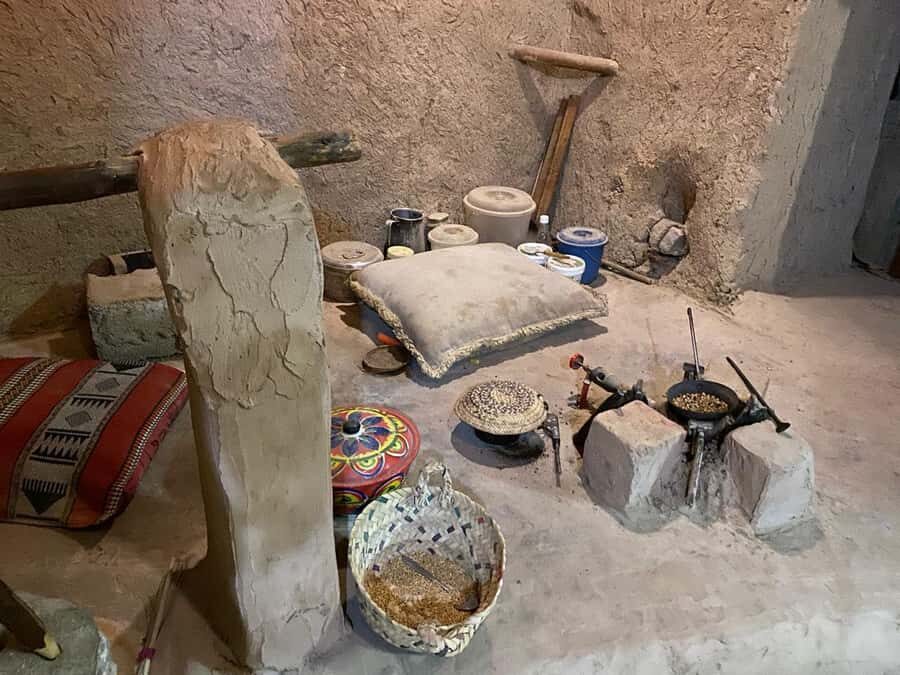
After Nizwa, you move to Al Hamra, one of the oldest villages in Oman. The setting matters here: Al Hamra sits at the foot of the Hajar Mountains, so the architecture feels linked to its surroundings rather than placed there by accident.
The tour includes a walk around the mud brick houses. This isn’t just scenery; it’s a direct look at how building materials, climate, and daily routines connect. Mud brick is about function—insulation and practicality—so you start noticing details like curves, textures, and the way homes relate to narrow lanes.
One of the best parts of this stop is the pacing. You’re not stuck staring from a distance. You’re walking and seeing how the village layout shapes movement, views, and daily life.
Possible consideration: this is village walking, so you’ll want comfortable shoes and a relaxed attitude. Surfaces can be uneven, and the goal is to explore, not to sprint.
Misfah al Abriyeen and the Falaj water system
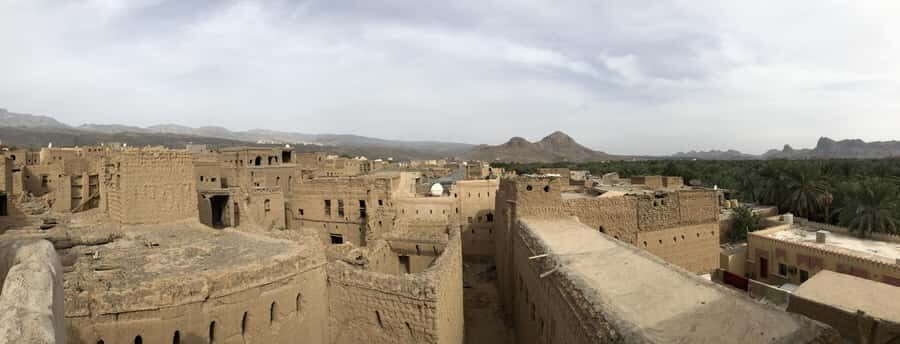
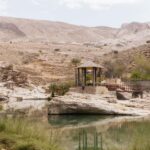
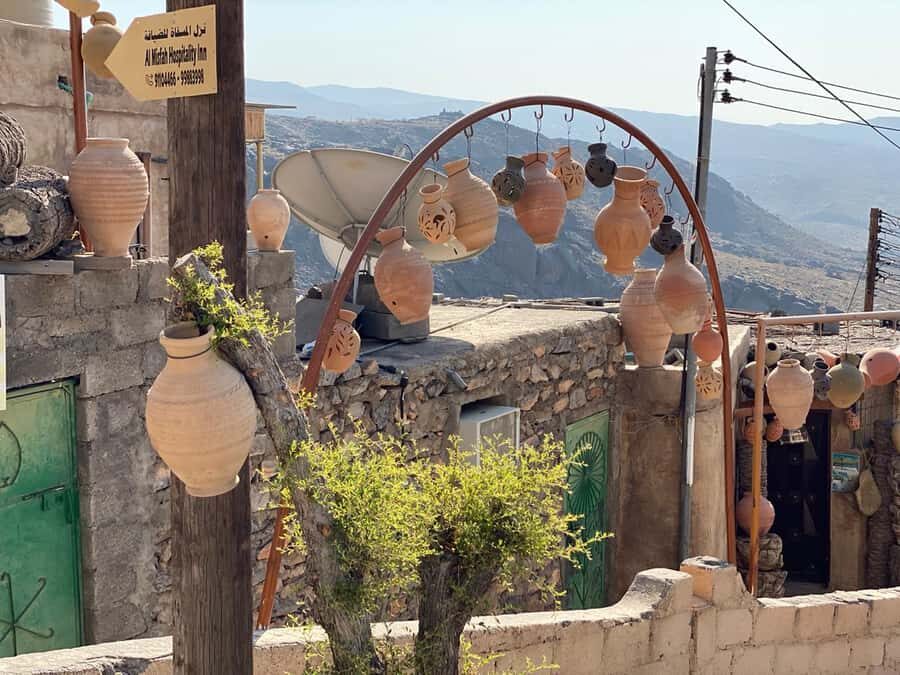
Misfah al Abriyeen is where the tour shifts from buildings to infrastructure—without losing the village feel. You’re at the base of Jebel Shams, and the highlight here is the Falaj water system that supplies water to nearby vegetation.
The Falaj system is one of those things that makes you realize how much planning goes into sustaining life in a dry mountain environment. It’s not only fascinating to see, it also changes how you view the villages around it. Water isn’t an afterthought here—it’s the reason green patches exist and the reason communities could thrive.
After seeing the Falaj, the tour encourages you to take your time through the village’s marked footpaths. That’s key: instead of wandering randomly, you get route options that help you explore without turning it into a scramble.
What I like about this stop is how it balances awe with practicality. You’re looking at something engineered, then spending time walking simple routes that let the place sink in.
Tip for your own pace: if you’re the type who reads every sign, you’ll enjoy Misfah. If you prefer photos, you’ll still get great angles from the footpaths, but you’ll probably move faster.
Climbing to Jebel Shams and your night at Hotel Sama Heights Resort
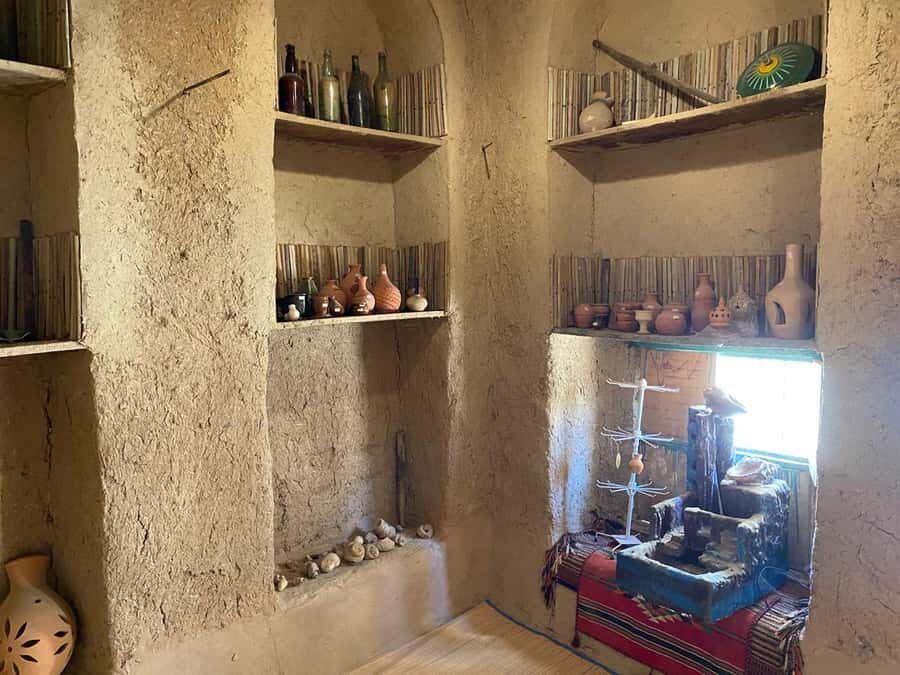
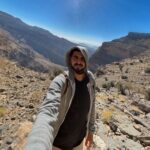
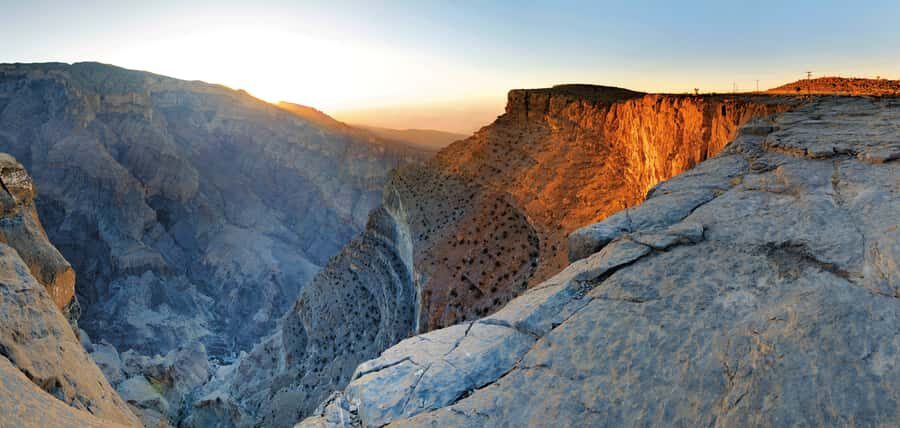
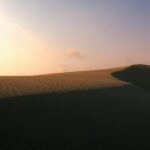
As the tour turns toward Jebel Shams, you stop along the way for amazing views of the Hajar Mountains and Oman’s highest point. This isn’t a quick “look and go” moment; it’s built into the drive so the climb feels meaningful, not just transportation.
Jebel Shams is the highest peak of the Hajar range, rising about 3,000 meters above sea level. The altitude is more than a number. The tour notes that even on the hottest days, it’s nice and cool up here—so plan for a noticeable temperature shift from Muscat.
The mountain also brings extra layers to the story: remote villages and ancient rock carvings. Those elements turn Jebel Shams into more than a viewpoint. It’s about time—how people have looked, lived, and left marks in a place that’s hard to reach.
Then you overnight at Hotel Sama Heights Resort (standard room). The key value here is simple: you don’t just drive to a viewpoint and rush away. Spending the night is what makes the mountain feel real and gives you time to settle in after the day’s travel.
A small reality check: you’ll likely feel the day in your legs. Between walking villages and climbing up the mountain road, it helps to treat the evening as downtime. Your full-board meals mean you don’t have to hunt for food after you arrive.

Price and what $450 buys you in real terms
At $450 per person for about 36 hours, this is not a budget outing—but it’s also not a high-end “only luxury” experience. You’re paying for several things that often cost extra when you travel independently.
Here’s what you’re getting for the money:
- Pickup and drop-off from your hotel
- A night at Hotel Sama Heights Resort
- Full board meals (breakfast, lunch, dinner)
- An English live tour guide
- A small group limited to 4 participants
That small group limit is one of the strongest value points. In a route like this, where the day involves multiple stops and some walking, a group that small helps keep the pace human. You’re less likely to feel like you’re herding through towns.
You’re also getting meals included. Food can quietly turn into a big expense on longer drives, and here it’s handled, which makes the 36-hour schedule feel easier to manage.
My practical take: if you want the mountain overnight plus a guided route through Nizwa and two village areas, the price starts to look fair. If you only care about one town or only want a viewpoint, you’d probably find cheaper options.
The guide factor: Khair and Salman make a difference
This tour leans on guidance, and the quality of the guide can change how much you get out of each stop. In the feedback tied to the experience, Khair is highlighted as top notch—extremely knowledgeable, kind, and attentive, with clear explanations that add perspective. Salman also gets praise for being very available.
Even when you don’t plan to ask questions, a strong guide helps you notice things: what to look for at the fort, how to connect village architecture to climate, and why the Falaj system matters beyond a quick sight.
If you’re the kind of person who likes understanding what you’re seeing, you’ll feel this value more than someone who just wants quick scenic stops.
Who should book this tour
I think this tour is a great match if you want:
- A guided route through Nizwa, Al Hamra, and Misfah al Abriyeen without dealing with transport planning
- An overnight on Jebel Shams instead of a one-hour photo stop
- A smaller group pace with an English guide
It’s also a solid choice if you’re curious about daily life and local systems—forts and markets matter, but the real payoff is seeing how villages relate to water and mountains.
If you prefer very slow travel, minimal walking, or long free time in one place, you might find the 36 hours a lot. This is more “route with meaning” than “hang out and wander all day.”
How to prepare so the day feels easy
Because the tour mixes village walking and mountain air, preparation pays off.
Pack for temperature change. The tour notes that it’s cool up on Jebel Shams even on hot days, so bring a layer you can actually use in the evening. If you only pack for Muscat heat, you’ll feel it up high.
Wear shoes you trust on footpaths around villages. Misfah’s marked routes are there to guide you, but it’s still a village environment with uneven ground.
And plan mentally for a full day of transitions. You’ll go from souk vibes to mud-brick lanes to water systems to mountain roads. That’s a lot for the senses, so keep your pace flexible.
Should you book this Jebel Shams night tour?
I’d book this tour if you want a structured, guided way to see three different sides of Oman’s interior: Nizwa’s heritage, Al Hamra’s village life, and Misfah al Abriyeen’s Falaj-based survival system, all capped with an overnight on Jebel Shams.
Skip it if you’re chasing only one highlight or if you dislike schedules that move. At $450 for 36 hours, you’re paying for the full package—so be sure you’ll enjoy the road-trip rhythm and the walking.
FAQ
How long is the tour?
The duration is 36 hours.
Which places are included in the itinerary?
It includes Nizwa Fort and the Traditional Souk, Al Hamra, Misfah al Abriyeen, and time at Jebel Shams with an overnight.
Where will I stay overnight?
You’ll stay at Hotel Sama Heights Resort in a standard room.
Are meals included?
Yes. Full board is included, with breakfast, lunch, and dinner.
Is there an English guide?
Yes. The live tour guide provides English.
How big is the group?
The group is limited to 4 participants.