REVIEW · MUSCAT
Muscat City Sightseeing Tour – A Fascinating Capital
Book on Viator →Operated by ORIENT TOURS LLC SOLE PROPRIETORSHIP · Bookable on Viator
Muscat can feel like a city of clean lines and ocean air, and this Muscat City Sightseeing Tour is a tidy way to see the big symbols fast. You get a guided drive through modern districts, then real time on the old streets around Muttrah, with commentary that connects what you see to Oman’s maritime trading story. I especially like how the tour balances photo stops with a few moments where you actually slow down and look.
My second favorite part is the mix of awe-inspiring architecture and everyday market life, from the Sultan Qaboos Grand Mosque to the souk area near the Corniche. For me, that pairing makes Muscat click, not just look pretty. The main drawback to watch: the experience depends heavily on the guide and the group setup, so your listening quality and time on-site can vary.
In This Review
- Key highlights you will remember
- From mosque serenity to souk energy in one morning
- Hotel pickup and air-conditioned comfort: why it is worth it
- Sultan Qaboos Grand Mosque: the one stop you cannot fake
- Embassy quarter drive-by: a fast lesson in Muscat’s modern identity
- Muttrah Corniche and the harbor vibe: where Muscat feels human
- Muttrah Souq shopping: fun if you go in with a game plan
- Old Muscat forts: Al Jalali and Al-Mirani across the bay
- Al Alam Palace photo stop: dramatic from the outside
- Bait Al Zubair Museum: the cultural thread that ties the day together
- Price and value: is $169 per person fair?
- Guide quality matters more than you think
- Who this tour suits best
- What to pack so your morning goes smoothly
- Should you book this Muscat city tour?
- FAQ
- How long is the Muscat City Sightseeing Tour?
- What time does the tour start?
- Does the tour include hotel pickup and drop-off?
- What is included in the tour price?
- Is food included?
- Is a dress code required for the Sultan Qaboos Grand Mosque?
- Is there time for shopping at Muttrah Souq?
- How many travelers are in the group?
- Can I cancel for a full refund?
Key highlights you will remember
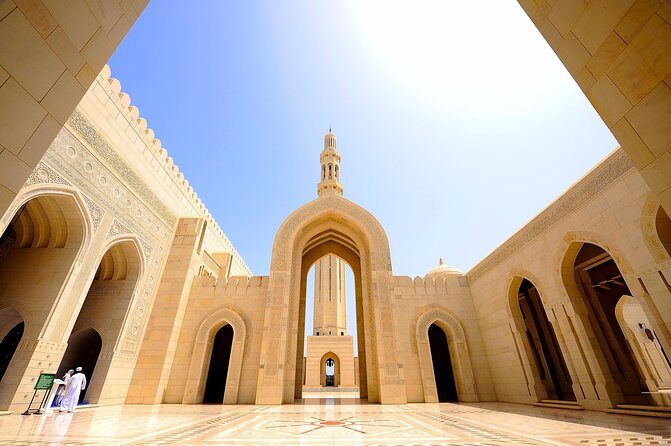
- Sultan Qaboos Grand Mosque visit with a clear explanation of its world-class hand-woven carpet
- Muttrah Corniche stroll with carved balconies and postcard views over the bay
- Old Muscat forts (Al Jalali and Al-Mirani) positioned across the water like paired guardians
- Al Alam Palace photo stop with a dramatic, unmistakable silhouette
- Bait Al Zubair Museum to connect buildings and streets to Omani culture through the centuries
- Small group feel (max 4 travelers) that often makes the day feel more personal
From mosque serenity to souk energy in one morning
This 4-hour Muscat city tour is built for orientation. You are not trying to cover every corner of the capital. Instead, you get a smart route that hits the places people actually use to understand Muscat: a landmark mosque, the older harbor neighborhoods around Muttrah, the old forts facing the bay, a quick look at the official palace area, and a museum stop that ties it all together.
You start with hotel pickup, so you skip the early logistics scramble. Then you ride in an air-conditioned coach or minivan (and sometimes it can be a smaller vehicle depending on your day and group size). That matters in Muscat because you will be outside for short walks, but you still want comfort for the driving and the stops between sites.
The tone is also practical: you are there to see, walk, and learn enough to make the rest of your trip make sense. If you want a day where your photos and your understanding move together, this fits.
You can also read our reviews of more city tours in Muscat


Hotel pickup and air-conditioned comfort: why it is worth it

Hotel pickup is one of those travel basics that can either make a tour smooth or turn it into an awkward scavenger hunt. Here, the pickup is included, and that lowers the stress level right away. You also spend a lot less time waiting around than you would if you are working out rides to each stop on your own.
Muscat’s heat can change your mood fast, especially if you are doing multiple sites back-to-back. An air-conditioned vehicle helps you stay focused on the sights, not the sweat. In the small-group format (max 4 travelers), you are more likely to get a calmer pace and easier conversations with your guide.
Sultan Qaboos Grand Mosque: the one stop you cannot fake
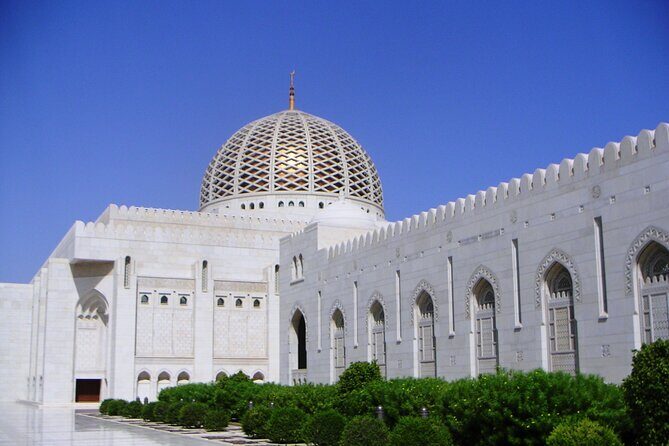
If you are doing only one major monument in Muscat, make it the Sultan Qaboos Grand Mosque. The building is stunning in a clean, contemporary Islamic style. But what makes this stop more than just a photo op is the way it is explained.
You walk into a serene setting of sandstone tones, domes, minarets, and courtyards, and your guide shares key details such as the world’s second largest hand-woven carpet in the main prayer hall—and that weaving took four years. That kind of fact turns the mosque from scenery into something you can actually understand while you look.
A big practical note: the dress code is real. Ladies need full sleeves and a covered head with a scarf, and both men and women should wear full pants—shorts are not allowed. Knees and shoulders need coverage at all times. If you show up unprepared, you may lose time adjusting clothes or risk being turned away.
Also plan your timing for photos. The tour guidance says to pay attention to local customs when taking pictures, so bring a respectful mindset, not just a camera reflex.
Embassy quarter drive-by: a fast lesson in Muscat’s modern identity
Between the older districts and the big heritage sites, you drive through the embassy quarter, known for its tidy, tree-lined streets and an elegant presence. It is not a “must stop” in the way a museum is, but it is useful for getting your bearings.
This area helps you see how Muscat balances tradition with a modern international look. In a short tour window, that kind of contrast matters. You come to Muttrah and the forts with your eyes tuned to what changed—and what stayed.
Muttrah Corniche and the harbor vibe: where Muscat feels human
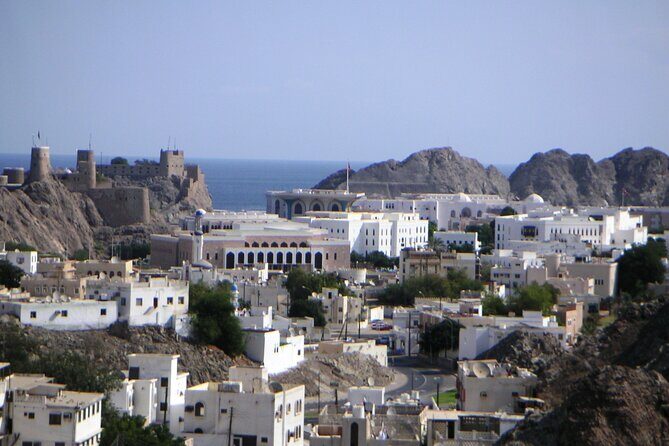
Muttrah is the heart of this experience. You get to stroll the Muttrah Corniche, where the bay sits under the mountains and the water views do the heavy lifting for atmosphere. On the waterfront, you will see merchants’ houses fronted by carved wooden balconies. It is the kind of detail that makes your photos look lived-in, not staged.
The tour also works in a fish market area. Even if you are not planning to shop or buy, watching the flow of the market gives you a snapshot of day-to-day life and the coastal rhythms behind Muscat’s old trading routes. Expect sensory energy here—activity, movement, and a busy street texture.



Muttrah Souq shopping: fun if you go in with a game plan
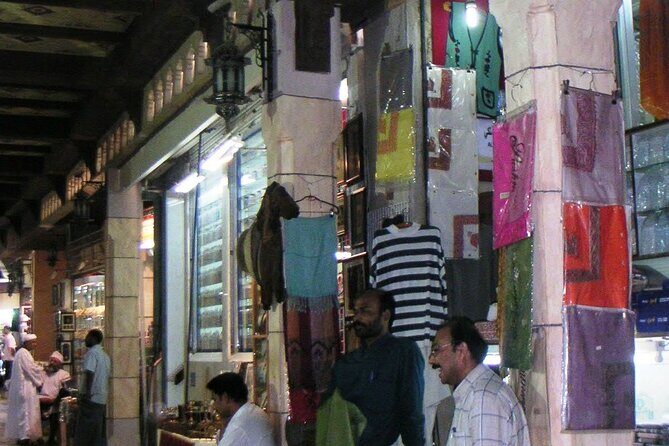
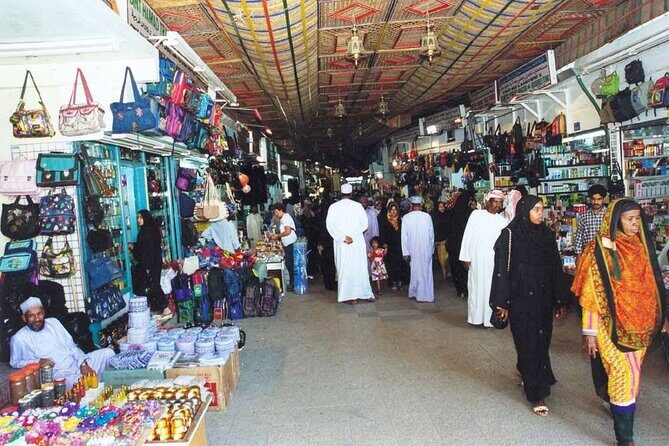
The souk area is where you can spend your optional energy on shopping. You will pass through lanes with stalls selling items such as silver, perfumes, and clothing—plus traditional handicrafts. The tour includes time for market shopping, so you are not rushed out the moment you step into the noise.
Here is my practical advice: go in knowing you will likely bargain for better prices. If you hate bargaining, keep your shopping simple—pick small items, treat it like browsing rather than a negotiation event, and set a hard budget before you start.
Also, wear shoes you can stand in. The souk streets and market floors can be uneven, and your day only lasts about four hours, so you want to stay comfortable while you explore.
Old Muscat forts: Al Jalali and Al-Mirani across the bay
After Muttrah, you shift to the story told by stone. You stop to admire the two Portuguese forts, Al Jalali and Al-Mirani, positioned on facing outcrops across the harbor. They feel like a matched pair—watching each other across the water.
Photo opportunities here are excellent, but the best part is the sense of place. Once you have seen the Corniche and the old-quarter streets, the forts stop feeling like random “old buildings.” You start to understand why forts matter on a trading coast: they protect routes, not just territory.
Al Alam Palace photo stop: dramatic from the outside
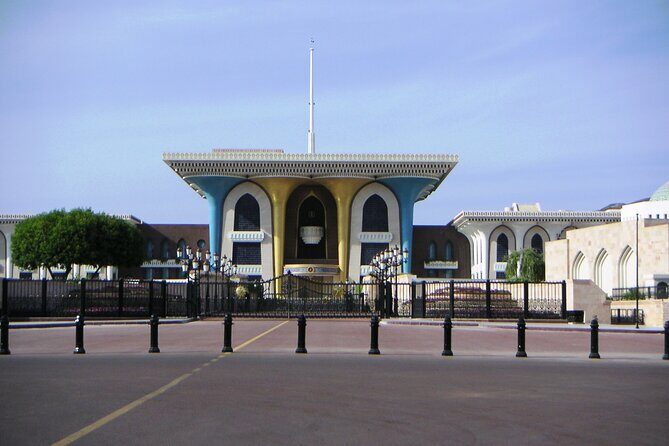
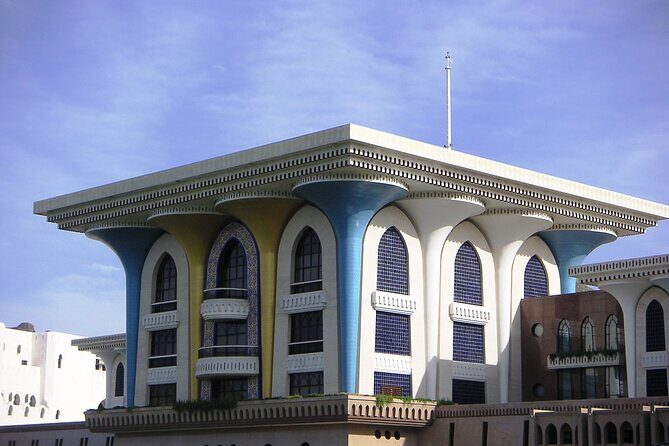
You get a stop for Al Alam Palace, the official palace of His Majesty Sultan Qaboos. This is mainly a photo stop from the outside, not a long visit. Still, it is worth it because the palace’s design is eye-catching and it helps you connect the official Muscat image to the older harbor world you just walked through.
This is one of those moments where you should plan for quick, respectful photos rather than expecting a walk-through.
Bait Al Zubair Museum: the cultural thread that ties the day together
If the mosque gives you scale and the forts give you strategy, the Bait Al Zubair Museum gives you context. You enter to explore displays that chart Omani life and heritage through the centuries.
This is the part of the tour that helps you go home with more than a memory card. Instead of seeing Muscat as disconnected scenes—mosque, souk, forts—you get a storyline for how those scenes connect to daily life, traditions, and identity.
One consideration from real-world experience: the tour format relies on your guide to walk you through what matters most. Some groups report smooth guidance and help inside courtyards and galleries. Others found less time with the guide during certain indoor moments. If you care a lot about explanations, ask your guide early what they recommend focusing on inside the museum so you get maximum value for your time.
Price and value: is $169 per person fair?
At $169 per person for about four hours, this tour is not the bargain-bin option. It is priced like a guided, structured half-day with hotel pickup and a museum stop—plus the mosque visit where guide commentary makes a difference.
So what is the value logic?
- You are buying convenience (pickup and drop-off).
- You are buying guided interpretation at the mosque and museum.
- You are buying a timed route so you do not waste hours figuring out what to see first.
If you are the kind of traveler who hates repeating yourself and prefers a guided hit list, the cost starts to look reasonable. If you only want one or two stops, you might find cheaper ways to cover parts of the route on your own. But for first-timers who want Muscat to make sense quickly, this format earns its keep.
Guide quality matters more than you think
The guide can make or break a city tour. In the best moments, guides like Rasheed or Rashid are praised for strong English and for sharing details that help you connect daily life, religion, and the city’s maritime story. Some people even mention that the pace feels unhurried and that they had time to see what was planned.
On the other hand, a few disappointments came down to communication clarity or the guide not sticking with the group through certain stops. That does not mean the tour is always like that. It just means you should treat the guide as the key variable.
My practical move: when you meet your guide, ask one simple question early about what you will focus on in the museum or the souk. If the answers come clearly, you are in good shape for the whole morning.
Who this tour suits best
This is a good fit if:
- You want a first-time Muscat orientation without spending your whole day commuting.
- You care about architecture and want the mosque explained, not just photographed.
- You like mixing monuments with street-level scenes like Muttrah.
- You prefer small group pacing (max 4 travelers) and hotel pickup.
It may be less ideal if:
- You want hours of free time in the souk or a heavy shopping day.
- You dislike dress-code requirements and do not want to plan clothing for the mosque.
- You are very sensitive to listening quality, since a few past experiences reported limited English clarity.
What to pack so your morning goes smoothly
You will be outside on short walks, and you will also be in sun between stops. Bring:
- Sunscreen
- A hat
- Steady shoes
- A mindset for respectful photo taking
And if you are visiting the mosque, pack backup layers that match the dress code. For ladies, bring a scarf that stays put. For everyone, skip shorts.
Should you book this Muscat city tour?
Yes, if you want an efficient, guided taste of Muscat with the Sultan Qaboos Grand Mosque and Muttrah as anchors. The structure makes sense for a short visit: modern-to-old city views, forts across the bay, a palace exterior photo, then a museum that gives you context so your photos feel meaningful.
If you are the type who enjoys wandering without guidance, or if you are on a tight budget, you might compare options. But for most first-timers, the combination of hotel pickup, mosque plus museum storytelling, and time in the Corniche and souk is a strong value.
If you book, do one thing that pays off: prepare for the mosque dress code and bring a couple of questions for your guide. You will get more out of the 4 hours.
FAQ
How long is the Muscat City Sightseeing Tour?
It is about 4 hours.
What time does the tour start?
The start time is 8:30 am.
Does the tour include hotel pickup and drop-off?
Yes, hotel pickup and drop-off are included.
What is included in the tour price?
Included features are a professional English-speaking guide, hotel pickup and drop-off, transport in an air-conditioned coach or mini-bus, time in the old town and traditional souq, plus a visit to Bait Al Zubair Museum and a photo stop at Al Alam Palace.
Is food included?
Food and drink are not included unless specified.
Is a dress code required for the Sultan Qaboos Grand Mosque?
Yes. Ladies should wear full sleeves and cover their head with a scarf, and both ladies and men should wear full pants. Men can wear half sleeve shirts, but shorts are not allowed.
Is there time for shopping at Muttrah Souq?
Yes. The tour includes time to shop in the traditional souq area.
How many travelers are in the group?
The tour has a maximum of 4 travelers.
Can I cancel for a full refund?
Free cancellation is offered if you cancel up to 24 hours in advance of the experience start time.