Muscat after dark is where the city makes sense fast. This private, small-group outing strings together market life in Muttrah Souq and big royal architecture along the Corniche, so you get both atmosphere and context. I like the way the tour balances quick photo moments with hands-on explanations, and I especially enjoy the souk time where your guide can help you haggle without turning it into a stress test.
The main thing to watch is that not every stop includes entry. Royal Opera House and Al Alam Palace don’t have admission included, so budget for tickets on your own.
In This Review
- Key points to know before you go
- Muttrah Souq at Dusk: bargaining help in the heart of Old Muscat
- Royal Opera House Muscat: contemporary marble lit for evening photos
- Al Alam Palace: a royal residence view with real context
- Corniche and Old Muscat: the Sultan’s Palace photo framed by Jalali and Mirani
- Bait Al Zubair Museum: turning landmarks into something you can explain
- Timing and feel: what 4 to 5 hours from 4:00 pm actually means
- Price and value: $277.34 per group, plus what to budget for tickets
- How to get the best night out of this route
- Should you book Muscat By Night with WABAR TOURS?
- FAQ
- What time does Muscat By Night start?
- How long does the tour take?
- Is pickup included?
- Is this a private tour?
- What is included at Mutrah Souq?
- Do I need separate tickets for the Royal Opera House and Al Alam Palace?
- Do you use a mobile ticket?
- Is the Sultan’s Quaboos Grand Mosque part of the experience?
- What is the cancellation policy?
- Does the tour depend on weather?
Key points to know before you go
- Private group up to 4 with pickup and a mobile ticket, so the night feels personal.
- Muttrah Souq stop includes admission, built around shopping for spices, crafts, and everyday Oman.
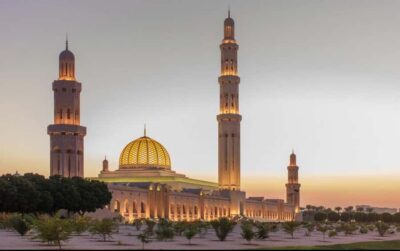
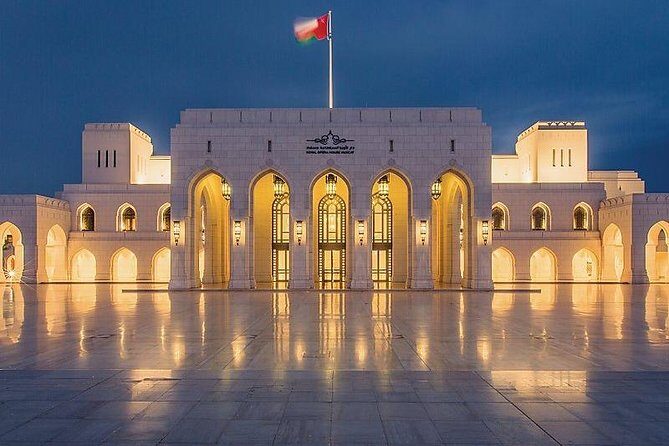
- Royal Opera House by evening light, with a white marble facade described as glowing golden-yellow.
- Al Alam Palace quick look at one of Sultan Qaboos’s royal residences overlooking the Gulf of Oman.
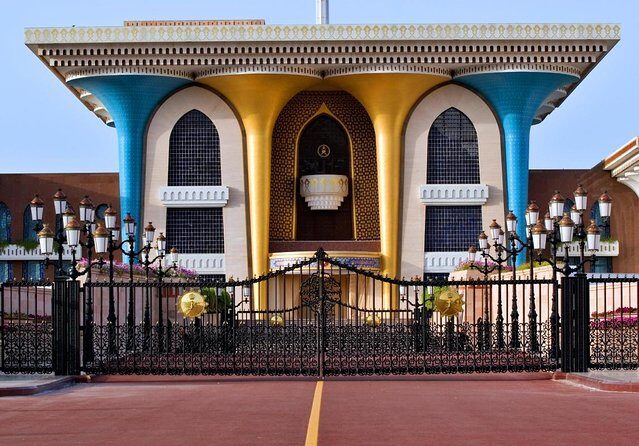
- Corniche + Old Muscat photo time with the Sultan’s Palace view framed by Portuguese forts Jalali and Mirani.
- Bait Al Zubair Museum adds culture context so the royal sites land with more meaning.
Muttrah Souq at Dusk: bargaining help in the heart of Old Muscat
Your night starts with Mutrah Souq, a classic old-style bazaar area where the shopping isn’t about fancy malls. Think household goods, clothing, spices, antiques, and more—the kinds of stalls where you can actually watch how Omanis shop and chat. The time is short (about 20 minutes), but it’s long enough to do two smart things: pick up a few useful souvenirs and learn what to negotiate for.
What I like here is that you’re not just wandering. You get guidance for interacting with the crowd and the bargaining rhythm, so you’re more likely to walk out with items you genuinely want, not random stuff you bought to end an awkward moment. If you’re into scents, keep an eye out for fragrances—the souk is described with that idea of the gold of Oman through smell, not just shine.
Practical tips for souk time:
- Bring small cash if you can, since markets often work best that way.
- Decide your budget before you start bargaining, then stick to it.
- If you buy spices or perfumes, ask how they’re packed or stored for travel so you don’t regret it later.
This first stop is included and priced the way a good intro should be: you can focus on experience, not ticket math.
You can also read our reviews of more evening experiences in Muscat


Royal Opera House Muscat: contemporary marble lit for evening photos
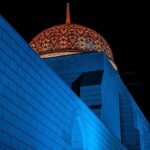
Next comes the Royal Opera House Muscat (ROHM), a modern architectural star. The description calls out a white marble facade that lights up in the evening with a golden-yellow glow. Even if you’re not an opera person, you’ll probably still appreciate how crisp and clean it looks in night lighting.
This stop is about 20 minutes, and the admission is not included. That matters because it changes how you should plan. If you’re the type who likes to go inside for photos and a closer look, you’ll want to allow time and extra money for entry. If you mostly want the exterior shots, you can still make it work without spending on admission.
A couple of details you’ll hear from your guide that add weight to what you’re seeing:
- It was built by royal decree of Sultan Qaboos bin Said.
- The work is tied to Carillion Alawi.
- Construction finished in 2011.
I find it helpful when a building like this gets explained in plain terms. It’s easy to see marble and light. It’s harder to connect it to why it exists. That’s where the guide’s framing makes the stop feel less like a photo stop and more like a story stop.
Al Alam Palace: a royal residence view with real context
Then you’re taken to Al Alam Palace, also known as the Sultan’s Palace and Sultan Qaboos Palace. It’s one of the six royal residences of Sultan Qaboos, and it overlooks the Gulf of Oman. The description also mentions it was built in 1972, with a reference to a 200-year historical link. Either way, the point for your visit is clear: this isn’t a random big building. It’s part of how power and place connect in Muscat.
Time is again around 20 minutes, and admission is not included. That means your guide may focus more on views and explanation rather than a long entry-and-exit session.
Even when you don’t go inside, the positioning matters. Seeing the palace in the broader setting helps you understand why the area around Muscat’s royal landmarks feels like a planned world, not just a collection of sights.
If you’re photographing, aim for calm shots rather than sprinting. Night lighting can make marble and stone look dramatic, but it also makes people’s faces and movement blur if you’re rushing.
Corniche and Old Muscat: the Sultan’s Palace photo framed by Jalali and Mirani
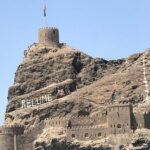
One of the most satisfying parts of this tour is the drive along the Corniche to Old Muscat. The route includes a memorable picture stop of the Sultan’s Palace, described as being surrounded by Portuguese forts Jalali and Mirani.
That small detail is worth paying attention to. Muscat isn’t only about modern development and clean lines. It also has layered history that shows up in the fort shapes and the way the shoreline is used.
Here’s why this portion adds value:
- You get a view without needing to find it yourself.
- You get the historical framing so you can see the forts as more than a background.
- You end up with at least one good photo angle without fighting traffic or crowds on your own.
If your phone camera struggles in low light, this is the moment to switch to a steadier approach—brace yourself, use a timer if you have one, and take a couple of test shots before you lock in.
Bait Al Zubair Museum: turning landmarks into something you can explain
After the big sights, you get a stop at Bait Al Zubair Museum. This is described as an exclusive chance to get informative information about Omani culture and their history. I like museum stops that work like translators: they help you connect what you just saw (palaces, forts, the city shape) to why it matters.
You’re not spending half your day reading labels. The museum is positioned as a context boost inside the 4–5 hour flow, which is a smart fit for a night tour.
In practice, this stop tends to change how you look at later photos. Instead of just recording stone and light, you start noticing patterns—style, purpose, and how different eras show up in one city.


Timing and feel: what 4 to 5 hours from 4:00 pm actually means
The tour starts at 4:00 pm and runs about 4 to 5 hours. That timing is a big deal. It’s late enough to catch evening lighting on places like the Royal Opera House, but early enough that you’re not stuck in late-night fatigue.
You’ll also want good weather. The experience notes that it requires good weather, and if it’s canceled due to poor conditions, you’re offered another date or a full refund.
Group size is a big reason this works well:
- It’s private, only your group participates.
- It’s priced for up to 4 people.
- Pickup is offered, and you use a mobile ticket.
Private pickup plus a short sightseeing plan means less waiting, fewer awkward logistics moments, and more time spent actually seeing things.
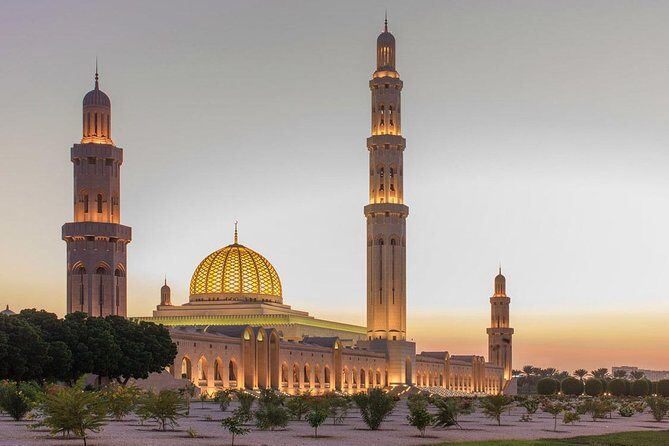
One small note: the overview also mentions the Sultan’s Quaboos Grand Mosque with opening hours of 8:00 AM to 11:00 AM (Saturday through Thursday). Because this tour is set for a 4:00 pm start, that mosque visit may or may not fit into your specific schedule. If it matters to you, check with your operator so you’re not counting on a morning-only stop during an afternoon departure.
Price and value: $277.34 per group, plus what to budget for tickets
The price is $277.34 per group (up to 4), which works out to about $69 per person if you fill all spots. That can feel very fair in Muscat, especially when you factor in pickup, guided interpretation, and transportation connecting multiple areas quickly.
What you should budget attention for is admissions:
- Mutrah Souq admission is included.
- Royal Opera House admission is not included.
- Al Alam Palace admission is not included.
So your total spend depends on whether you plan to enter those two ticketed stops. The tour still makes sense even if you focus on exterior viewing, but money planning is smart so you’re not surprised later.
Where value really shows up is with the guide. Names like Saif, Sameer, Ali, Khalid, Mohammed, and Tahal appear in past experiences, and the pattern is consistent: clear explanations, friendly help in the souk, and a calm, safe pace. One guide was praised for a secure, attentive driving style. Another helped shoppers with bargaining advice. And several guides were noted for speaking strong English and pointing out details other people miss.
How to get the best night out of this route
This tour is short and focused, so a few habits help you enjoy it more:
1) Dress for respect and photos
If your route includes the mosque at any point (it’s listed in the description with specific hours), wear modest clothing. Even if you’re not going inside, you’ll likely be near spaces where local expectations matter.
2) Use souk time to buy a small, meaningful list
With only 20 minutes, don’t aim to shop your way through the whole souk. Pick:
- one spice or flavor-related souvenir
- one handmade craft
- one fragrance item if you’re into scents
3) Plan for tickets at ROHM and Al Alam Palace
Because admission isn’t included for those two, decide ahead of time if you want to pay for entry or stick to photos and viewpoint time.
4) Keep expectations realistic about stops
This is a night tour with a compact schedule. It’s ideal for getting oriented fast, not for lingering for hours inside every building.
Should you book Muscat By Night with WABAR TOURS?
If you want an efficient first look at Muscat with a guide who can explain what you’re seeing, this is a strong choice. It’s especially good for:
- first-time visitors who want royal landmarks without arranging everything themselves
- small groups who prefer private pickup and a paced plan
- people who enjoy market atmosphere but want help navigating the bargaining side
Book it with a clear mindset: you’ll get a highlight route, smart context, and good photo moments. The only reason to pause is the extra admission you may pay at the Royal Opera House and Al Alam Palace.
If that sounds fine, you’re set for a night that feels like Muscat, not just a checklist.
FAQ
What time does Muscat By Night start?
The start time is 4:00 pm.
How long does the tour take?
It lasts about 4 to 5 hours.
Is pickup included?
Pickup is offered.
Is this a private tour?
Yes. It is private, and only your group participates, up to 4 people.
What is included at Mutrah Souq?
Mutrah Souq includes admission and is about 20 minutes, focused on traditional items like household goods, clothing, spices, antiques, and more.
Do I need separate tickets for the Royal Opera House and Al Alam Palace?
Yes. Admission for the Royal Opera House and Al Alam Palace is not included.
Do you use a mobile ticket?
Yes, the tour includes a mobile ticket.
Is the Sultan’s Quaboos Grand Mosque part of the experience?
The description includes Sultan’s Quaboos Grand Mosque, and it lists opening hours of 8:00 AM to 11:00 AM from Saturday through Thursday.
What is the cancellation policy?
Free cancellation is available. You can cancel up to 24 hours in advance for a full refund.
Does the tour depend on weather?
Yes. The experience requires good weather, and if it’s canceled due to poor weather, you’ll be offered a different date or a full refund.