REVIEW · MUSCAT
Jabal Shams (Grand Canyon)
Book on Viator →Operated by ALISMAILI TRAVEL & TOURISM · Bookable on Viator
A high cliff day can change your whole mood. This Oman trip strings together mountain villages and the views from Jabal Shams, often called the Grand Canyon of Arabia. You start in Muscat, climb into the Western Hajar Mountains, and end the day in Al Hamra with ruins and farms perched over dry slopes.
Two things I really like about this experience are the way it mixes easy sightseeing stops with big scenery, and that the key viewpoints include free admission for Misfat al Abreyeen and Jabal Shams. One thing to consider: this tour is weather-dependent, and the provider also has one serious negative review about the tour operator—so it’s worth double-checking your expectations and details before you go.
If you want a day that feels like you went deeper than a simple city excursion, this fits. And if clouds or rain roll in, you’ll need to accept that your timing might shift.
In This Review
- Key highlights to know before you go
- From Muscat to Jabal Shams: a route built for big views
- Misfat al Abreyeen: mudbrick alleys and terraces on a steep mountain
- Jebel Shams: the cliff-edge viewpoint over Al Nakhr Canyon
- Al Hamra: ruins, an oasis, and farms hanging over dry mountains
- Price and what makes it good value (or not)
- Weather matters more than you think for canyon views
- Private tour comfort: why “up to 4” changes the day
- Who should book this Jabal Shams day trip?
- Quick packing and on-the-ground tips
- Should you book this tour?
- FAQ
- How much does the Jabal Shams day trip cost?
- How long is the tour?
- Where does the tour start and end?
- Is pickup included?
- What ticket method do I receive?
- What happens if weather is bad?
Key highlights to know before you go
Misfat al Abreyeen’s mudbrick terraces – mountain alleys, traditional buildings, and stepped farmland carved into the slopes
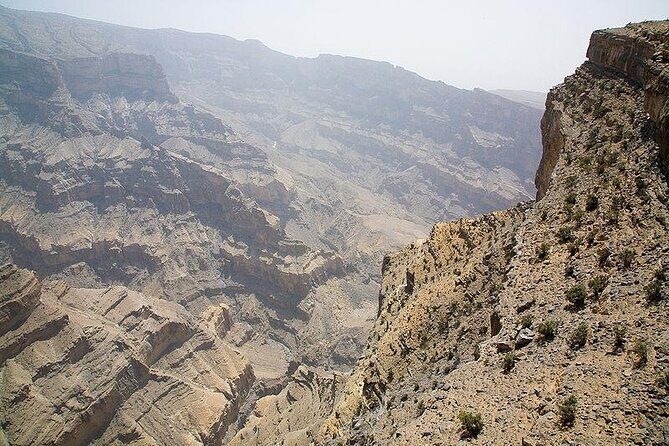
Jabal Shams is Oman’s highest mountain – a dramatic edge-of-the-canyon viewpoint over Al Nakhr Canyon
Grand Canyon of Arabia views – expect wide, jaw-drop geography, not just one pretty overlook
Al Hamra ruins and oasis farms – old village remains with agricultural life clinging to a harsh setting
Private group time (up to 4) – you’re not sharing the day with strangers
From Muscat to Jabal Shams: a route built for big views
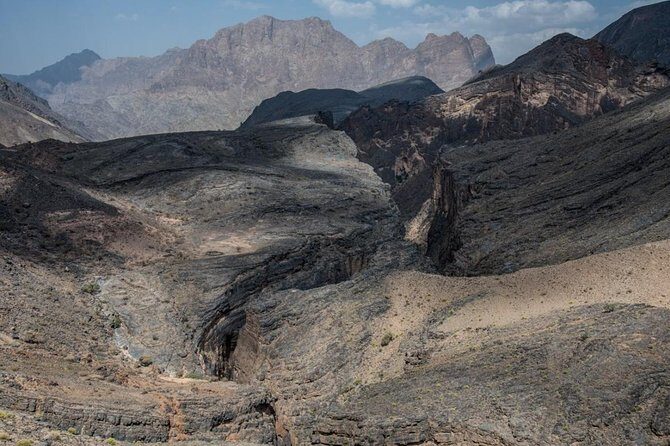
This is the kind of day trip you take when you want Oman to feel physical. You’re not just driving past sights—you’re climbing into the Western Hajar Mountain chain and spending time at village level and canyon level.
The day is designed around three moments: Misfat al Abreyeen, Jabal Shams, and Al Hamra. Each stop has a different vibe. Misfat feels slow and local, Jabal Shams is all height and drama, and Al Hamra adds an old settlement feel plus the surprise of farmland and an oasis where you wouldn’t expect it.
With an 8-hour duration (approx.) and pickup offered, the logistics stay simple: start in Muscat, and you return to the meeting point at the end. You’ll also get a mobile ticket, which is handy if you don’t want to fuss with paper confirmations.
You can also read our reviews of more tours and experiences in Muscat.
Misfat al Abreyeen: mudbrick alleys and terraces on a steep mountain
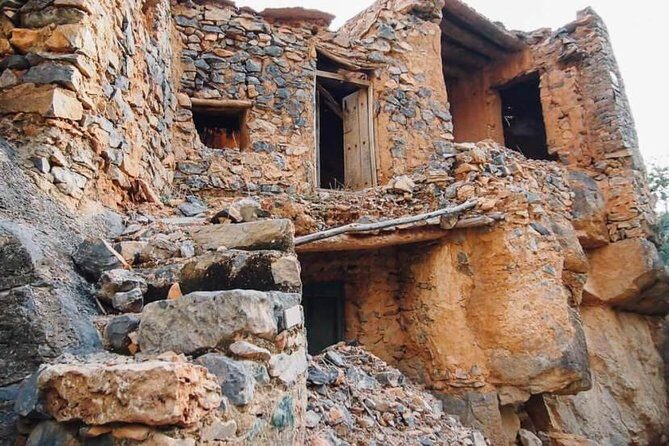
Misfat al Abreyeen is the kind of place where the scenery comes from architecture and farming, not just the horizon. This village sits high—about a thousand metres above sea level—so the air and light can feel different from Muscat.
What you’re looking for here is the layout: narrow alleys, traditional buildings, and high mud structures pressed up against the mountainside. On top of that, the terraces wrap around the slope like a patchwork. Homes sit higher up, and the farms work their way down the mountainside. That pattern is why Misfat feels peaceful; you’re seeing a system that people built over time to live with steep ground.
Expect the visit to feel more like walking a small neighborhood than touring a single monument. The timing is about 1 hour, and admission is free. That’s a nice balance for a day like this: you get time to wander, but you still move on while the light and energy are good.
Practical tip: bring comfortable shoes with grip. The village is described with alleys and terraces, and uneven ground is common in old mountain villages. Also, plan for sun—even if it’s cooler than the city—because shade can be limited on terraces.
Jebel Shams: the cliff-edge viewpoint over Al Nakhr Canyon
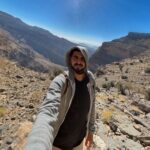
Then comes the headline: Jabal Shams, Oman’s highest mountain, located in the Western Hajar Mountains in the Al Dakhiliyah region. The climb takes you toward elevations up to about 3,000 metres above sea level, and that’s where the day starts to feel cinematic.
You’ll spend about 1 hour at Jebel Shams, and admission is free there too. The main payoff is the view over Al Nakhr Canyon—so spectacular it’s often labeled the Grand Canyon of Arabia. This is big geography you can stand and take in, and it works whether you’re a serious hiker or you just want the viewpoint without a full day on trails.
The area is also known for mild climate compared with hotter lowlands, plus exciting trekking paths and off-road adventures. Your exact experience will depend on what the route on your day looks like, but even without a long trek, the mountain setting does the heavy lifting.
What to watch for: canyon views can be affected by haze. If visibility is clear, you get sharper canyon lines and depth. If the day is milky or windy, you still get scale, but the fine details may soften. This is one reason the weather requirement matters—more on that below.
Al Hamra: ruins, an oasis, and farms hanging over dry mountains
After the height and canyon drama, Al Hamra gives you a different kind of wow. The city is where you’ll see an ancient village famous for ruins and an oasis of farms. The contrast is the point: farms and cultivated green are shown as sitting over very dry mountains.
Even if you’re not stopping long, this kind of end-of-day stop is valuable because it explains how people adapted to Oman’s conditions. You’re not just looking at scenery—you’re seeing evidence of how settlement and agriculture can cling to a difficult environment.
Because the detailed stop timing for Al Hamra isn’t listed here, I suggest treating it as your flexible buffer in the schedule. If you’re the kind of traveler who likes photos and a slower pace, you can usually find a spot to linger without feeling like you’re stuck.
Practical tip: bring a light layer even in the afternoon. Mountain air can cool quickly, and if you spend time at viewpoints, you might feel the temperature shift.
Price and what makes it good value (or not)
The price is $533.34 per group for up to 4 people, for an 8-hour outing. That’s a private tour, and private tours can be expensive—so the value depends on how your group sizes up.
If you fill the group with 4 people, you’re roughly around $133 per person. That starts to look more reasonable for a full day that includes mountain travel, multiple distinct stops (villages plus canyon plus ruins), and pickup and return to your meeting point.
If it’s only 1 or 2 people, the cost per person rises fast. In that case, I’d ask yourself what matters more: do you want the convenience and private flexibility, or would you rather trade comfort for budget with a shared group? The itinerary has three “worth it” stops, so it can justify the private cost—just don’t assume it’s automatically cheap.
Also, this trip includes mobile tickets, which reduces friction at check-in. And since it’s “most travelers can participate,” it’s not being pitched as a hardcore physical challenge based on the details provided.
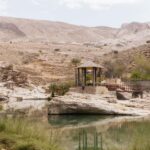


Weather matters more than you think for canyon views
This experience requires good weather. If it’s canceled due to poor weather, you’re offered a different date or a full refund. That’s not just fine print; it affects the whole reason you’re going—Jabal Shams and canyon visibility.
If you’re planning this trip, pick dates that aren’t right in the middle of known stormy stretches (and keep an eye on forecasts close to departure). Mountain weather can change quickly, and fog or rain can make cliff views less satisfying or even unsafe depending on conditions.
The good news: because the trip is weather-aware, the operator is at least acknowledging reality rather than selling an impossible promise. Still, be mentally ready for adjustments.
Private tour comfort: why “up to 4” changes the day
I like private tours for one simple reason: your day moves at your pace. With only your group participating, you aren’t stuck behind a slow crowd or rushed by a fast one. For this specific route, that matters because villages and viewpoints invite photo time and small detours.
It also means the 1-hour blocks at Misfat al Abreyeen and Jabal Shams can feel less like a checklist and more like “spend time where you care.” If you want to walk the alleys longer at Misfat or stand longer at the canyon edge at Jabal Shams, private time helps you do that.
One note I take seriously: the experience provider listed is ALISMAILI TRAVEL & TOURISM, and there’s at least one very negative review blaming the tour operator for a horrible experience (the review says the place itself was good). That doesn’t invalidate the scenery, but it is a warning flag about service quality. If you book, I’d keep your expectations clear and confirm timing details before you go so there are fewer surprises on the day.
Who should book this Jabal Shams day trip?
This tour is a good fit if you want:
- A single-day mountain hit from Muscat without needing to plan multiple separate outings
- Canyon viewpoints plus historic village texture (not just one long drive)
- A private experience sized for small groups (up to 4)
It’s also a smart choice if you like variety: an old village setting at Misfat, Oman’s high mountain viewpoint at Jabal Shams, then ruins and farm oasis life at Al Hamra.
If you’re chasing a full-day hike challenge, this may feel short, since the detailed stops listed include about 1 hour each for Misfat and Jabal Shams. But for many people, that’s the sweet spot: see the essentials, enjoy the views, and still return to Muscat that day.
Quick packing and on-the-ground tips
For a day mixing villages, canyon viewpoints, and dry mountainous areas, I’d keep it practical:
- Shoes with grip for alleys and terraces
- A hat and sunscreen even if it’s cooler up high
- Water and light snacks, since you’ll be out for about 8 hours
- A light layer for the mountain air at higher elevations
- Charge your phone—mobile ticket plus photos will eat battery fast
And if you’re sensitive to heights, take the canyon viewpoints slowly. You don’t need to sprint from spot to spot to get the payoff.
Should you book this tour?
I’d book it if you match the vibe: you want a private small-group day from Muscat that blends traditional mountain village life with the major “Grand Canyon of Arabia” view from Jabal Shams, then ends with Al Hamra’s ruins and oasis farms. The structure is strong, and the fact that key admissions are free at Misfat and Jabal Shams makes the sightseeing feel like it costs what it should—not extra for entry fees.
I’d be cautious about booking if you strongly care about smooth operator service, because there’s one glaringly negative note tied to ALISMAILI TRAVEL & TOURISM. That doesn’t mean your day will go badly, but it does mean you should be clear on timing and ask questions before you pay.
If you do book, go in knowing it’s weather-dependent and built for scenery stops more than long trekking. When the visibility is good, this is the kind of Oman day that sticks.
FAQ
How much does the Jabal Shams day trip cost?
It costs $533.34 per group (up to 4 people).
How long is the tour?
The duration is about 8 hours.
Where does the tour start and end?
It starts in Muscat, Oman, and ends back at the meeting point.
Is pickup included?
Pickup is offered.
What ticket method do I receive?
You’ll receive a mobile ticket.
What happens if weather is bad?
The experience requires good weather. If it’s canceled due to poor weather, you’ll be offered a different date or a full refund.