REVIEW · MUSCAT
Day Trip to Jabal Shams (Grand Canyon of Oman) Wadi Nakhar, Misfat Al Abriyeen
Book on Viator →Operated by Discover Mazoon Tours Oman · Bookable on Viator
I love how this trip combines big canyon views with real village life, and Misfat al Abriyeen is the calm, human counterpoint to the drama of the Grand Canyon of Oman. You get an organized route that hits the highlights—Wadi Ghul’s abandoned stone village, then the viewpoints, then canyon time in Wadi Al Nakhar—without feeling rushed. One drawback to plan for: it’s a long day (about 9 to 10 hours) with lots of driving, and it is not stroller-friendly.
My favorite part is the pacing. On tours I’ve taken in Oman, the best guides do two things well: keep you moving safely on the mountain roads, and still give you time to actually look and take photos. Here, guides such as Fawzi and Fahad are praised for being kind, patient, and genuinely helpful, especially around Misfat al Abriyeen and Jebel Shams.
In This Review
- Quick hits before you go
- Key points to know
- Morning departure from Muscat: Wadi Ghul’s abandoned stone village
- Why this stop is worth your time
- Driving up to Jebel Shams: the Grand Canyon of Oman viewpoint
- A note on timing and photo success
- Wadi Al Nakhar: canyon scenery shaped by erosion
- What to do in Wadi Al Nakhar (and what not to)
- Misfat al Abriyeen: old houses, falaj farms, and a 3,000-year-old rhythm
- How the falaj system adds depth to the trip
- What the day feels like overall: long, scenic, and worth it if you’re flexible
- The mountain roads are part of the experience
- Price and value: what $230 per person buys you in the real world
- Who should book this day trip (and who might prefer something else)?
- Weather and comfort tips that matter on this route
- Should you book this Jabal Shams, Wadi Nakhar, and Misfat al Abriyeen day trip?
- FAQ
- How long is the day trip?
- What time does the tour start?
- What sites will we visit?
- Is pickup included?
- Do we need to pay for admission at the stops?
- Is the tour stroller accessible?
- Is this a private tour?
- What weather conditions does the tour require?
- How much does it cost per person?
Quick hits before you go
You’ll start at 8:00 am from a meeting point near public transportation, typically with pickup offered. It’s a private tour/activity, meaning only your group joins you, and you’ll have a mobile ticket for convenience. Just be ready for canyon-day conditions: the route depends on good weather, and the views are best when the skies cooperate.
Key points to know
- Ancient stops, not just viewpoints: Wadi Ghul is an abandoned 2,000-year-old stone village you pass early in the day.
- Jebel Shams is the main event: drive up high for the Grand Canyon of Oman viewpoints (2,000 meters viewpoint area).
- Wadi Al Nakhar explains the geology: you’ll see canyon scenery tied to rock erosion over long time periods.
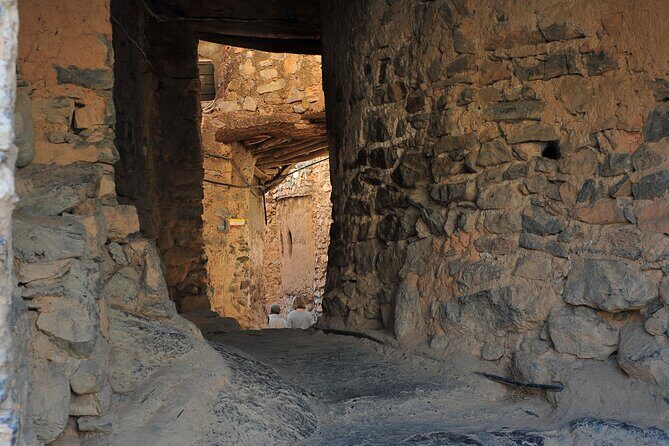
- Misfat al Abriyeen is the slow walk: narrow lanes, old homes, and a falaj water system feeding orchards.
- A guide you can ask questions to: Fahad and Fawzi are specifically mentioned for being patient and informative.
- Long day, limited walking surfaces: no stroller access and you’ll want comfortable shoes for uneven ground.
A few more Muscat tours and experiences worth a look

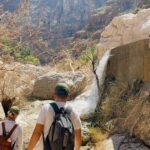
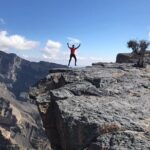
Morning departure from Muscat: Wadi Ghul’s abandoned stone village
The day starts early enough that Muscat feels quieter than it does later in the morning. Once you’re on the road, you’re watching Oman’s change from city-to-mountain in real time—less “tour bus sightseeing,” more “road trip with a plan.”
Your first real stop is Wadi Ghul, a village built of solid stones that dates back about 2,000 years. It’s described as abandoned, with no inhabitants left, and you can see it near the foot of Mountain Ghul as you head toward Jabal Shams. Even if you only spend around 10 minutes here, it’s one of those places that makes you slow down. You’re not just looking at ruins—you’re seeing how stone architecture was meant to survive.
Practical tip: bring a light layer. Even on a clear day, canyon regions can feel cooler, especially if you pause for photos.
Why this stop is worth your time
This is the “history warm-up.” Before you reach the dramatic canyon edges, Wadi Ghul gives context: humans were living high up in this rugged terrain long before modern roads. That makes what comes next at Jebel Shams hit harder.
Driving up to Jebel Shams: the Grand Canyon of Oman viewpoint
Then comes the main climb. The road up to Jabal Shams is known for being adventurous, with off-road-style stretches and mountain driving that keeps your attention on the road. It’s not just transport. It’s part of the experience.
At Jebel Shams (Jabal means mountain; Shams means sun), you’re heading to the heart of the day: the Grand Canyon of Oman. The mountain is around 3,009 meters, and you reach the canyon viewpoint area at roughly 2,000 meters. Expect the kind of view that makes your brain pause. You’ll be able to take photos and simply stand there for a bit—about one hour is planned for this stop.
What makes Jebel Shams special is the scale. The canyon isn’t a small “walk-up and look.” It’s wide, deep, and layered, with the harsh mountain setting doing half the storytelling for you. You can understand why people treat this place as the headline sight in Oman’s interior.
Practical tip: take your photos, then step back and look with less focus on your camera. The view changes with your position and the angle of light.
A note on timing and photo success
This is a view-dependent stop. The route requires good weather, and cloud cover can mute the canyon drama. If you’re going in a season where visibility can be uncertain, keep your expectations flexible and rely on your guide’s judgement.
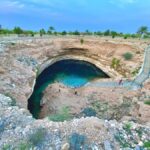



Wadi Al Nakhar: canyon scenery shaped by erosion
After Jebel Shams, you drive down into Wadi Al Nakhar for canyon time. This part of the trip feels less like standing still and more like moving through Oman’s rocky story.
You’ll spend around two hours here, and the scenery is famous—often described as the Grand Canyon of the Middle East. The name connection is tied to local language meaning the process of rock sculpture through erosion. The idea is simple: water carved and shaped the valley over long time periods, and what you’re seeing is the result.
This wadi is also described as one of Oman’s deepest valleys. The “big gap” from Jabal Shams is considered an important source of water, because the opening lets water reach and feed valleys and reefs that form the Al Nakhar valley system.
What to do in Wadi Al Nakhar (and what not to)
Do: take your time looking for layers and textures. Canyon walls often tell the story in color bands and worn edges. Also, notice how the valley floor feels different from the heights above it.
Don’t: rush. Two hours sounds short, but the best experience comes from slow stops and a few thoughtful turns—like you’re reading a page, not skimming.
If you’re sensitive to heat, plan your breaks. Canyon areas can shift between sun and shadow, and you’ll want water and a hat (even though the tour data doesn’t list gear, common sense matters here).
Misfat al Abriyeen: old houses, falaj farms, and a 3,000-year-old rhythm

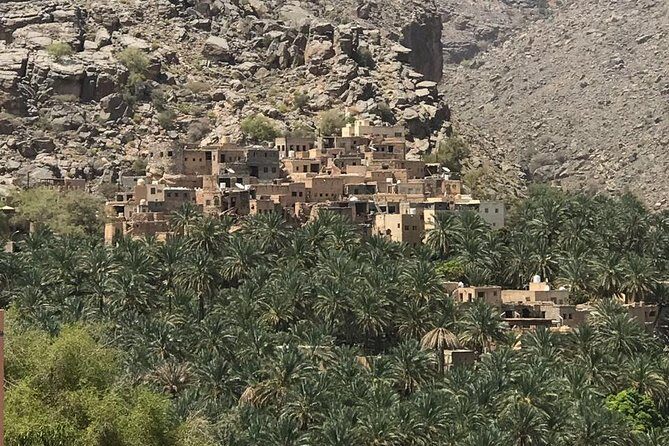
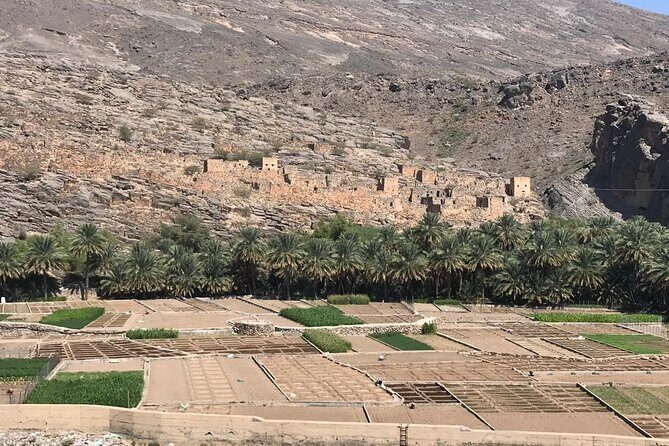
Then you get to slow down for the most human part of the day: Misfat al Abriyeen. This village sits on a steep slope at the foot of Jebel Shams, and that slope shapes everything—the street layout, the feel of the houses, and the way the village looks like it clings to the mountainside.
The village is described as having old homes and narrow streets, with a falaj system that supports orchards, especially date palms and vegetables. You’ll have about one hour to walk around, soak up the atmosphere, and see how water management supports daily life in a dry region.
This is the stop people tend to remember most, because it isn’t just a view. It’s a place where water engineering meets agriculture. When you walk through Misfat, you can practically see why falaj systems mattered for survival and why they became part of village identity.
How the falaj system adds depth to the trip
At Jebel Shams, you saw geology on a huge scale. In Misfat, you see how people respond to that same environment by building systems that work with water where it’s available.
If you like photography, you’ll find plenty of corners for street-style shots: narrow passages, doorways, stone textures, and the way the village steps along the hillside. If you prefer conversation, this is also a great place to ask questions and learn how people make daily life work here.
What the day feels like overall: long, scenic, and worth it if you’re flexible
This outing runs about 9 to 10 hours, starting at 8:00 am. That means you need to treat it like a real day-trip, not a quick excursion. The payoff is that you see a full slice of Oman in one go: an ancient abandoned settlement, the dramatic canyon viewpoint, a deep-eroded valley, and then a living village shaped by historic water systems.
One practical consideration: the tour is not stroller accessible. That doesn’t automatically mean it’s hard for everyone, but it does mean uneven ground and narrow streets at Misfat can be tricky. If you’re traveling with mobility challenges, it’s worth thinking about walking time and comfort before you commit.
The mountain roads are part of the experience
There’s also an energy factor. Driving up to Jebel Shams includes challenging mountain segments. Your guide will help manage timing and safety, and the reviews highlight guides being patient and calm—especially when the road and altitude make people a little anxious.
Price and value: what $230 per person buys you in the real world
At $230 per person, this isn’t a budget half-day. So you should ask: is it value, or just a famous name?
Here’s what you’re paying for in practical terms:
- Full-day logistics: you’re covering distant, high-impact sites in one structured route, including a long drive out of Muscat and back.
- Private group format: it’s only your group, not a mixed crowd. That often translates into a smoother schedule and more personalized pacing.
- Transport plus time at the best moments: you’re not just passing through. You get about 10 minutes at Wadi Ghul, one hour at the Jebel Shams viewpoint, two hours in Wadi Al Nakhar, and one hour walking Misfat.
- Guide quality: guides like Fawzi and Fahad are specifically praised for being kind, patient, and informative, and for letting you take your time at the places that matter most.
If you have limited time in Oman and you want the canyon highlight without having to piece together separate drives and stops, this price starts to make sense. If you’re a very independent traveler who already plans mountain drives well, you might be able to do parts on your own. But for most people, the value here is speed-to-scenery without sacrificing time on site.
Who should book this day trip (and who might prefer something else)?
This tour makes the most sense if you:
- want to see Jebel Shams and Wadi Al Nakhar in one day without coordinating multiple legs
- like a mix of big nature views and human-scale history
- appreciate a guide who keeps things calm, paced, and explain-it-as-you-go
It might not be ideal if you:
- don’t handle long days well (9–10 hours)
- need stroller access
- expect everything to be flat, easy walking. Misfat’s narrow streets and the valley terrain call for proper footwear and steady footing.
If you’re the type who enjoys learning while you travel, this is a strong fit. Wadi Ghul’s stone village and the falaj system in Misfat give you real context, not just postcard stops.
Weather and comfort tips that matter on this route
The tour requires good weather. That’s not just a fine print detail—it’s what protects your canyon-day experience. If visibility is poor, you’ll still travel, but the views are less dramatic and photos won’t have that sharp canyon contrast.
Plan your day like this:
- wear comfortable shoes for uneven ground
- bring a hat and water (you’ll be outside for canyon and village time)
- keep a light layer handy, since mountain areas can feel cooler at certain times
And mentally: accept that the itinerary moves through different settings quickly. The “canyon wow” is real, but the day is still structured travel.
Should you book this Jabal Shams, Wadi Nakhar, and Misfat al Abriyeen day trip?
Yes, if you want Oman’s interior highlights in one well-paced day. The combination works: Wadi Ghul sets the historical mood, Jebel Shams delivers the Grand Canyon-level views, Wadi Al Nakhar shows you the valley’s erosion story, and Misfat al Abriyeen slows everything down with falaj-fed life and old stone lanes.
Skip it only if you strongly dislike long driving days, need stroller-friendly routes, or want a lighter, less structured experience.
If you do book, choose it with confidence. The strongest parts of the trip—patient guiding, time to actually enjoy the canyon viewpoints, and a meaningful walk through Misfat—are exactly what make this day trip feel like more than a checklist.
FAQ
How long is the day trip?
It runs about 9 to 10 hours total.
What time does the tour start?
The start time is 8:00 am.
What sites will we visit?
You’ll visit Wadi Ghul, Jebel Shams (Grand Canyon of Oman), Wadi Al Nakhar, and Misfat al Abriyeen.
Is pickup included?
Yes, pickup is offered.
Do we need to pay for admission at the stops?
The tour information indicates admission tickets are free at the listed stops.
Is the tour stroller accessible?
No, it is not stroller accessible.
Is this a private tour?
Yes. Only your group participates.
What weather conditions does the tour require?
It requires good weather, and if it’s canceled due to poor weather, you’ll be offered a different date or a full refund.
How much does it cost per person?
The price is $230.00 per person.